

From traditional production to smart agriculture
As a border commune, after the merger, Tan Bien has a natural land area of 24,471 hectares. Currently, the commune's economy continues to develop steadily, with the agricultural sector gradually transforming towards the application of high technology associated with the construction of new rural areas, achieving many clear results.
Faced with fluctuations in the agricultural market, farmers are boldly applying scientific and technological advancements, transforming their crop structure towards efficiency and sustainability. Many areas of low-productivity land have been converted to growing high-value crops such as jackfruit, durian, and pomelo.
In 2022, recognizing that red jackfruit was a new crop in the area with export potential and high economic value, and was suitable for the local soil, Mr. Nguyen Van Duong (residing in Tan Thanh hamlet, Tan Bien commune) decided to switch from cassava to planting red jackfruit intercropped with Thai jackfruit using a combination of organic and inorganic farming methods.
Thanks to proper care and techniques, after two years, Mr. Duong's jackfruit orchard began to yield fruit. With selling prices ranging from 35,000 to 40,000 VND per kilogram, his family earns approximately 300 million VND annually from the orchard.
“I produce using a combination of organic and inorganic methods to ensure the best results and yields for the plants in the early stages of fruiting. However, during cultivation, I also research biological products to minimize the use of fertilizers and pesticides, and irrigation is carried out according to proper procedures and techniques,” said Mr. Duong.
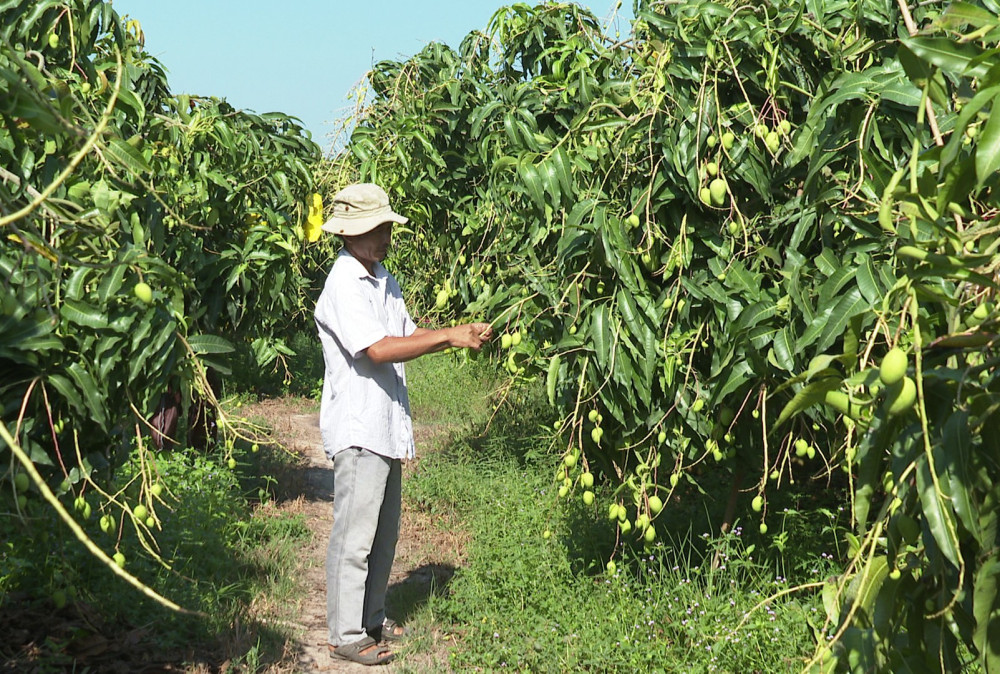
Many fruit-growing areas apply science and technology to production, resulting in high economic efficiency.
Also a typical example of a local farmer, Mr. Phan Van Tha's family (residing in Hamlet 3, Tan Bien Commune), starting from a small-scale rubber plantation, has been pondering how to improve productivity and create a sustainable livelihood.
Since the local area implemented crop restructuring models, he proactively learned and participated in technical training courses, boldly switching to growing various crops, from rambutan, jackfruit, pomelo, and finally durian, all cultivated organically. With his production model, his family earns more than 6 billion VND annually.
Mr. Tha stated: “In the context of the country's overall development, the development of Vietnam's agricultural sector, and to meet the increasingly high demands of the market, in recent years, I have been producing on a large scale, specializing in durian, pomelo, jackfruit, etc. Production also incorporates scientific and technical methods, from fertilization and irrigation to plant care, to bring the best quality products to the market.”
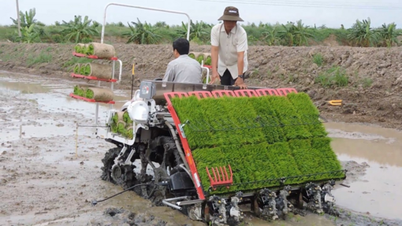
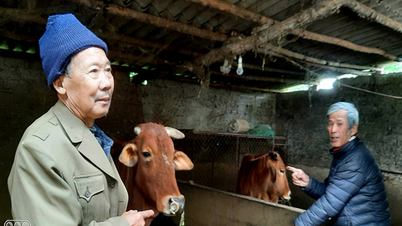
In Loc Ninh commune, many farming households have begun applying mechanization and digital technology to production. Mr. Ta Van Minh said that previously, farmers' farming was mainly based on experience and heavily dependent on the weather, resulting in low efficiency. However, since applying science and technology to production, many areas of his family's cassava, sugarcane, and bamboo crops have achieved high yields and better resistance to pests and diseases.
“When preparing the land, we use machinery; in cultivation, we apply an automatic irrigation system, which is fast, even, and provides just the right amount of soil moisture for good plant growth. Each season, my family saves tens of millions of dong in costs while achieving higher efficiency and productivity than before,” Mr. Minh said.
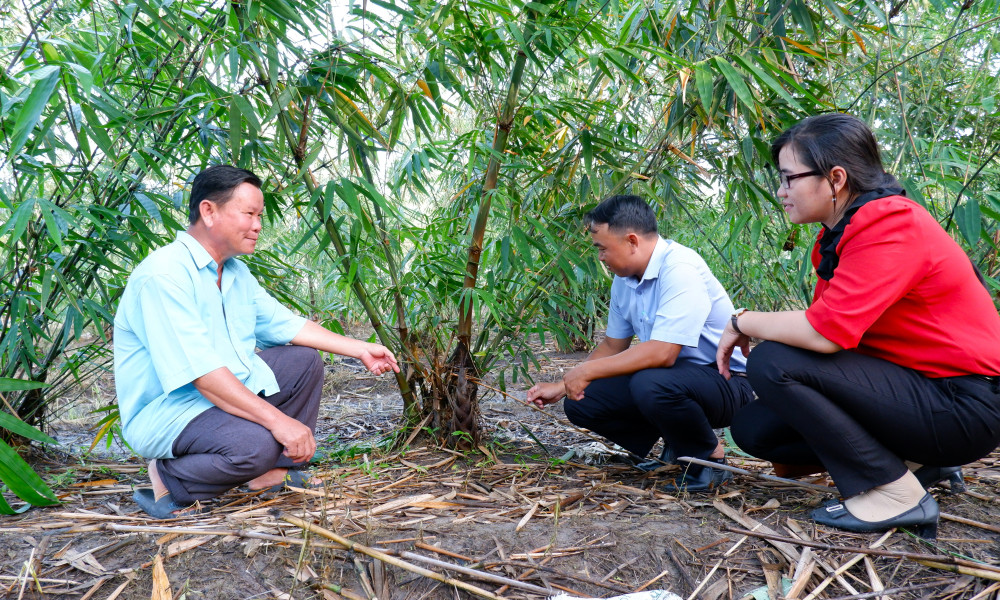
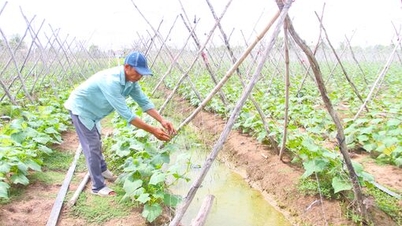
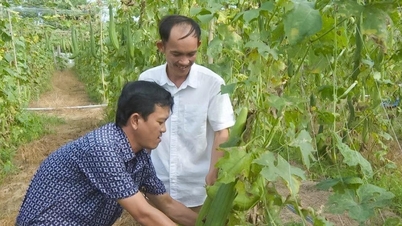
Mr. Ta Van Minh's bamboo shoot cultivation area, which utilizes an automatic irrigation system, yields high economic efficiency.
According to statistics from the provincial Department of Agriculture, hundreds of hectares of crops in the province currently utilize technological solutions such as water-saving irrigation, greenhouses, net houses, and synchronized mechanization, contributing to increased production value per unit area.
Science and technology – the foundation for agricultural products to reach further markets.
Besides production, the province also focuses on applying science and technology in the preservation, processing, and consumption of agricultural products. Many cooperatives have used QR codes to trace the origin of products, bringing agricultural products to e-commerce platforms and expanding their markets.
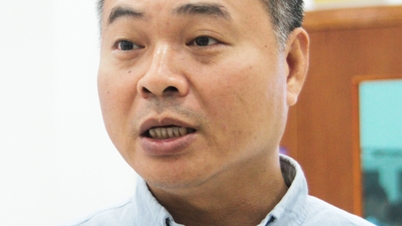
Mr. Phan Hoai Thinh, Director of Bau Don Fruit Cooperative in Truong Mit commune, said that applying traceability technology has helped the cooperative's products gain consumer trust. "Thanks to transparent information, our durian products have secured stable sales contracts with supermarkets inside and outside the province, and many orders have been exported to demanding markets," Mr. Thinh said.
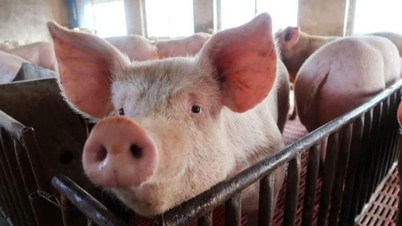
According to information from the Department of Agriculture and Environment, in recent times, the province has issued many policies to encourage businesses, cooperatives, and farmers to invest in high-tech agriculture. At the same time, the department has also proactively coordinated with relevant agencies to widely apply many scientific and technical advances in seeds, fertilizers, and intensive farming methods in crop cultivation and livestock breeding.
Through the application of science and technology, many production linkage areas have been formed in the province, bringing high economic efficiency and creating a new breakthrough in production development, such as the model of growing cantaloupe in greenhouses, and areas producing clean vegetables according to VietGAP standards…
In addition, localities have also stepped up propaganda and mobilization efforts to encourage people to boldly transform the structure of crops and livestock towards commodity development and stable income; promote production-consumption linkages, support farmers in building collective economic models, developing cooperatives and associations to increase product value and minimize risks in output…
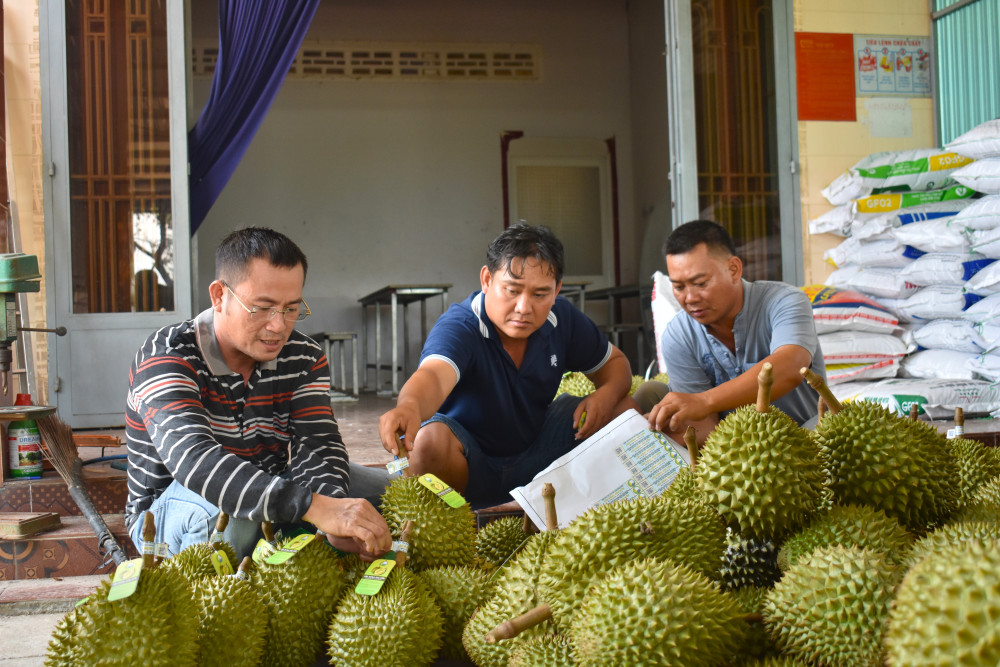
Members of the Bau Don Fruit Cooperative in Truong Mit commune are attaching QR codes to durians for export.
In the coming period, the province will strengthen information dissemination, propaganda, and the transfer of science and technology to the people, especially regarding staggered planting in production, the application of good agricultural practices, and disease prevention and control in crops and livestock; strictly manage and supervise planting area codes and packaging facilities; support the connection between production and consumption to maintain export markets; promote the development of large-scale, concentrated livestock farms applying high technology, and build disease-free breeding facilities and breeding areas; focus on developing aquaculture applying new technologies, circular technologies, and environmentally friendly technologies, aiming to reduce emissions…
It can be affirmed that the application of science and technology to agricultural production is not only an inevitable trend but also a path to help Tay Ninh's agriculture enhance its competitiveness, adapt to climate change, and integrate deeply into the market. However, for science and technology to truly go into depth, relevant agencies need to continue promoting training and improving the skills of farmers; strengthen the linkage between the "four stakeholders" (farmers, businesses, scientists, and the government); and provide appropriate mechanisms to support capital, land, and infrastructure.
Vietnam
Source: https://baolongan.vn/ung-dung-khoa-hoc-cong-nghe-vao-san-xuat-don-bay-nang-cao-gia-tri-nong-san-a208380.html
![[Photo] Two flights successfully landed and took off at Long Thanh Airport.](/_next/image?url=https%3A%2F%2Fvphoto.vietnam.vn%2Fthumb%2F1200x675%2Fvietnam%2Fresource%2FIMAGE%2F2025%2F12%2F15%2F1765808718882_ndo_br_img-8897-resize-5807-jpg.webp&w=3840&q=75)
























































Comment (0)