

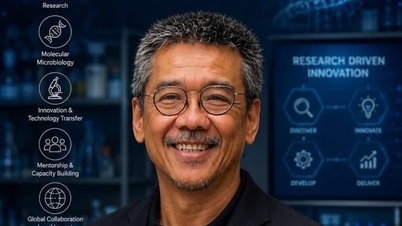
Assoc. Prof. Dr. Pham Van Song - Rector of the Eastern University of Technology ( Dong Nai ): Enhancing research capacity
On June 27, 2025, the National Assembly passed the Law on Science , Technology and Innovation with 435 out of 438 attending delegates voting in favor. This law, comprising 73 articles, will take effect on October 1, 2025, aiming to establish major policies to promote research, technological development, and innovation nationwide.
The Law on Science, Technology and Innovation, which orients universities towards becoming centers of scientific research and innovation, is a strategic step that reshapes the mission of higher education . To successfully achieve this mission, universities need not only to change their strategies and develop specific action plans, but also to receive substantial support from the State.
First, the State needs to invest financially and budgetarily, and reform the financial mechanisms for universities. The nature of scientific research and innovation, especially basic research, does not yield immediate economic results. Therefore, in addition to socialization, there needs to be a strategic commitment to targeted funding for scientific research, especially basic research, which receives little private funding.

Budgetary spending on university research needs to be increased, along with flexible and transparent financial mechanisms to attract talent and nurture research results. In addition, preferential policies are needed in public procurement for products from science and technology organizations.
Next, it is crucial to develop and attract high-quality human resources. The government needs to support the training and development of highly qualified lecturers and researchers, especially those with doctoral degrees. An open mechanism is needed to attract outstanding scientists and professors with appropriate remuneration, while simultaneously building and developing strong research groups.
Policies that encourage individual scientific activity are also necessary. The "liability exemption" policy in the Law is a progressive and highly practical measure, helping scientists to focus on their research. However, this policy needs to be further clarified to create more favorable conditions for scientific research activities at universities.
Research universities need investment in modern infrastructure such as libraries and laboratories that meet international standards. Therefore, universities need investment in upgrading infrastructure and building a professional research environment. This creates a research culture with a spirit of academic freedom, simplifies administrative procedures so that scientists can focus on their expertise.
Universities that want to be strong in research need to innovate their governance and promote multi-faceted cooperation. The government needs to thoroughly reform the governance model, grant strong autonomy to universities, and promote policies that encourage international and interdisciplinary cooperation. Universities need to closely link with businesses so that research becomes a driving force for entrepreneurship and socio-economic development.
Dr. Dang Xuan Ba - Director of the Intelligent Robotics Center, Ho Chi Minh City University of Technology and Education: The motivation for scientists to persevere to the end.

According to the 80/20 principle of scientific research, a product that is 80% complete only takes 20% of the time. To achieve 100% completion, the scientist must spend 80% of the time on the remaining 20%. This shows that scientists need a significant amount of time to perfect a product. Therefore, they need strong motivation to tackle the remaining 20%. So, what motivates scientists to persevere?
In my opinion, there are two things that will help them continue: external and internal stimuli. Externally, scientists need encouraging policies from government agencies.
The Law on Science, Technology and Innovation, with its mechanism allowing scientists to receive 30% of the profits if their research is commercialized, is a clear incentive, creating a strong motivation for scientists to perfect their final products. This internal motivation stems from the inherent qualities of each scientist, a commitment to thoroughly researching the issue. This is considered a characteristic of many researchers; they want to demonstrate that their products are usable and recognized by society.
In reality, in this business model, research and development (R&D) only accounts for a small part of the overall business operations, alongside marketing, sales, promotion, customer service, and paperwork. I believe that R&D should be the responsibility of the university, and the business should handle sales in this collaborative relationship. This model has been successful in many countries, especially China and South Korea, where leading companies have research teams comprised of professors and PhDs from universities.
In addition to research policies, the government needs market support mechanisms to help domestic production. Specifically, supporting industries need more policy support to develop and compete with imported goods. This will help research products become more competitive in terms of cost compared to other products, increasing their commercialization potential.
Dr. Huynh Thien Tai - Deputy Head of the Department of Science, Technology and External Relations, Ho Chi Minh City University of Natural Resources and Environment: Unleashing scientists through a "contractual payment" mechanism.
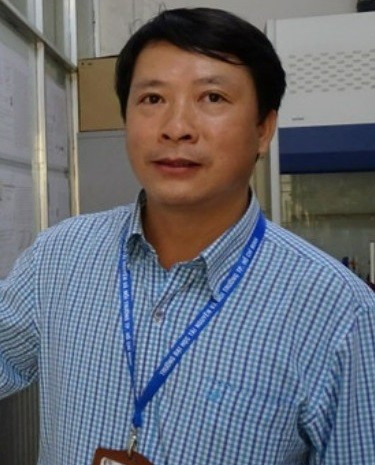
The risk-taking approach in research, as outlined in the Law on Science, Technology and Innovation, is a step forward consistent with the nature of science. In the event of unsuccessful research, scientists can stop without having to compensate for the costs.
More importantly, researchers need to publish unsuccessful results so that the scientific community can avoid repeating the mistake and learn from it. With this mechanism, I believe it will solve the current research problem where scientists have to go to great lengths to get their projects approved according to the initial specifications.
Regarding financial mechanisms, the "lump-sum payment" system will help free up scientists. Currently, research projects funded by the state budget must go through an annual evaluation and acceptance process for each complex topic. Financial and accounting procedures also consume a significant amount of scientists' time.
I have participated in research projects funded by both state and private sources, and I find them suitable for the specifics of science. This is because the disbursement of funds is based on the progress of the work achieved by the scientists. The scientific council evaluates the results of each stage of the project to decide whether to continue funding or stop it.
The fund management agency is only concerned with the final results, allowing scientists autonomy in using funding appropriately for their research purposes. This gives scientists time to focus on their professional work and produce high-quality research results.
Besides investing in strong research groups and leading experts, I believe that regulatory bodies need to focus on supporting young scientists. These are talented individuals who need to be given opportunities and financial support to develop their abilities and strengths. More research funding sources are needed to make them more accessible to young scientists.
Of course, young scientists receiving research funding must also go through rigorous evaluation and assessment processes. Implementing a flexible funding mechanism and accepting risks in scientific research not only encourages creativity but also helps the country quickly catch up with global scientific and technological trends.
Ms. Dang Thi Luan, M.Sc. - Deputy Director in charge of the Center for Creative Entrepreneurship (Ho Chi Minh City Department of Science and Technology): Creating momentum for the startup ecosystem.

The Law on Science, Technology and Innovation is the first to incorporate innovation into law and recognize it as an independent pillar, helping to create a unified and synchronized legal framework. Support policies will be designed more directly and effectively for the national innovation ecosystem.
Thus, activities such as incubation, startup acceleration, venture capital, and policy testing (sandbox) will have a solid legal foundation for effective implementation.
Furthermore, this fundamental shift has had a profound impact on the awareness of society as a whole, from policymakers and scientists to the business community, regarding the importance of linking scientific research with practical applications and market demands.
From a practical perspective in Ho Chi Minh City, which has the most vibrant startup and innovation ecosystem in the country, I believe that when innovation is clearly institutionalized, localities will have more tools, legal frameworks, and resources to proactively implement appropriate support models. More importantly, this opens up opportunities for better connection between components in the ecosystem, from startups, universities, businesses, investors to state management agencies, towards co-creating value.
The Law on Science, Technology and Innovation provides incentives for innovation centers such as priority in land leasing; priority in using research equipment in shared laboratories; support in information and communication; and trade promotion… This is a positive sign that not only helps to improve the support infrastructure but also shortens the policy access gap for startups.
When the center is provided with preferential treatment in terms of land, infrastructure, research equipment, information and communication support, or trade promotion, then the startups themselves are the direct beneficiaries through the services provided by the innovation center. This is especially important in the context of small businesses and startups with limited resources.
"Regarding the 30% remuneration for scientists if their research is successfully transferred and commercialized, I believe this is a significant step forward, valuing the role and efforts of scientists by ensuring they receive the rewards of their contributions."
However, for research to be commercialized, it requires the participation of businesses in a three-party model: scientists, universities, and businesses working together. After research results are obtained with intellectual property rights, scientists can transfer them to businesses, and they benefit from the research results due to copyright recognition.” - Dr. Huynh Thien Tai
Source: https://giaoducthoidai.vn/cuoc-dai-phau-giup-khoa-hoc-cong-nghe-but-pha-post745630.html


![[Image] Nearly 125,000 Hanoi students completed the Literature exam for the 10th grade entrance exam.](https://vphoto.vietnam.vn/thumb/1200x675/vietnam/resource/IMAGE/2026/05/30/1780117233041_ndo_br_thiet-ke-chua-co-ten-2-png.webp)










![[Video] 2 candidates violate exam regulations on the first day of the 10th grade entrance exam in Hanoi.](https://vphoto.vietnam.vn/thumb/402x226/vietnam/resource/IMAGE/2026/05/30/1780156540244_dung01-11-24-36099still011-png.webp)























































































Comment (0)