

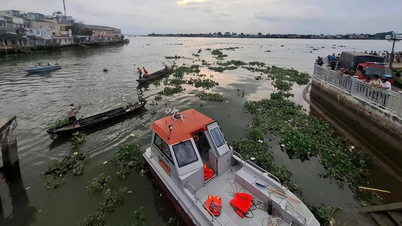
According to statistics from the Ministry of Education and Training, approximately 1,800 children drown in Vietnam each year. The drowning mortality rate among Vietnamese children and students is among the highest in Southeast Asia, about eight times higher than in developed countries. Worryingly, drowning doesn't only happen to those who don't know how to swim.
Risks in aquatic environments can occur even to those who know how to swim.
Aquatic environments always present dangerous situations that are beyond the ability of many people to handle, even those who have been swimming for years.
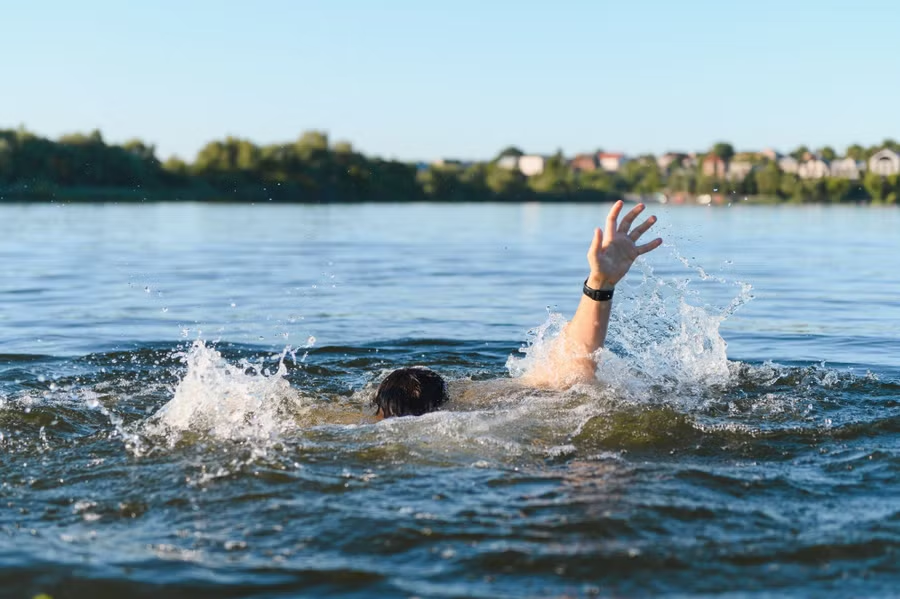
One of the most common dangers is rip currents at sea. According to experts, these currents can reach speeds of 4–5 km/hour, even faster than the swimming ability of many professional athletes. When swept away, the natural human reflex is to try to swim back to shore. But the more one struggles against the current, the faster the body becomes exhausted, leading to panic and increasing the risk of drowning.
Or consider muscle cramps while swimming – a seemingly simple situation, yet it's the cause of many tragic accidents. The sudden pain causes swimmers to lose control of their bodies, stop breathing, and quickly panic if they aren't equipped with the right skills to handle it.
UNICEF has warned that the majority of drownings happen very quickly and very "silently." Victims often lack the ability to call for help or struggle as vigorously as depicted in movies. In just a few dozen seconds, a healthy person can sink if they lose control of their breathing and mental composure.
And that's why more and more experts are saying that "knowing how to swim" and "being safe in the water" are two completely different concepts.
The difference between "Knowing how to swim" and "Survival swimming"
According to water safety experts, "knowing how to swim" primarily refers to the ability to perform movements in a stable water environment such as a swimming pool. Meanwhile, "water safety" is a much more comprehensive set of skills, including: hazard identification, breathing control, treading water, survival buoyancy when exhausted, panic management, and safe escape techniques.
Water Safety USA defines these competencies as “water competency,” which is the ability to anticipate, avoid, and escape common drowning situations. This includes not only swimming skills, but also understanding the aquatic environment, identifying hazards, and knowing how to respond appropriately.
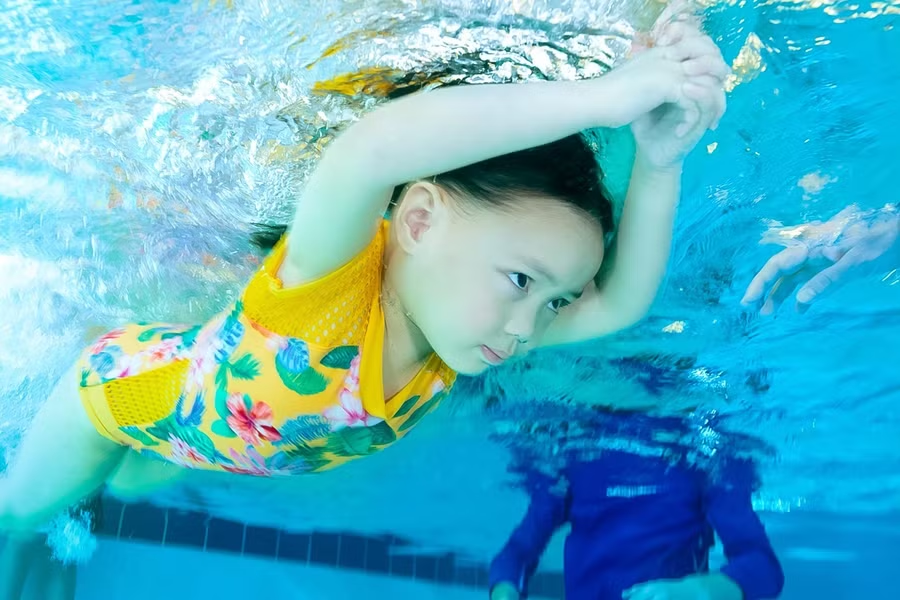
Survival swimming is therefore increasingly considered an essential life skill. Unlike other forms of competitive swimming, survival swimming focuses on adaptability, energy conservation, and survival in real-world aquatic environments.
An international study by a group of American university professors on 373 university students also showed a huge gap between being able to "swim" and being able to "survive." While 76% of participants could swim continuously for over 300m, only about 40% could stay afloat for 15 minutes, and more than a third could not stay afloat for more than 2 minutes.
National swimmer Nguyen Thi Anh Vien once shared: "When faced with a dangerous situation, swimmers without the necessary skills will lose their composure, and the more panicked they become, the faster they will drown, and the more likely they are to die. Skills for staying safe in water are also essential life skills, so don't just focus on teaching swimming."
In this context, formal swimming lessons from an early age are gradually becoming an urgent requirement. Recently, the Prime Minister also requested that swimming be promoted as an official subject in schools, as part of a strategy to enhance life skills and prevent drowning among children.
Why should you invest in survival swimming early on?
According to studies in the US, learning survival swimming can reduce the risk of drowning by up to 88% in children aged 1–4 years – the age group at highest risk.
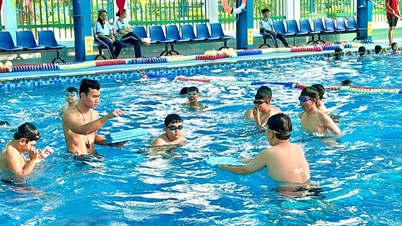
The biggest difference in survival swimming lies in its training objectives. While many traditional swimming classes focus on teaching children basic strokes like breaststroke and freestyle, survival swimming aims to teach children how to protect themselves in dangerous situations underwater. Children not only learn arm and leg movements but also develop: the ability to float safely, control their breathing, react when unexpectedly falling into the water, self-rescue skills, staying calm, and identifying dangers in real-world environments.
Many physical education experts believe that survival swimming skills, like language or movement, cannot be sustainably developed after just a short course. It's a process of accumulation through long-term practice. This is also why many modern parents are interested in choosing survival swimming programs like Aqua-Tots.
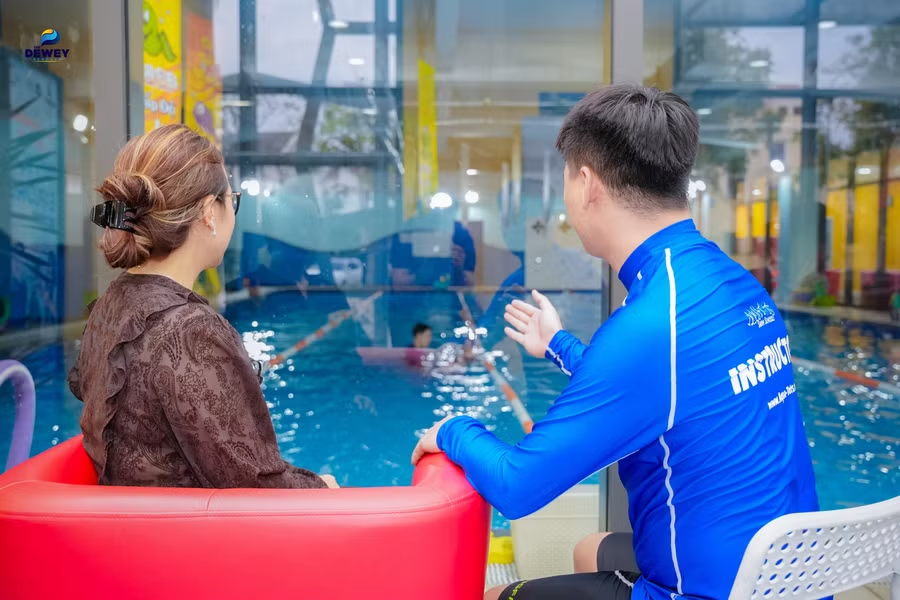
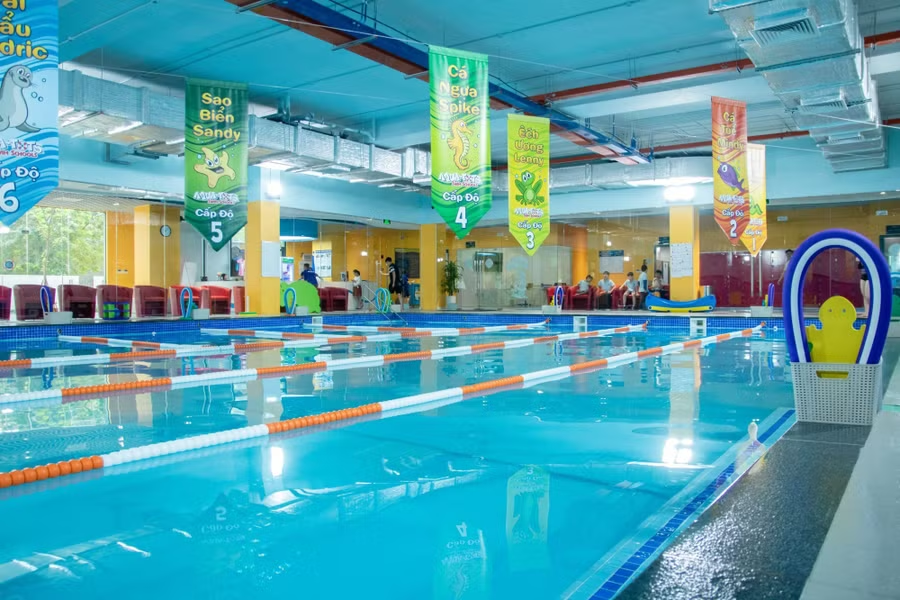
Aqua-Tots is a US-standard swimming program that ASC Education (a member of the Edufit Education Group) has partnered with and transferred directly from Aqua-Tots Swim Schools – one of the top 10 leading children's swimming franchise brands in the United States. The program is structured into 8 levels, specifically designed for children aged 4 months to 12 years, helping them develop swimming skills and underwater reflexes at their own natural pace.
The instructors at ASC – Aqua-Tots are carefully selected and trained to meet US certification standards. With class sizes following the "golden ratio" of 1:1, 1:2, or 1:4, instructors closely monitor each student, helping children make significant progress after each lesson. Parents can also easily track their child's skills and development through the Aqua card after each session.
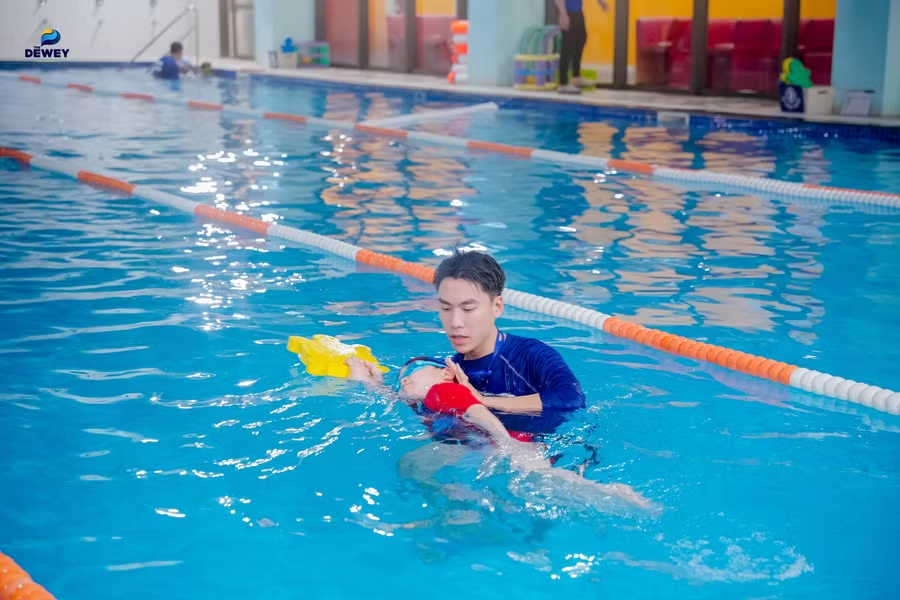
In particular, the year-round swimming pool system maintains an ideal temperature of 30–33°C along with modern water filtration technology, providing a safe and friendly learning environment even for young children and those with sensitive skin.
Currently, ASC Education directly operates four Aqua-Tots swimming schools in Vietnam, located in Hanoi and Hai Phong.
🔸 Aqua-Tots Tay Ho: Lot H3-LC, Tay Ho Tay Urban Area, Xuan Dinh Ward, Hanoi
Hotline: 024 7100 0001
🔸 Aqua-Tots Cau Giay: 89 Khuc Thua Du Street, Cau Giay Ward, Hanoi
Hotline: 024 7100 0002
🔸 Aqua-Tots Gia Lam: PT-01, Ocean Park Urban Area, Gia Lam, Hanoi
Hotline: 024 7100 0005
🔸 Aqua-Tots Hai Phong: Street 11, Sao Do Urban Area, Anh Dung 2, Hung Dao Ward, Hai Phong
Hotline: 0225 710 8889
Source: https://giaoducthoidai.vn/biet-boi-van-co-the-bi-duoi-nuoc-post779724.html
![[Image] Nearly 125,000 Hanoi students completed the Literature exam for the 10th grade entrance exam.](https://vphoto.vietnam.vn/thumb/1200x675/vietnam/resource/IMAGE/2026/05/30/1780117233041_ndo_br_thiet-ke-chua-co-ten-2-png.webp)























































































Comment (0)