


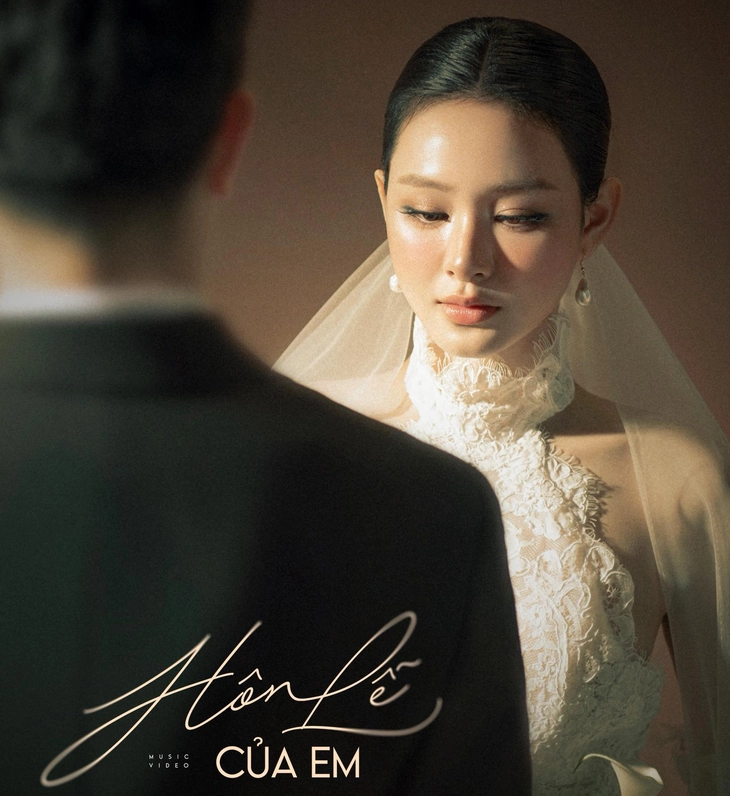
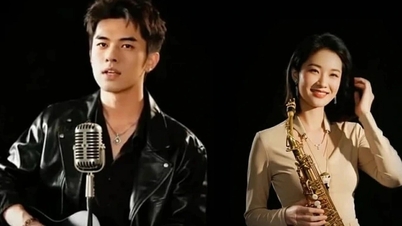
AI singer Xiao Mei creates a sensation with "My Wedding" - Screenshot
Many other songs performed by artificial intelligence (AI) have also been heard frequently recently, such as: "Okay," "I Didn't Know How to Love You," "Wild Grass and Gardenia," "Difficult to Keep Sincerity," "Should We Break Up," "Winter Beginning," "It's Still Raining," etc.
Perhaps never before has AI-generated music been as prominent in the music market as it is today. Even real singers' covers are sometimes judged to be "inferior to AI," and many AI-generated songs have topped digital music charts, directly competing with live-action singers.
"It will soon become a major trend."
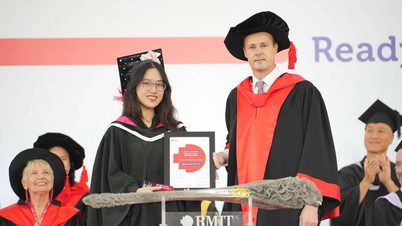
Associate Professor Nguyen Van Thang Long - Deputy Head of the Professional Communication Department, RMIT University Vietnam - said, "The recent phenomenon of Vietnamese singers covering AI-generated music is like an early-stage market test and will soon become a major trend in Vietnam for many reasons."
Whether we like it or not, AI music has been developing in Vietnam, with an increasing number of songs and increasingly higher quality.
This phenomenon has occurred in many Asian countries.
According to People's Daily Online, last year the Chinese market recorded a historic milestone with 56.9% of new independent songs being supported by AI. Luminate notes that both Tencent Music and NetEase have deployed intelligent songwriting tools.
Many new singers are starting to create cover versions or acquire the rights to AI-generated music for official release.
"This shows that this technology is no longer an experimental tool but has become the backbone of the music industry's production process," Long said.
On the other hand, many creative cultural industries have begun restructuring according to a hybrid strategy: Machines handle technical tasks or data analysis, suggesting initial product ideas, while humans customize them according to emotional orientation and cultural depth.
He added that covering songs from this source also offers several advantages: less dependence on musicians/music producers/arrangers – which are relatively expensive and time-consuming to produce.
This is another extremely clever market validation model, already implemented in many countries. Instead of musicians finding singers or vice versa, creating arrangements, and then only knowing if a song has the potential to succeed, this algorithm proves that when a melody goes viral, it actually has real appeal.
When singers cover songs, it's a way of reproducing emotions, infusing human soul into a song that has already been accepted by the market.
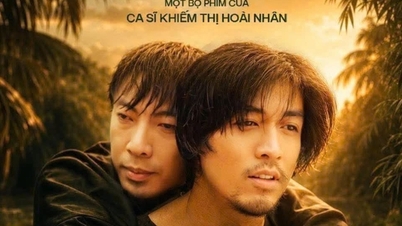
The song "50 Years Later" is performed by AI.
Tung Duong's cover of "50 Years Later" - a Chinese song with Vietnamese lyrics, performed by AI, has been a sensation recently.
However, in a context where music is easily mass-produced, and the advantage no longer lies in technique or quantity but in human depth, will this trend quickly fade away?
Speaking to Tuoi Tre newspaper , Mr. Long said he "doesn't think this trend will die out quickly, but it will be a catalyst to accelerate the polarization of the music market."
According to him, history shows that whenever technology lowers technical barriers, the market is immediately filled with mass-produced commodity music, making the value of superficial creations cheaper than ever.
This is a real risk, especially for utility segments like background music, library music, or advertising music, where AI has penetrated deeply due to its speed and cost advantages. However, in the segment related to artist identity, AI is still not a competitor.
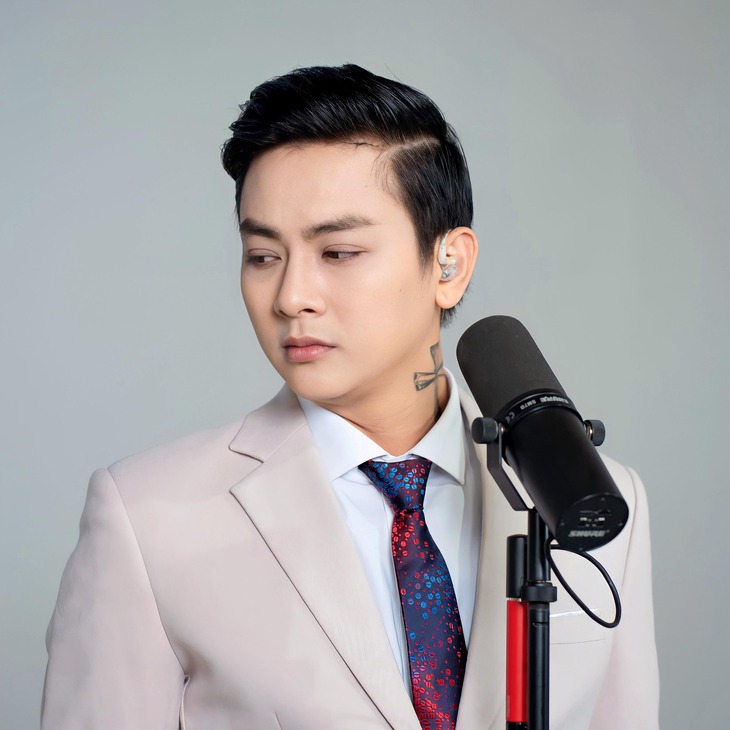
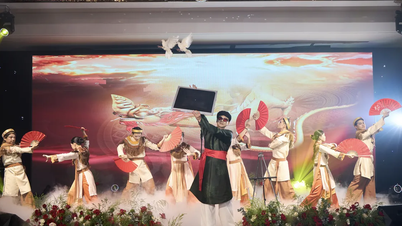
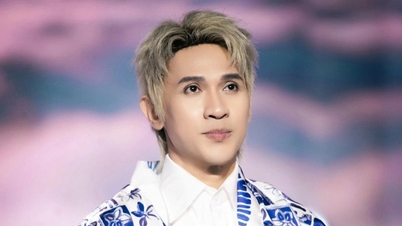
Hien Ho covers "My Wedding" - Photo: FBNV
As AI develops, the demand for unique or unreplicable things increases. This is the inevitable consequence of scarcity.
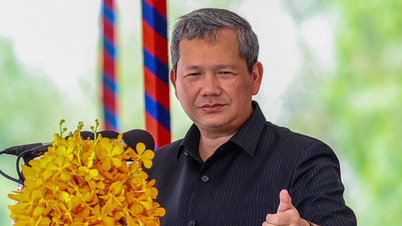
Mr. Long cited Vietnam as an example, a nascent digital music market but closely connected to fan communities and social media, where the appeal of an artist like Tung Duong comes not only from the melody but also from his life journey and unique musical personality – something that algorithms cannot recreate or imitate.
He commented that "the trend of artists covering AI-generated music is likely to remain merely a strategy to change content tastes rather than becoming a mainstream creative trend."
According to him, it will not disappear, but it also cannot enter the center of the music industry unless the legal framework for copyright is clarified.



Singers Anh Tú, Hoài Lâm, Hoàng Hải, and Quốc Thiên all covered songs performed by AI - Photo: FBNV
This has led to many new disputes.
From a legal perspective, lawyer Hoang Ha (Ho Chi Minh City Bar Association) believes that the wave of singers covering AI-generated music could lead to many new disputes because the product now includes not only the original song, but also recordings, performances created by AI, and in many cases even voices mimicking real artists.
Disputes can easily arise regarding who to ask for permission from, who to pay, who holds the rights to the AI-generated product, and whether or not there is infringement of voice, digital identity, or misleading the public about the artists involved.

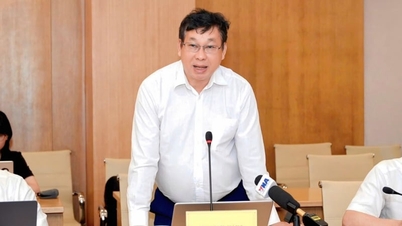
Lawyer Hoang Ha - Photo: FBNV

Assoc. Prof. Dr. Nguyen Van Thang Long - Photo: FBNV
Mr. Ha told Tuoi Tre newspaper : "The biggest legal gap is that Vietnamese law does not yet have very specific regulations to determine the threshold of human creative contribution in AI-assisted musical works, and has not clearly defined the boundary between style, vocals, and specific recordings."
At the same time, "there are also no sufficiently detailed rules on labeling and transparency for AI music. Therefore, this is an area where disputes will increase faster than the pace of legal development."
He added that while the law already has a framework to address some aspects, there is still no sufficiently specific set of rules for the "AI cover singers/AI singers" issue. He predicted that disputes will not be lacking in the future, but the most difficult thing will remain identifying the correct subject of rights, the correct owner of those rights, and the correct legal basis for claiming those rights.
 Lawyer HOANG HA
We need AI music management.
The rapid development of AI poses significant challenges and fundamental transformations to the music industry in particular, and the entire cultural and creative industry in general.
And the emergence of a fair, healthy, and sustainable market for AI generation will only succeed within a credible legal framework that empowers creators and protects their intellectual property rights.
To keep the law up to par with the evolving landscape of music, lawyer Hoang Ha believes that specialized guidelines for AI music are needed soon to clearly distinguish between works with AI assistance, recordings created by AI, voices mimicking real people, and the obligation to label them.
In addition, it is necessary to ensure transparency of input data and tighten the consent principle when using artists' identifiable voices, as this is not only a matter of intellectual property but also personal data.
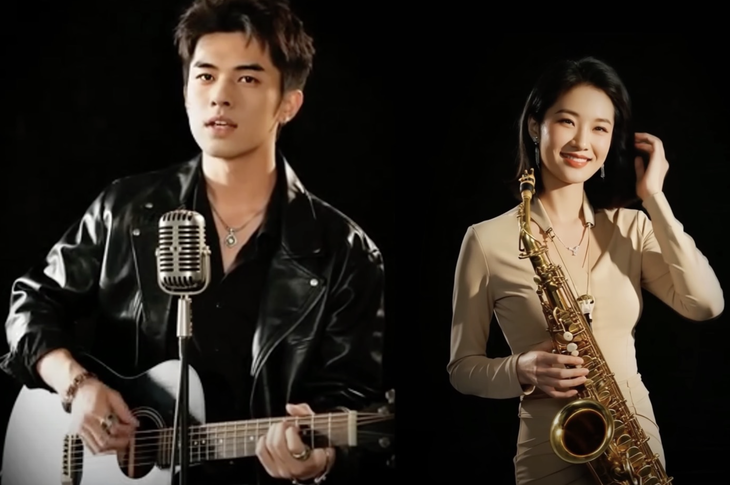
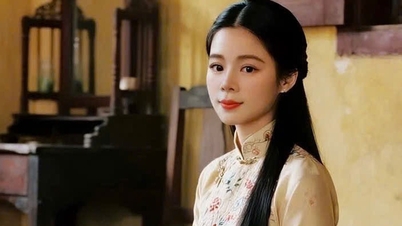
Saying "I'll love you for a lifetime" is performed by AI - Screenshot
Furthermore, it is necessary to clarify the criteria for human creativity to determine who is truly the author when AI is involved; build a feasible licensing and benefit-sharing mechanism to ensure the market functions effectively. Finally, raise the standards for digital evidence so that in case of disputes, the creative process and data source can be proven. This means that the law must address the bottlenecks of the market instead of just applying general principles.
According to Associate Professor Dr. Nguyen Van Thang Long, this trend forces the Vietnamese music industry to question its core values. Excessive dependence on technology is not only a technical issue but also a matter of professional ethics and the survival of individual creativity.
If artists increasingly follow this trend, the market will be flooded with fast-paced, consumer-oriented music that is easily forgotten after just one listen. "This kind of music inflation inadvertently eliminates the uniqueness of artists with their individual works," he observed.
Mr. Long said, "If left unregulated, this trend could inadvertently legitimize technology as a legitimate source of creativity, gradually eroding the role of genuine musicians and composers."
"Living a peaceful life is enough" is the theme song "Enough," performed by AI and going viral on social media.
Suno and Udio AI are making a significant impact on the global music industry, primarily through automated music creation tools that allow anyone to create complete tracks in seconds, without the need for musicians, singers, or studios. The French streaming platform Deezer has released a series of noteworthy reports. While in January 2025 there were 10,000 AI-generated songs per day on their platform, by the end of the year, that number had risen to 50,000 per day. By the beginning of this year, that number had reached 60,000 per day and continues to increase (accounting for nearly 40% of daily uploads).
According to a crowdfunding presentation obtained by Billboard, Suno – currently the largest AI music platform – is generating approximately 7 million songs per day. Forbes reports that Suno – the controversial AI-powered music creation software – has surpassed 2 million paid subscribers and over 100 million people have used it to create music, despite growing opposition in the industry.
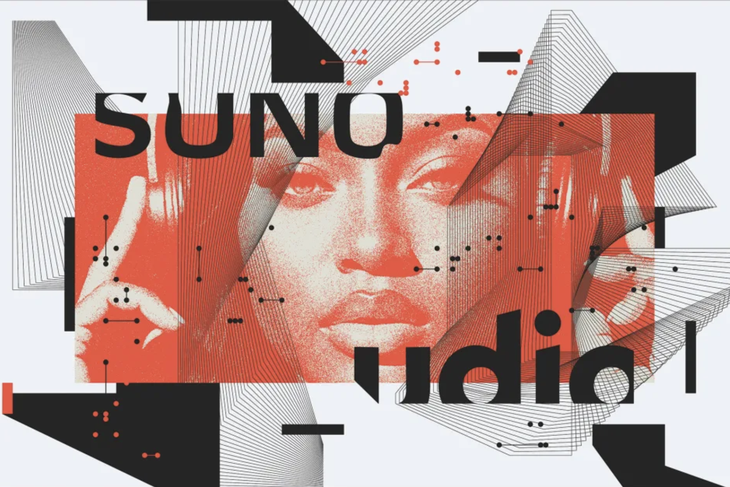
Suno and Udio – two AI-generated music companies that are currently trending in the market – Photo: Israel Vargas/Billboard
According to reputable reports, this market is transforming from a pilot phase to widespread application, currently valued at hundreds of millions of dollars and projected to increase many times over in the next 5-10 years.
Business Research Company predicts the market for AI-generated music is expected to grow from $0.44 billion in 2025 to $0.57 billion in 2026 and reach $1.34 billion in 2030. North America will be the largest region in this market by 2025. Asia-Pacific is expected to be the fastest-growing region in the following period.
In its February monitoring report titled "Reshaping Policies for Creativity," UNESCO warned that AI generation is expected to cause significant income losses for artists by 2028, threatening the livelihoods of millions of cultural workers.
Without new investment, fairer market conditions, and stronger international cooperation, innovators risk being further marginalized as technology advances.
UNESCO calls on governments to prioritize cultural policy as a strategic priority to protect the livelihoods of artists, while ensuring that creativity continues to drive social cohesion, economic opportunity, and cultural diversity in a rapidly changing world.
Source: https://tuoitre.vn/cuoc-dua-voi-nhac-ai-20260413085104289.htm










































































Comment (0)