

Iran continues to send strong messages following US forces' attack on missile sites in southern Iran, amid intensified diplomatic efforts by mediators such as Pakistan and Qatar to reach an agreement to end the conflict between the US and Iran.
According to the Vietnam News Agency correspondent in the Middle East, Iranian Supreme Leader Mojtaba Khamenei declared on May 26 that the Gulf states would no longer be a "safety shield" for US military bases in the Middle East.
In a message posted on the Telegram messaging app, Mojtaba Khamenei stated that US military forces and facilities in the region would face greater security risks if tensions escalated.
Meanwhile, senior Iranian Armed Forces spokesman Abolfazl Shekarchi declared that any new military action against Tehran would be met with a “much harsher” response.
The Fars news agency quoted Shekarchi as warning that if conflict resumes, Iranian attacks will be on a larger scale and extend beyond the region.
According to Iran's IRNA news agency, in a message to the people on May 25, the Secretary of the Supreme National Security Council (SNSC), Mohammad Baqer Zolqadr, affirmed that the country will not surrender and will not back down.
According to him, Iran's resilience and ability to respond are demonstrated on both the military and diplomatic fronts, as well as through popular support. Furthermore, the official emphasized the need for Iranian people to maintain unity, and stressed that upholding consensus and solidarity within society is more important than ever at this time.
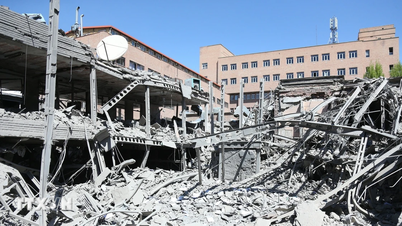
Senior Iranian officials issued this message just hours after U.S. forces launched airstrikes on missile sites in southern Iran and attacked ships suspected of deploying mines in the Strait of Hormuz.
These new developments raise concerns that the already fragile ceasefire agreement from April 8th is at risk of collapsing. The US military move comes as senior Iranian negotiators are in Doha, Qatar, for discussions with Qatari officials and to prepare for indirect talks with the US through Pakistani mediation.
While diplomatic efforts are underway, Iran has outlined five conditions for building trust with the US before reaching an agreement. In an interview on PressTV, broadcast on May 26th, Ebrahim Azizi, Chairman of the National Security and Foreign Policy Committee of the Iranian Parliament , stated that the measures the US needs to take include: ending military actions on all fronts, especially in Lebanon, with a commitment that conflict will not recur; lifting the naval blockade; accepting mechanisms proposed by Iran regarding the Strait of Hormuz; suspending oil sanctions; and releasing frozen Iranian assets.
According to Mr. Azizi, if the above conditions are met, the two sides could enter into a 30-60 day negotiation process to continue detailed discussions on sanctions and outstanding issues.
Meanwhile, Ebrahim Rezaei, spokesman for the National Security and Foreign Policy Committee of the Iranian Parliament, argued that Iranian diplomats need to “negotiate from the perspective of the victors” in indirect negotiations with the US. On social media platform X, Rezaei asserted that “the ultimate winner of the war will still be the Iranian people,” while warning that concessions would only exacerbate the situation.
In recent weeks, the two sides are believed to have exchanged a number of proposed plans outlining the conditions for achieving peace through Pakistani mediation. However, both Iran and the US have signaled caution, acknowledging that a breakthrough will not be easy in the short term.
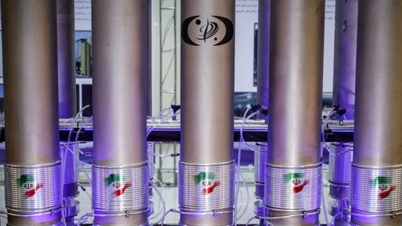
Regarding the handling of Iran's enriched uranium stockpile, one of the key points of contention in current negotiations between the US and Iran, the semi-official Tasnim news agency stated on May 25 that Iran has not agreed to transfer enriched uranium abroad, while also refuting earlier reports by Saudi Arabia's Al Hadath television channel suggesting Tehran was ready to remove its highly enriched uranium from its territory.
Tasnim stated that its verification results showed that the information regarding the content of a potential memorandum of understanding (MoU) between Tehran and Washington was "inaccurate."
The news agency also stated that some of the information published by Saudi Arabian media regarding the peace talks between Iran and the US was intended to manipulate public opinion.
According to Tasnim, the current draft MoU does not contain any provisions mentioning Iran's willingness to transfer nuclear materials abroad, nor has Tehran made any specific commitments regarding the nuclear issue in this document.
Earlier, in an interview with Iran's state-run broadcaster IRIB on May 23, Iranian Foreign Ministry spokesman Esmaeil Baghaei said that Tehran and Washington were working to finalize a 14-point Memorandum of Understanding (MoU) aimed at ending the conflict.
According to Mr. Baghaei, both sides hope to reach a final agreement within 30-60 days. The main contents of the MoU include the lifting of the US blockade on Iranian seaports and the release of frozen Iranian assets.
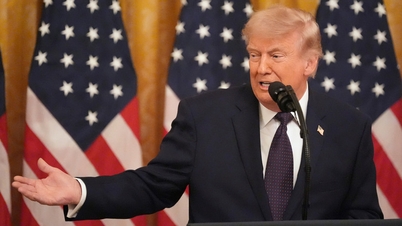
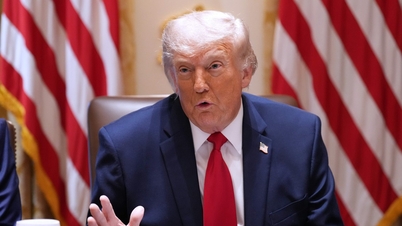
On the US side, President Donald Trump on May 25 outlined options for handling Iran's enriched uranium stockpiles should the two countries sign a peace agreement currently being negotiated with Tehran.
According to the Vietnam News Agency correspondent in Washington, sharing on the social media platform Truth Social, President Trump stated: “Iran’s enriched uranium will be immediately handed over to the United States for destruction, or the preferred option is to be destroyed on-site (or at another acceptable location) with the cooperation and consent of the Islamic Republic of Iran, under the supervision of the Atomic Energy Commission (or equivalent agency) for the entire process.”
For a long time, the United States has maintained the position that Iran must dismantle its nuclear program and relinquish its enriched uranium stockpile. Meanwhile, Iran firmly asserts its ownership of its enriched uranium and rejects US demands to abandon or hand over this nuclear material.
Source: https://www.vietnamplus.vn/dai-giao-chu-iran-dua-ra-thong-diep-cung-ran-post1112714.vnp

![[Photo] Ba Lang An Lighthouse - the "eye of the sea" amidst the "rock museum" of Quang Ngai province.](https://vphoto.vietnam.vn/thumb/1200x675/vietnam/resource/IMAGE/2026/05/29/1780038698840_anh-man-hinh-2026-05-29-luc-14-10-42.png)
![[Image] Pleasant weather helps students enter the 10th grade entrance exam with confidence.](https://vphoto.vietnam.vn/thumb/1200x675/vietnam/resource/IMAGE/2026/05/29/1780034401612_ngay-1-thi-lop-10-minh-duy-8-5009-jpg.webp)









































































Comment (0)