

(NLĐO) - The extraordinary abilities of a still-mysterious life form promise to help humanity in the fight to save Earth's environment.
A research team led by microbiologist Pok Man Leung from Monash University (Australia) discovered that archaea – Earth's third life form – generate energy in a unique way that was previously believed to be impossible.
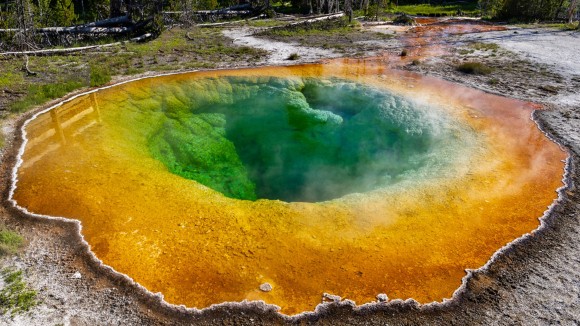
Archaea were once found in boiling water environments in Yellowstone National Park, USA - Photo: NATURE
Archaea are called the third form of life because they are a distinct lineage of organisms that evolved along a completely different path from the other two forms of life: bacteria and eukaryotes.
Eukaryotic organisms are those organisms that possess complete cells with a nucleus, including animals and plants on Earth. Of course, we are also eukaryotic organisms.
Meanwhile, archaea are single-celled organisms lacking internal membrane connective tissue.
Most archaea are known only through genetic code found in the harsh environments in which they exist; many species have not been cultured in laboratories because it is very difficult to do so.
Dr. Leung and his colleagues discovered at least nine archaea that produce hydrogen gas using enzymes previously thought to exist only in the other two life forms.
This hydrogen is their lifeblood, enabling many species of archaea to survive in the "dead zones" of Earth, places completely unsuitable for other forms of life.
Archaea were once found in harsh environments such as hot springs, dark underground caves, volcanoes, and deep-sea geysers.
"Humans have only recently begun to think about using hydrogen as an energy source, but archaic bacteria have been doing it for billions of years," said Dr. Leung.
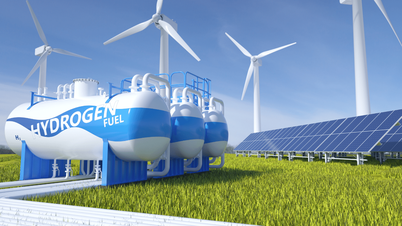
The new discovery, presented in a paper published in the journal Cell, offers a suggestion for modern biotechnologists: We could use these unusual archaea to produce industrial hydrogen that is completely "green".
Furthermore, this new discovery also helps scientists better understand the relationships between life forms on early Earth, through the types of enzymes they all possessed; as well as the similarities and differences in the use of those enzymes after billions of years of evolution.
Source: https://nld.com.vn/dang-song-thu-3-cua-trai-dat-dang-tao-ra-nang-luong-196240614091503992.htm


![[Photo] Prime Minister Pham Minh Chinh presides over a meeting on private sector economic development.](/_next/image?url=https%3A%2F%2Fvphoto.vietnam.vn%2Fthumb%2F1200x675%2Fvietnam%2Fresource%2FIMAGE%2F2025%2F12%2F20%2F1766237501876_thiet-ke-chua-co-ten-40-png.webp&w=3840&q=75)












































































Comment (0)