


 |
| The landscape of Thai Nguyen's tea-growing region, with its vast stretches of green, embodies the depth of local culture and stories, making it a captivating destination for tourists. |
Potential for expansion from historical and natural spaces.
Following the merger, Thai Nguyen entered a new phase of development with a significantly expanded tourism space. The adjustment of administrative boundaries facilitated the connection of complementary tourism resources, forming a relatively comprehensive tourism landscape, rare in the northern midland and mountainous region.
According to Dr. Le Quang Dang from the Vietnam Institute of Culture, Arts, Sports and Tourism, Thai Nguyen currently possesses four outstanding strengths: ecotourism linked to natural resources, cultural and historical revolutionary tourism, rural tourism, and community tourism associated with ethnic minorities. These advantages enhance the ability to connect different types of tourism within a single itinerary, providing a rich experience for visitors.
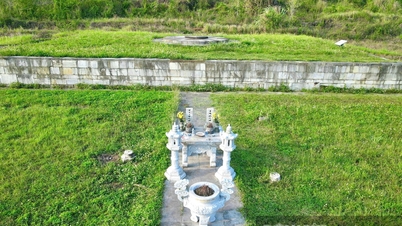
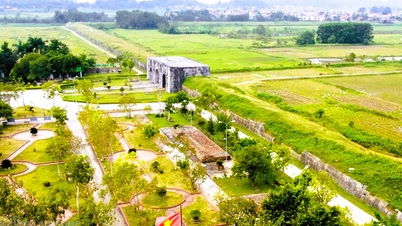
First and foremost is its historical and revolutionary tourism space. Thai Nguyen has long been known as the cradle of the Vietnamese revolution, a place where many safe zones and relics associated with the activities of the Central Party Committee, the Government, and President Ho Chi Minh during the resistance war against French colonialism are concentrated.
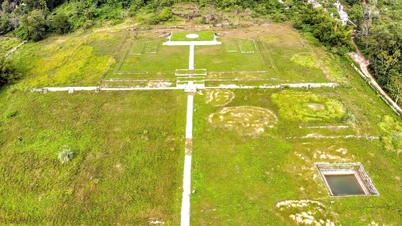
As the development space expands, this system of historical sites becomes more seamlessly connected, forming a historical spatial axis from the Định Hóa Revolutionary Base Area, Chợ Đồn to Tân Trào. This connecting axis facilitates the development of heritage tourism routes and traditional education programs linked to practical experiences, instead of just focusing on individual visits.
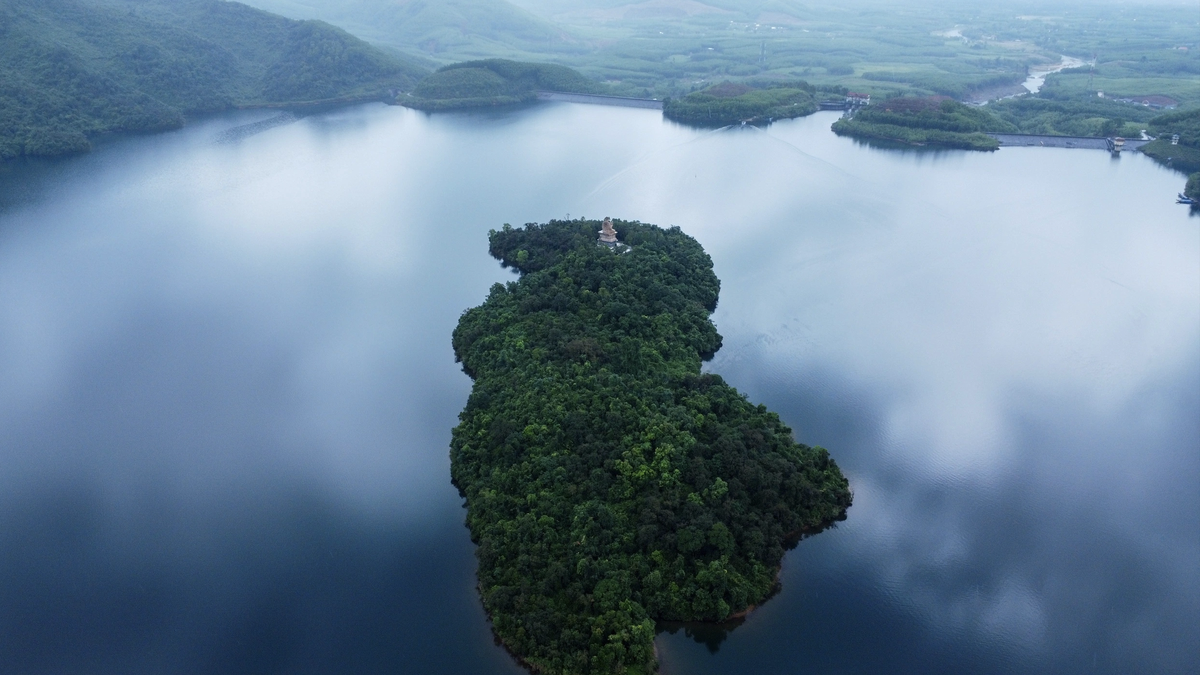
Along with history, nature is a crucial pillar in Thai Nguyen's tourism landscape. Possessing Ba Be National Park, large lakes such as Ba Be, Nui Coc, and Ghenh Che, and the eastern Tam Dao ecological zone, the province boasts a rich natural foundation. These spaces are ideal for developing ecotourism, resort tourism, exploration, and experiential tourism, catering to the growing trend of green tourism and wellness tourism.
 |
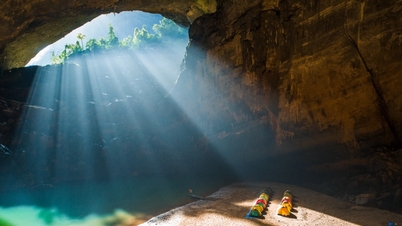
| The eastern slopes of Tam Dao have a pleasant climate and beautiful natural landscapes with many waterfalls, attracting young tourists to experience and explore. |
The depth of local culture continues to be a lasting advantage. Thai Nguyen currently boasts thousands of historical and cultural relics and scenic spots, including many special national relics and dozens of recognized intangible cultural heritage sites. This is an important resource for developing specialized, distinctive tourism products, from folk art performance spaces and traditional festivals to community-based tourism linked to the cultural life of ethnic minority groups.
Within that overall picture, community-based tourism and rural tourism are gradually asserting their role as distinctive highlights. The Thai Hai ethnic stilt house eco-village model, recognized by the World Tourism Organization as one of the best tourist villages in the world, demonstrates the right direction in linking cultural preservation with sustainable tourism development.
Agricultural tourism, linked to tea cultivation—a distinctive cultural symbol of Thai Nguyen—continues to be a strength as many cooperatives have proactively combined production with experiential activities, contributing to enhancing the value chain of agriculture and improving livelihoods for the people.
It's impossible to overlook the advantages of its geographical location and regional connectivity. The short travel distance from Hanoi, coupled with a gradually improving transportation network, makes Thai Nguyen a convenient destination for both weekend getaways and longer trips. This is a crucial condition for expanding the tourist market and attracting strategic investors, as there is still significant room for development.
From these factors, it can be seen that Thai Nguyen possesses a relatively comprehensive tourism foundation. The question is no longer whether it has potential or not, but rather how to organize the development space, select key products, and exploit those advantages in a sustainable and effective way.
These movements enhance the value of the destination.
In recent years, Thai Nguyen's tourism sector has witnessed significant, fundamental, and long-term developments. Driven by the need to improve growth quality and the trend of shifting investment flows, tourism is gradually being integrated into the overall socio-economic development of the province.
One of the significant changes is the dramatic improvement in transportation infrastructure. Roads connecting Thai Nguyen with Hanoi and other provinces in the northern midland and mountainous regions have been invested in and upgraded, significantly shortening travel time and facilitating access to tourist areas and attractions. Transportation infrastructure has become a "lever," helping to more effectively utilize the existing natural, historical, and cultural values.
Alongside infrastructure development, there has been an increase in investment projects in high-quality tourism products. The establishment of golf courses in the province, such as Tan Thai, Glory, and An Binh; and the inauguration and operation of the largest stadium in the northern midland and mountainous region, Thai Nguyen Stadium, demonstrate a strategic approach targeting high-spending tourists, linking tourism with sports, relaxation, and high-end services.
Along with that, a system of hotels and facilities meeting standards is gradually being established, contributing to resolving the bottleneck in high-quality accommodation. This is an important prerequisite for Thai Nguyen to develop conference, seminar, and event tourism, a sector capable of generating stable revenue and spreading to many other service industries.
Notably, the Flamingo Ho Nui Coc resort complex is considered a landmark project. Spanning over 60 hectares amidst pristine natural landscapes of lakes, forests, and mountains, the project comprises 108 luxurious detached villas in a "Walless Resort" style, seamlessly integrated into the natural environment. Flamingo Ho Nui Coc maximizes the beauty of the waterfront and offers world-class resort amenities, creating a private and relaxing living experience for guests. It is expected to become a 6-star international standard resort destination and contribute to elevating tourism in Thai Nguyen province. The project has multifaceted impacts, from increasing tourist numbers to expanding employment, developing supporting services, and attracting secondary investment projects, thereby enhancing the province's tourism status.
Tourism promotion and marketing efforts have also undergone many innovations. Thai Nguyen is gradually shifting from traditional methods to a more professional approach, focusing on linking with businesses, applying digital technology, and integrating promotion with cultural and sporting events. Festivals such as "Thai Nguyen - The Fragrance and Beauty of Famous Tea," Long Tong Festival, and Bach Thong Orange and Tangerine Festival contribute to honoring the cultural values and local agricultural products, while also becoming distinctive tourism products, spreading tourism to rural and mountainous areas.
These synchronized efforts have yielded positive results. In 2025, Thai Nguyen welcomed over 7.3 million tourists, generating revenue of nearly 7,447 billion VND, exceeding the set target. These figures reflect a clear recovery and growth, and demonstrate the initial effectiveness of the implemented strategies and solutions.
Towards a green, safe, and attractive destination.
In the context of the whole country accelerating the restructuring of the economy towards increasing the proportion of services, tourism is identified as a sector with high spillover effects. For Thai Nguyen, promoting tourism development has been a top priority for the provincial leadership.
 |
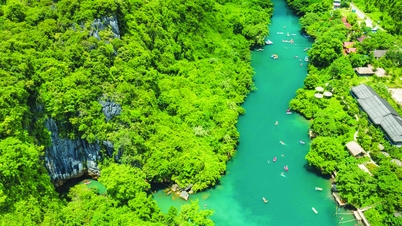
| Ba Be Lake, likened to a green gem nestled amidst the mountains and forests, has become a top choice for tourists visiting Thai Nguyen. |
In late October 2025, a delegation from the province visited Lao Cai province, including surveying several typical tourist destinations in Sa Pa ward. Based on Sa Pa's success, the province hopes to learn from its experience in planning, management, attracting investment, and promoting its image, aiming to make tourism a key economic sector.
According to leaders of Thai Nguyen province, the locality is orienting the development of a tourism route connecting the eastern slopes of the Tam Dao mountain range with the Ho Nui Coc National Tourist Area, forming a unique chain of ecological, spiritual, and resort tourism. The province is calling for strategic investors to research and build a cable car system in this area, opening up new development opportunities for tourism.
At the dialogue conference with various sectors, classes, and members of political and social organizations, Chairman of the Provincial People's Committee Vuong Quoc Tuan emphasized: Tourism is a sector with great potential and advantages for development in Thai Nguyen. The province will invite and select large investors and strategic investors to invest in the Nui Coc Lake and Ba Be Lake tourist areas.
The determination to pave the way for long-term breakthroughs has been concretized by Thai Nguyen province through its Tourism Development Plan for the period 2026-2030. The province's goal is to develop tourism in a sustainable, innovative, and competitive manner, closely linked to resource conservation, preserving cultural identity, and improving the lives of the people. The overarching principle is to prioritize quality, extending the length of stay, and increasing value, rather than simply pursuing quantity.
The highlight of the Project is the "Two key areas, one driving axis, one foundation" model. The two key areas are the Nui Coc Lake Tourist Area and the Ba Be Lake Tourist Area, spaces with outstanding ecological advantages and potential for developing resort tourism, entertainment, sports, and event organization. The driving axis is the system of cultural and historical heritage and human values of Thai Nguyen, creating depth for tourism products, contributing to the formation of a unique identity and avoiding duplication with other destinations in the region. The foundation is the development of community-based tourism and agricultural tourism, ensuring the participation and benefit of local people.
Looking at it from a deeper perspective, tourism development is not simply about projects or numbers, but about awakening the hidden values in each region and community. On the eve of the new year, Thai Nguyen's tourism sector is facing a crucial turning point. With a solid foundation, long-term strategic decisions, and the support of businesses and the people, the tourism industry is ready to break through, becoming a new growth engine and contributing to spreading the image of a green, safe, and culturally rich Thai Nguyen.
Thai Nguyen aims to welcome at least 12 million tourists by 2030 (including 11 million domestic and 1 million international tourists); achieve total revenue from tourism activities exceeding 25,000 billion VND per year; and create jobs for approximately 10,000 workers. The province also plans to develop at least 300 additional tourist accommodation establishments, including at least 5 4-5 star hotels.
Source: https://baothainguyen.vn/xa-hoi/202602/danh-thuc-mien-xanh-xu-tra-8c81c8a/

![[Photo] General Secretary To Lam attends the opening session of the Peace Council on Gaza.](https://vphoto.vietnam.vn/thumb/1200x675/vietnam/resource/IMAGE/2026/02/19/1771516865192_tbttolam5-jpg.webp)

















































Comment (0)