

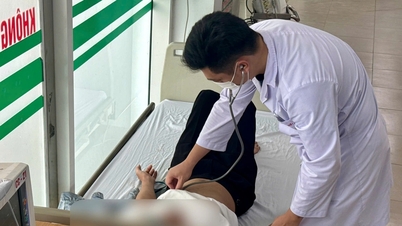
According to US News , Jim Liu, a cardiologist at the Wexner Medical Center at Ohio State University, says strenuous exercise can increase the risk of certain heart diseases.
Heart rate is too high.
Heart rate is an important indicator of health. Kisha Carr, a fitness trainer in California, advises against letting your heart rate exceed your maximum heart rate during exercise.

Your heart rate should not exceed your maximum heart rate during exercise.
The formula for calculating your maximum heart rate relatively accurately is to subtract your current age from 220. For example, if you are 40 years old, your maximum heart rate would be 220 - 40 = 180 beats per minute.
Therefore, if you're not doing high-intensity exercises but still feel a sudden increase in heart rate or irregular heartbeat, you should definitely stop exercising and rest.
Chest pain
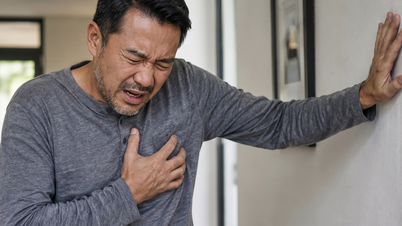
According to Martha Gulati, a professor of medicine at the University of Arizona (USA), chest pain is one of the abnormal symptoms.
If you experience chest pain or tightness, especially if accompanied by nausea, dizziness, shortness of breath, or excessive sweating while exercising, stop and get a medical checkup.
Additionally, overtraining can often lead to muscle soreness. If you have trouble sleeping or are struggling to keep up with previous workouts, take a break and consult your doctor.
Short of breath
Gulati stated that feeling out of breath or experiencing discomfort while performing exercises that you previously found easy is a sign that you should stop exercising.
If shortness of breath after exercise persists and worsens, you should consult a doctor.
Dizzy
Not eating or drinking enough before exercising is one of the causes of dizziness during workouts. However, if you have stopped to eat and still experience dizziness along with symptoms such as profuse sweating, loss of consciousness, and even fainting, you need urgent medical attention.
These symptoms can be caused by dehydration, diabetes, high blood pressure, heart disease, and nervous system problems.
Leg cramps
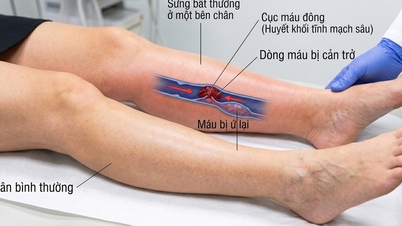
Leg cramps during exercise can be a sign of blockage in a major artery in the leg.
There are many causes of leg cramps, but common ones include low potassium levels, dehydration, or electrolyte imbalance.
Dr. Mark Conroy, an emergency physician at Ohio State University's Wexner Medical Center, recommends massaging and cooling the cramped area by wrapping it with a cold towel or applying an ice pack.
Excessive sweating
Sweating helps cool the body. Excessive sweating can also be a sign of an abnormality in the body.
If you sweat excessively, beyond what is normal and not due to hot weather, you should stop exercising, rest, and get a health checkup.
Source link
![[Photo] First session of the 14th Congress of the Vietnam Trade Union](https://vphoto.vietnam.vn/thumb/1200x675/vietnam/resource/IMAGE/2026/06/03/1780465947883_ndo_br_img-3852-jpg.webp)

![[Photo] Secretary of the National Assembly Party Committee, Chairman of the National Assembly presides over the meeting of the Standing Committee and Executive Committee of the National Assembly Party Committee.](https://vphoto.vietnam.vn/thumb/1200x675/vietnam/resource/IMAGE/2026/06/03/1780480353201_ndo_br_bnd-2585-jpg.webp)

![[Photo] General Secretary and President To Lam presides over a meeting with the Central Organizing Committee.](https://vphoto.vietnam.vn/thumb/1200x675/vietnam/resource/IMAGE/2026/06/03/1780482764658_a1-bnd-4741-3342-jpg.webp)

















































![[Video] Sunset at Lap An Lagoon – Where the sun sets over the fishing nets](https://vphoto.vietnam.vn/thumb/1200x675/vietnam/resource/IMAGE/2026/05/31/1780192137701_beach-landscape-sea-water-nature-grass-745871-pxhere-com.jpeg)






































Comment (0)