

 |
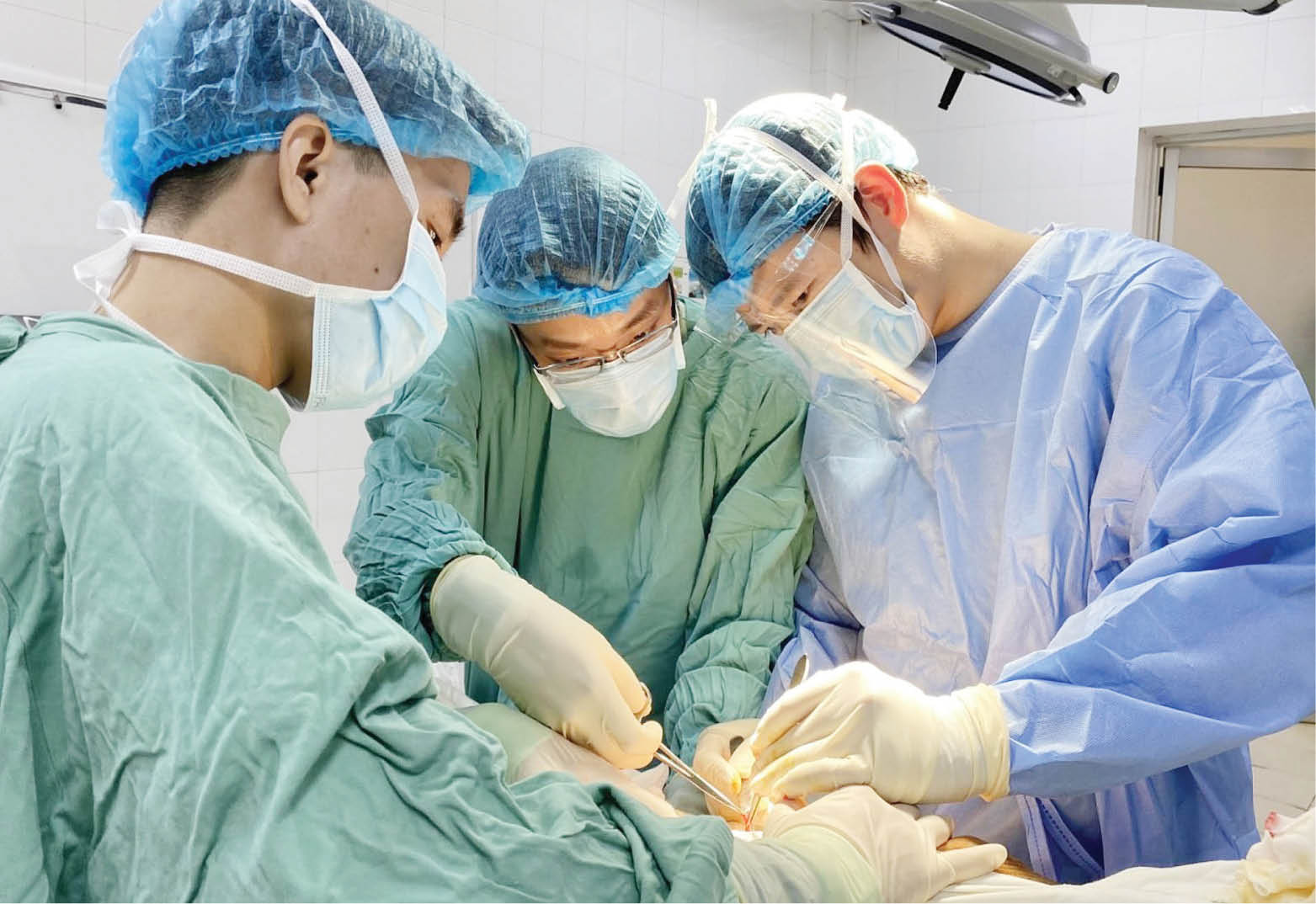
| Dr. Nguyen Thai Bao (right) during surgery on a patient. |
Pressure from new development requirements
Following the implementation of the two-tiered local government model, Hue City currently has 24,851 personnel, including 2,973 civil servants and 21,878 public employees. The process of reorganizing the administrative apparatus aims not only for a more streamlined and efficient structure but also requires improving the quality of human resources in the public sector.
At the commune and ward level alone, there are 1,808 civil servants and 17,191 public employees. Notably, 99% of commune-level civil servants have university degrees or higher; approximately 30% have been transferred or rotated from the provincial and district levels to strengthen resources at the grassroots level.
However, the pressure on civil servants and public employees is increasing. After the merger of administrative units, many localities have a larger management scale and a greater workload, while some officials have to take on multiple responsibilities.
In the context of digital transformation, civil servants not only need administrative expertise but also the ability to apply technology and adapt to new management models. Many fields such as information technology, data management, construction, finance, and healthcare are still lacking highly qualified personnel. According to the Department of Science and Technology, Hue City currently has over 15,000 science and technology personnel, of which only over 500 work in the field of information technology.
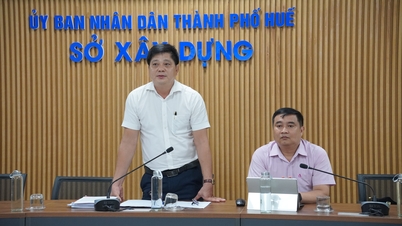
According to Mr. Tran Minh Long, Deputy Director in charge of the Department of Internal Affairs, the CQĐP2C model is placing new demands on the team of civil servants and public employees; especially digital skills and the ability to adapt to the modern management environment.
"High-quality human resources are no longer a need specific to individual sectors, but have become a decisive factor in the operational capacity of a modern government apparatus. Without sufficiently open mechanisms, a good environment, and clear development opportunities, it is very difficult to retain talented people," Mr. Long shared.
This reality is also acknowledged in Resolution No. 06-NQ/TU dated April 1, 2026, of the Fifth Conference of the Executive Committee of the Hue City Party Committee, 17th term, on the development of high-quality human resources for the period 2026-2030: The quality of the city's human resources still has certain limitations; there is a shortage of human resources in new fields such as digital transformation, high technology, and cultural industries; and the link between training and employment is not yet truly strong.
Creating breakthroughs in attracting and developing talent.
In response to new development demands, Resolution No. 06-NQ/TU identifies the development of high-quality human resources as a key task, linked to the requirements of building a digital government, smart cities, and improving the quality of public administration. To concretize this orientation, the city is drafting a resolution on policies to attract high-quality human resources with many new mechanisms and policies. According to the draft, the city prioritizes attracting human resources in four strategic areas: culture and tourism, healthcare, education and training, and science and technology. Notably, in addition to traditional recruitment methods, the city is expanding mechanisms for hiring experts, outsourcing work, and paying salaries based on performance and actual output.
According to the draft, leading experts and scientists could receive an estimated monthly income of 150 million VND, along with accommodation support during their initial period of employment in Hue. For personnel recruited to work in the public sector, the city plans to provide a competitive one-time support payment depending on their qualifications and expertise. Specifically, general practitioners will receive 200 million VND; masters, resident doctors, and specialists (level I) will receive 300 million VND; doctoral degree holders and specialists (level II) will receive 500 million VND; and professors will receive up to 700 million VND.
Beyond just financial policies, the city also aims to create an environment where talented individuals can develop their abilities through mechanisms that encourage scientific research, innovation, and foster long-term commitment.
According to the objectives set out in Resolution No. 06-NQ/TU, by 2030, Hue City strives to train and attract 1,500 master's and doctoral degree holders to work in the public sector; ensuring that 100% of officials and civil servants at all levels receive training and professional development to meet the standards for job titles, positions, and competency frameworks as prescribed.
In practice, many highly qualified personnel have chosen to return to Hue to work and contribute. One typical example is Dr. Nguyen Thai Bao. After many years of studying and researching in Japan, he returned to Hue to work at the University of Medicine and Pharmacy and is currently the Head of the Department of Joint Surgery and Sports Medicine, and concurrently the Deputy Director of the Center for Orthopedic Trauma and Plastic Surgery, Hue Central Hospital.
During his research in Japan, Dr. Nguyen Thai Bao actively participated in complex surgeries and gained access to many modern techniques to accumulate professional experience before returning to Vietnam to work. “Determined to return to Vietnam to contribute after completing my doctoral studies, during my time studying and researching in Japan, I always chose topics that were relevant to the practical needs in Vietnam,” shared Dr. Nguyen Thai Bao.
Investing in high-quality human resources is therefore not only aimed at meeting the operational requirements of the current system but also at creating a foundation for the sustainable development of Hue city in the process of building a digital government and a smart city.
Source: https://huengaynay.vn/chinh-polit-xa-hoi/dau-tu-nguon-nhan-luc-chat-luong-cao-166141.html

![[Image] Pleasant weather helps students enter the 10th grade entrance exam with confidence.](https://vphoto.vietnam.vn/thumb/1200x675/vietnam/resource/IMAGE/2026/05/29/1780034401612_ngay-1-thi-lop-10-minh-duy-8-5009-jpg.webp)

![[Photo] Ba Lang An Lighthouse - the "eye of the sea" amidst the "rock museum" of Quang Ngai province.](https://vphoto.vietnam.vn/thumb/1200x675/vietnam/resource/IMAGE/2026/05/29/1780038698840_anh-man-hinh-2026-05-29-luc-14-10-42.png)









































































Comment (0)