During the National Assembly's discussion on the draft Law on Road Traffic Order and Safety on the afternoon of November 24th, amidst debates with many delegates suggesting reconsideration of an absolute ban on alcohol consumption while driving, delegate Pham Van Thinh (from Bac Giang province) argued that an absolute ban should be implemented as proposed in the draft law.
Mr. Thinh cited four reasons. He argued that the harm caused by drivers under the influence of alcohol is significant. "According to official data, in traffic accidents of a serious nature or higher, over 50% involved drivers who had alcohol in their blood or breath," Mr. Thinh stated.
He also argued that legal regulations should be clear, making them easy for people to comply with, and allowing them to independently assess and verify whether or not a violation has occurred.
From that perspective, the representative concluded that between the options of setting a threshold or prohibiting alcohol consumption, the prohibition option would be clearer, making it easier for citizens to comply and allowing them to assess whether they are violating the rule. This is also a requirement for the development of any legal regulation.
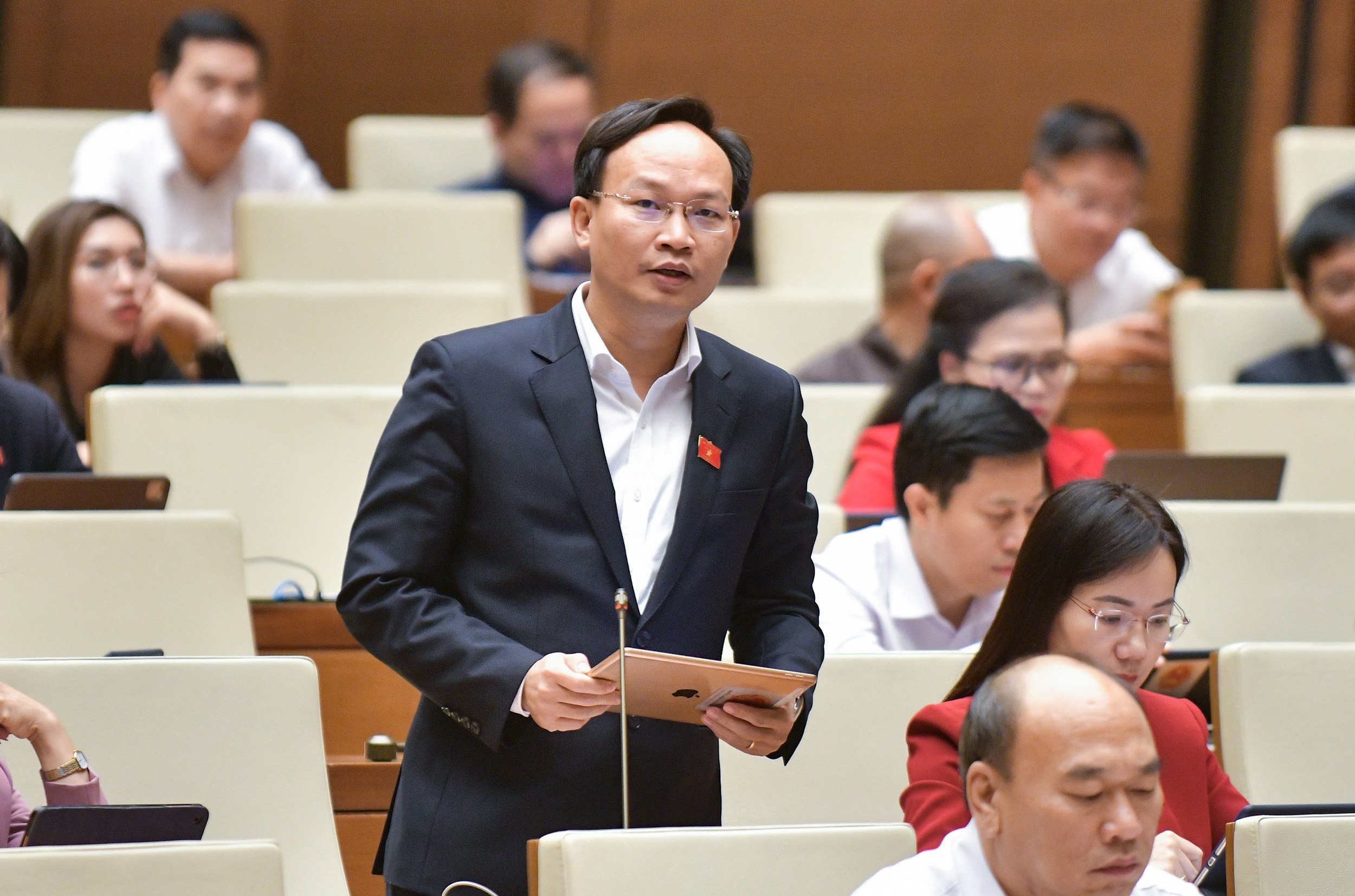
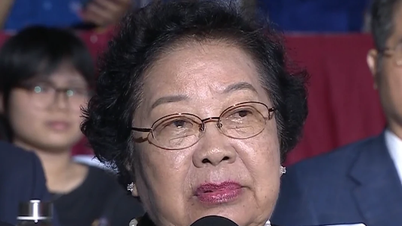
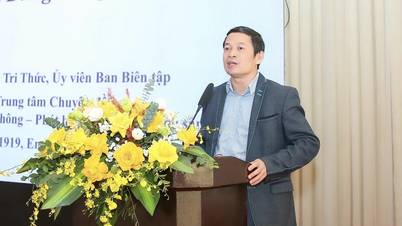
Delegate Pham Van Thinh, from Bac Giang province (Photo: Quochoi.vn).
Conversely, Mr. Thinh argued that allowing alcohol consumption below a certain threshold would create an environment that encourages violations.

"From a behavioral psychology perspective, if you've already had one drink, the likelihood of drinking more is higher than if you had definitely avoided alcohol from the start. Secondly, because the drinker themselves doesn't know if they've reached the threshold, and the alcohol concentration changes over time from the moment of consumption, setting a threshold for alcohol concentration inadvertently encourages violations by drivers," Mr. Thinh analyzed.
Offering another reason, the representative argued that the level of compliance with the law in general, and traffic safety laws in particular, in our society is still not high. Therefore, a ban would be more appropriate given the current level of social awareness.
"The regulations in the draft are not new; they were passed by the 14th National Assembly in the Law on Prevention and Control of Harmful Effects of Alcohol, effective from January 1, 2020. In reality, they have only been strongly implemented from 2022 to the present and are yielding very good results in curbing traffic accidents, so changing them at this time is unreasonable," Mr. Thinh stated.
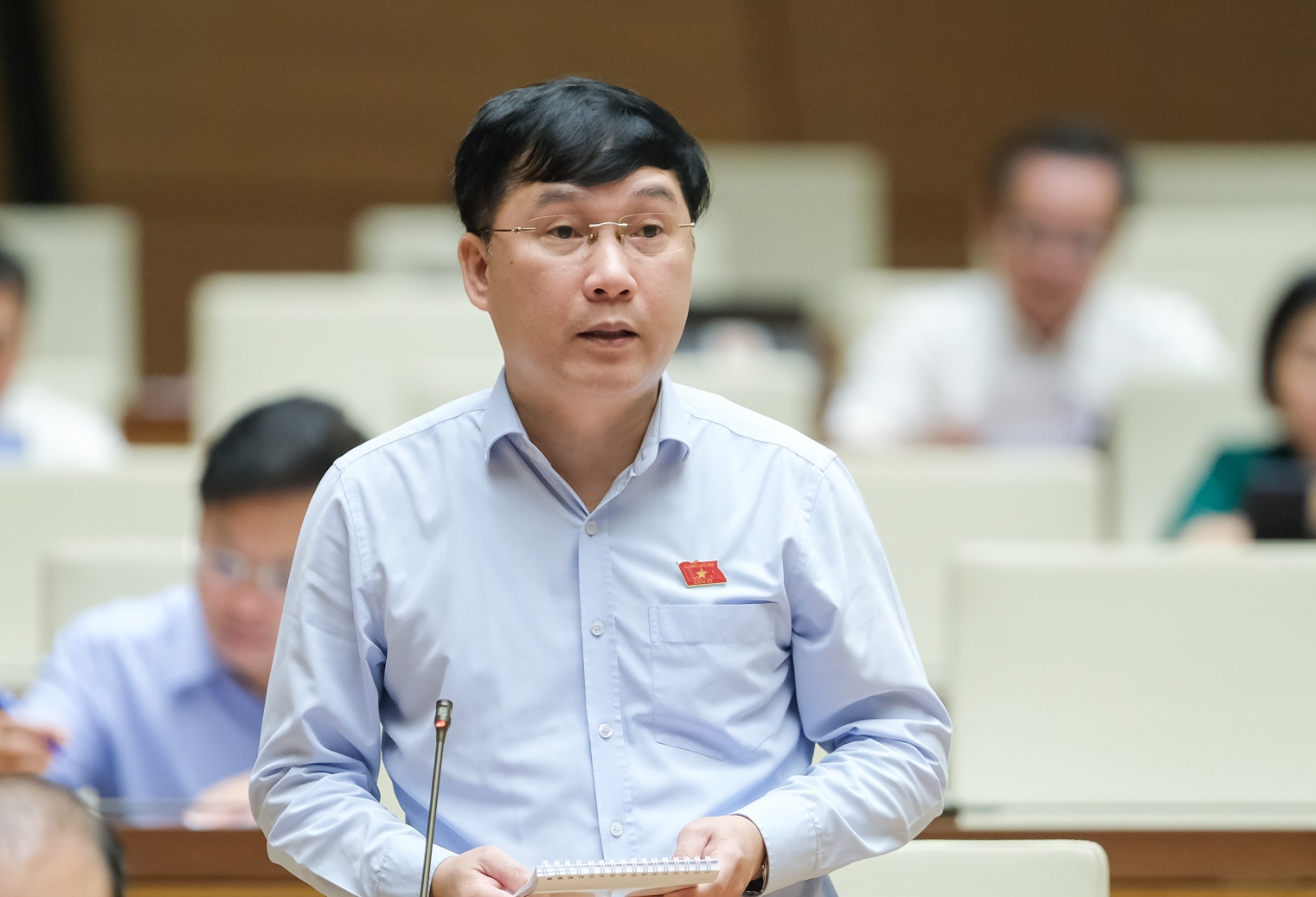
Delegate Le Hoang Anh, Gia Lai delegation (Photo: Quochoi.vn).
Raising his placard to participate in the debate, delegate Le Hoang Anh (Gia Lai delegation) argued that the National Assembly's decisions on issues should be based on scientific evidence and the conclusions of competent authorities, not on emotions.
According to the delegate, regarding the draft law, the Government has affirmed that it will study and provide a scientific basis for this issue. "That is to say, at this time, there is no scientific basis," Mr. Hoang Anh said.
The delegate stated that he had reviewed the draft Law on Prevention and Control of the Harmful Effects of Alcohol and Beer, but there was no document from a competent authority confirming scientific evidence for this claim.



He argued that the ban should not affect behaviors that embody the cultural values of humanity.
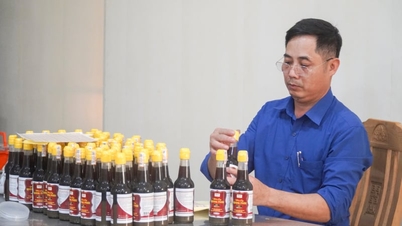
The representative from Gia Lai also suggested that the ban should not affect or restrict professions that the State is encouraging, such as traditional medicine. "For example, using 5-10 ml of medicinal wine to treat illnesses could immediately be considered a violation," Mr. Hoang Anh stated.
Therefore, the delegates suggested that for the National Assembly and its members to make a decision, there needs to be scientific evidence on this issue. "I propose that the Government direct the Ministry of Health and the Ministry of Science and Technology to provide an official response to the National Assembly, outlining the scientific basis and evidence for the absolute ban as proposed in the draft," Mr. Hoang Anh said .
Source

![[Image] Overview of the construction site for the underground station of metro line 5 at the Hanoi Ring Road 1 intersection.](https://vphoto.vietnam.vn/thumb/1200x675/vietnam/resource/IMAGE/2026/07/03/1783065595682_ndo_br_z7974930852369-100ca093c306e72675f1d3700966a86b-jpg.webp)