

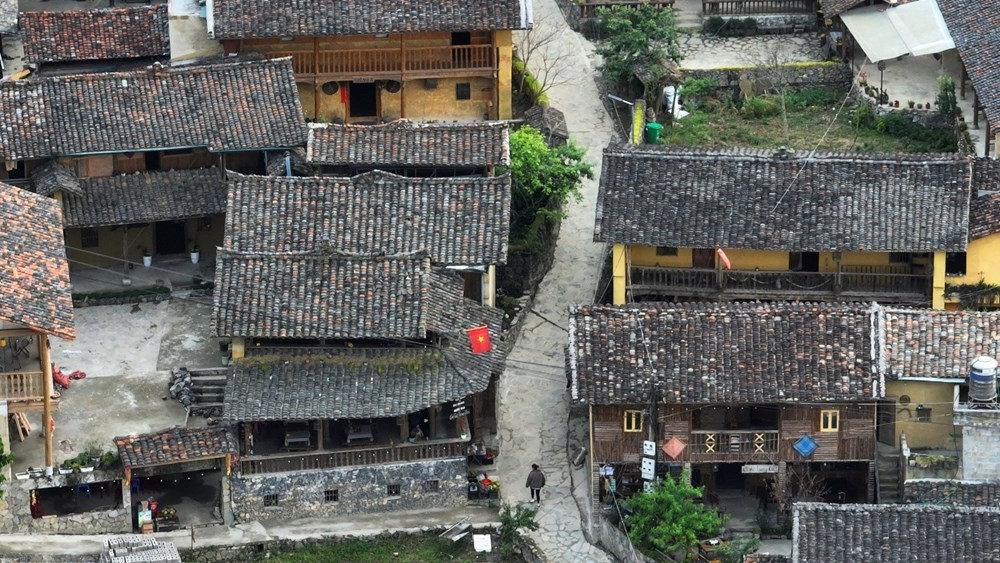
Lo Lo Chai has just been recognized as the "Best Tourist Village in the World ".
Lo Lo Chai - a fairytale village nestled in the far north.
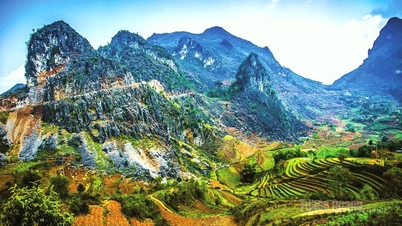
Recognized as the "World's Best Tourist Village" by the United Nations Tourism Organization (UN Tourism) on October 17, 2025, Lo Lo Chai village (Tuyen Quang province) is nestled at the foot of Dragon Mountain, just a few steps from the Lung Cu flagpole.
Here, visitors feel as if time slows down, and each step they take on this land feels like being transported into a fairytale world.
For generations, the Lolo people have lived in harmony with nature. They cultivate rice on the mountain slopes, weave brocade from linen, and craft musical instruments from copper and bamboo. Every detail in their village tells a story of resilience and national pride.
But perhaps what makes Lo Lo Chai most special are its ancient rammed earth houses, a type of architecture found only in a few places around the world. The thick walls are built entirely from rammed earth. The curved, yin-yang tiled roofs not only create a graceful silhouette amidst the majestic mountain scenery but also embody a philosophy of living in harmony with nature.
In Lo Lo Chai, over 90% of the residents are Black Lo Lo people, one of the smallest ethnic groups in Vietnam, yet possessing a very unique culture. Overcoming the difficulties of life in the highlands, the people here have preserved their traditional identity through meticulously hand-embroidered brocade costumes, religious rituals steeped in spiritual values, folk songs, and dances that depict life intertwined with nature and community.
Since 2016, Lo Lo Chai has become known for its community-based tourism model. To serve tourists, more than 50 homestays have been built, all retaining the original rammed-earth house architecture, skillfully preserving each tiled roof, stone pillar, and ancient garden.
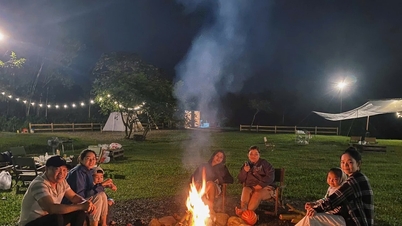
In Lo Lo Chai, visitors can stay with host families, learn to cook, sew, and create handicrafts, immerse themselves in festivals, and wear traditional costumes to dance around a campfire.
Community-based tourism here is developing slowly but steadily, without diminishing the local identity, and allowing visitors to appreciate the cultural heritage that has been preserved and celebrated over time.
Quynh Son - A village of the Tay people
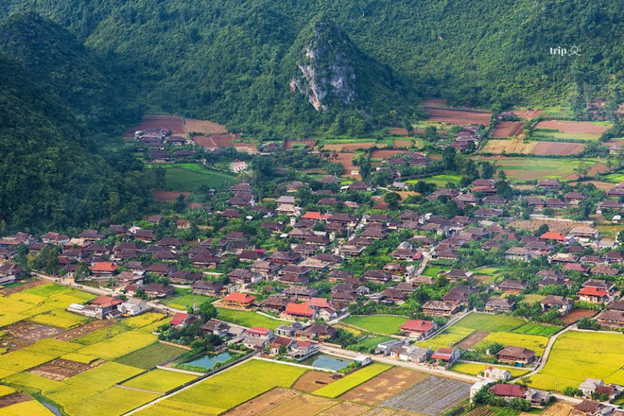
Quynh Son community tourism village is as beautiful as a painting.
Quynh Son Community Tourism Village in Lang Son province was also recognized as the "Best Tourism Village in the World" on October 17, 2025, surpassing more than 270 applications from 65 countries.
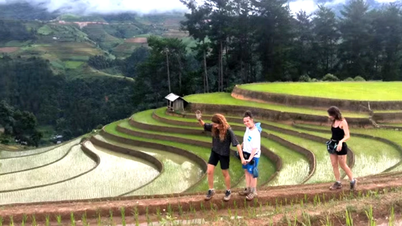
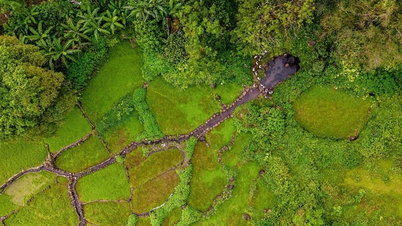
The Tay village nestles against the rolling mountains, nestled in the vast Bac Son valley, a picturesque scene painted by the green of the rice paddies, the brown of the tiled roofs, and the hazy white of the evening smoke.
Located within the Bac Son Uprising National Special Historical Site and part of the UNESCO Lang Son Global Geopark, Quynh Son village is not only a tourist village but also a heritage site, preserving enduring and vibrant values.
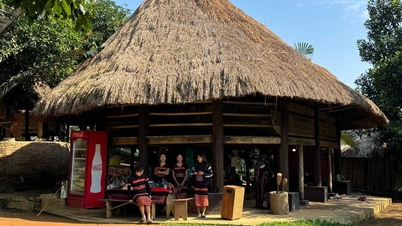
Here, the Tay people still maintain their traditional way of life with stilt houses made of ironwood, indigo clothing, the sound of the zither, and the captivating melodies of the then folk songs that enchant visitors from afar.
In Quynh Son, tourists can spend the night in ancient stilt houses, "play the role" of locals weaving cloth, farming, cooking five-colored sticky rice, or immerse themselves in the lively atmosphere of harvest festivals and rice planting festivals.
Quynh Son is not noisy, but it always captivates hearts with its genuine beauty and deep human warmth. Each resident here becomes a "cultural ambassador" of their village, telling the story of their homeland with their own voice and friendly smile.
Tra Que - a green vegetable village in the heart of Hoi An
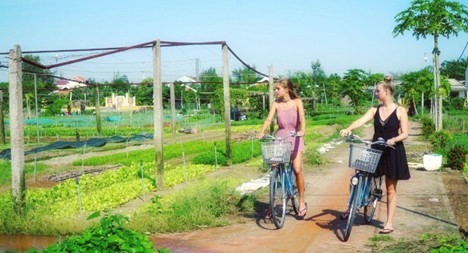
Tourists experience the local culture at Tra Que vegetable village.
The Tra Que vegetable farming village, established in the 16th century, is located 3km northeast of Hoi An ancient town. With its unique characteristics as a river island near the sea, surrounded by the Co Co River and Tra Que Lagoon, the area enjoys a mild climate and fertile soil, creating favorable conditions for the locals to innovate and develop their long-standing organic vegetable farming practices.
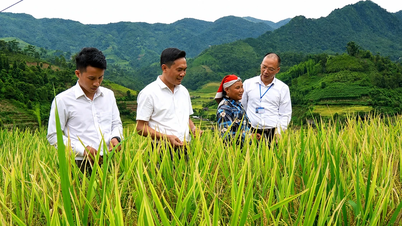
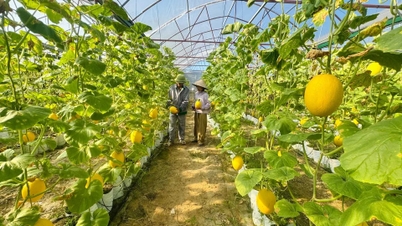
Tourism activities in Tra Que vegetable village began to flourish in 2003 with the "A Day as a Farmer in Tra Que Vegetable Village" experience tour. Here, tourists can transform into real farmers, joining the locals in tilling the soil, planting vegetables, catching insects, watering, and more.
After hours of work, visitors can enjoy a refreshing glass of iced tea, soak their feet in herbal water, and join the locals in cooking and enjoying local specialties served with fresh vegetables.
In Tra Que village, famous relics such as the Cham stone well, the Earth God shrine, the Five Elements shrine, along with festivals, customs, traditions, and beliefs, are being effectively preserved and promoted, serving as evidence of the village's long-standing development.
Besides visiting the vegetable village, tourists can choose to stay in homestays to eat, live, and work alongside the locals; participate in morning coffee tours such as "Sunrise over the Vegetable Village," "A Day as a Farmer in Tra Que," "Cooking Classes and Tasting Local Specialties," and "Hands-on Experiences" for students...
With its unique charm, in 2024 Tra Que vegetable village was recognized by UN Tourism as the "Best Tourist Village in the World".
Tan Hoa - a flood-resistant village transforming into a tourist destination.
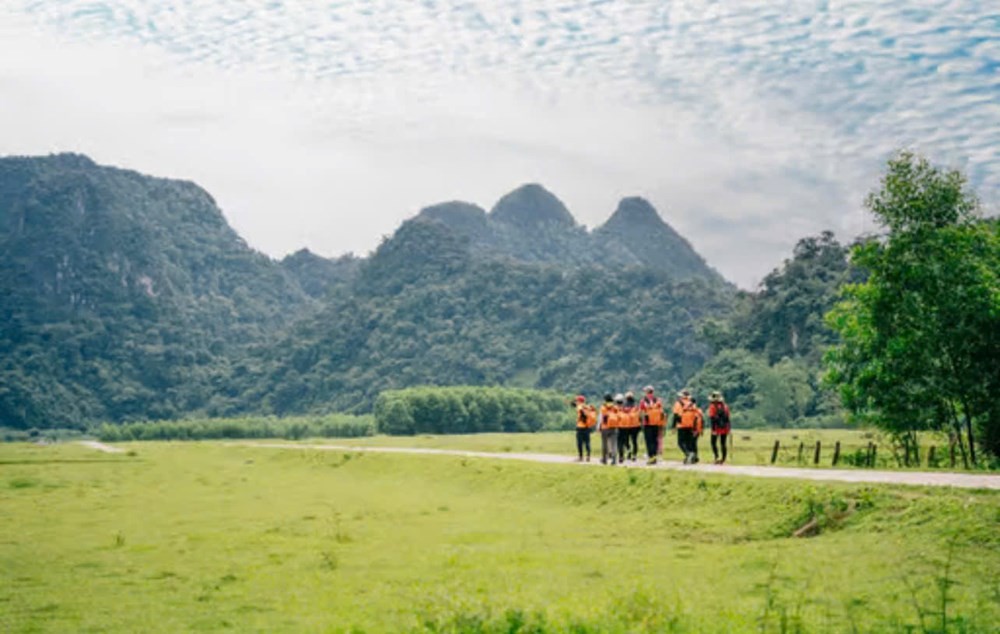
Visitors to Tan Hoa can participate in many attractive activities.
Tan Hoa village (Quang Tri province) is famous for its picturesque landscape, with towering limestone mountains embracing a vast valley and lush green meadows.
Tan Hoa is also known for its magnificent Tu Lan cave system – the setting for many famous films such as Kong: Skull Island, The Immortal , and The Legend of Quan Tien...
This is the homeland of approximately 3,300 Nguồn people, a community belonging to the Viet-Muong ethnic group. Through many ups and downs, the people here have preserved their mother tongue and a rich treasure of literature and folk songs. Among them, the " fish-catching" chant with its rhythmic "hoi len la hoi len" vividly reflects the community's working life in the past.
In October 2023, Tan Hoa village was honored by UN Tourism as the "World's Best Tourist Village" for its sustainable tourism development, while preserving and promoting its unique cultural and natural values.
Here, visitors can participate in many exciting experiences such as exploring the Tu Lan cave system, cycling, and jogging through the valley to feel the expansive and poetic atmosphere of nature.
Visitors can also enjoy traditional dishes with authentic local flavors such as com poi - a rustic dish made from corn, cassava or beans, sweet potato leaves, snails, eggplant, etc.
In particular, tourism in Tan Hoa has developed strongly in recent years, nổi with its "weather-adaptive" homestay model inspired by flood-resistant floating houses. Moreover, it is aiming to become the first flood-resistant tourism village in Vietnam and the world.
Thai Hai - a cultural space rich in the ethnic identity of the Tay and Nung people.
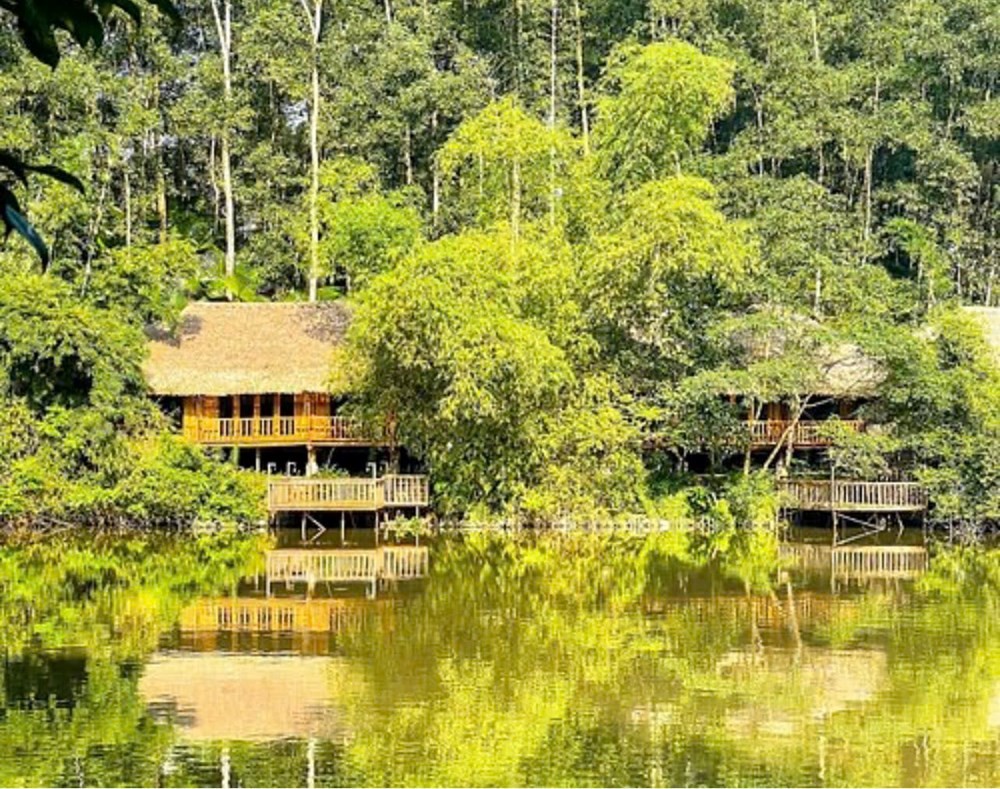
Thai Hai is home to many unique stilt houses.
Despite lacking luxurious services, high-end amenities, or modern facilities, the Thai Hai Ethnic Village Ecological Reserve (Thai Nguyen province) still welcomes many tourists each year, including a significant number of international visitors.
Thai Hai's appeal stems from its expansive green spaces spanning tens of hectares, and, more importantly, its cultural space deeply rooted in the Tay and Nung ethnic identities, a feature rarely found in other tourist areas.
According to Ms. Nguyen Thi Thanh Hai, owner of the Thai Hai Ethnic Ecological Stilt House Village Conservation Area, from a barren, desolate hillside, after many years of diligently planting trees to green the area and relocating more than 30 ancient stilt houses of the Tay and Nung people from the Dinh Hoa Revolutionary Base, this place has become a unique stilt house village.
Notably, among the hundreds of people living and working in the nature reserve, quite a few are in unfortunate circumstances, such as being sick, elderly, lonely, or having young people who have dropped out of school.
Families living in the village together maintain the language, customs, rituals, costumes, and traditional spiritual festivals, helping to naturally preserve the cultural identity of the Tay and Nung people in their daily lives.
Their daily work involves planting trees, growing vegetables, cultivating tea, increasing production, participating in tourism activities, and preserving the traditional culture of their ethnic group.
Here, visitors can immerse themselves in the cool, shady atmosphere and stay in traditional stilt houses nestled on hills planted with acacia trees. Each stilt house has its own purpose: some are used for making herbal medicine, others for making green tea, some for making rượu (rice wine), and some for preserving the Then folk singing tradition…
Besides enjoying the art of Then singing and Tinh playing, participating in unique festivals, playing folk games, or having bonfires, tourists can also join the locals in planting vegetables, picking tea, building stilt houses, casting nets to catch fish, and pounding rice with pestles… to better understand the lives of the people in this region.
In 2022, Thai Hai became the first Vietnamese village to be selected by UN Tourism as the " World's Best Tourist Village" .
Source: https://baolaocai.vn/den-viet-nam-ghe-tham-5-lang-du-lich-duoc-the-gioi-vinh-danh-post885160.html
![[Photo] Delegation attending the 14th Congress of the Vietnam Trade Union visits the Mausoleum of President Ho Chi Minh.](https://vphoto.vietnam.vn/thumb/1200x675/vietnam/resource/IMAGE/2026/06/03/1780451842301_ndo_br_img-3824-jpg.webp)










































































Comment (0)