

 |
| The distinctive jagged limestone mountains create a unique landscape for the Stone Plateau. |
Heritage enters into life.
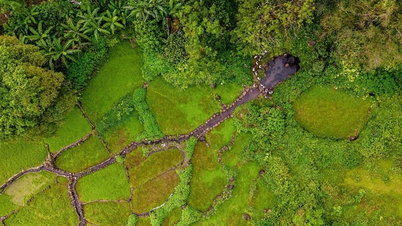
The Dong Van Karst Plateau, often described as an "open-air geological museum," covers an area of 2,356.8 square kilometers and has a history spanning over 550 million years. Today, this heritage is present in the daily lives of the local people, from traditional houses and the sounds of the Hmong flute echoing in the markets, to linen weaving and local products that attract tourists. When the landscape, culture, and community life all become resources for development, it is then that the heritage truly comes alive on the Karst Plateau.
According to Associate Professor, Dr. Tran Tan Van, Head of the Specialized Subcommittee of the UNESCO Vietnam Committee on Geoparks, and a member of the UNESCO Global Geoparks Network Advisory Board, the special value of the Dong Van Karst Plateau lies in its ancient rock layers, geological landscape, and the preserved "living link" between nature and community life. When people can live off their heritage, be proud of their culture, and actively preserve it, that is the most sustainable foundation for maintaining its global status.
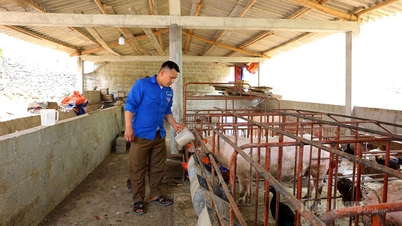
More than a decade ago, for many households in the highlands, tourism was still a foreign concept. Livelihoods relied primarily on corn farming and small-scale livestock raising in conditions of limited arable land, lack of clean water, and poor infrastructure. But the Global Geopark, recognized in 2010, opened up opportunities for development, with many people shifting their livelihoods towards community tourism, accommodation services, traditional crafts, and local products.
The Dong Van Karst Plateau currently has 7 community-based tourism villages with nearly 700 homestays. Between 2021 and 2025, the number of tourists visiting the Karst Plateau is projected to increase from 900,000 to nearly 3.5 million per year. Simultaneously, the poverty reduction rate in these localities is expected to exceed 6% per year, 1-2% higher than the province's average poverty reduction rate.
The development of tourism helps people earn more income and changes their perceptions about preserving the landscape, conserving culture, and building a civilized way of life. As a result, many indigenous cultural values are no longer just present in daily life, but have become "cultural assets" that contribute to creating livelihoods and preserving the soul of this rocky region.
 |
| The traditional linen weaving craft of the Hmong people - a "cultural asset" of the heritage region. |
The equilibrium problem
The rapid development of tourism creates many opportunities, but also places considerable pressure on conservation efforts. Ahead of UNESCO's fourth reassessment in 2026, preserving the landscape, protecting the ecological environment, and mitigating the impacts of rapid development are becoming crucial balancing acts in heritage preservation.
In reality, the Stone Plateau faces considerable pressure regarding environmental issues, planning, and cultural space preservation. At some tourist destinations, accommodation facilities, and homestays, the waste and wastewater collection and treatment systems have not been comprehensively invested in. During peak seasons, the amount of household waste can increase two to three times compared to normal days, while the processing capacity has not kept pace with actual demand. Furthermore, the spontaneous construction of accommodation and service facilities in some localities reveals shortcomings in planning. The concreting of spaces, leveling, and drilling and cutting of rocks to expand the area alters the landscape, disrupts traditional architecture, and destroys the unique topography of the plateau.
After 16 years of joining UNESCO's Global Geopark Network, the rocky region has truly "awakened" with tourism. However, along with this vibrancy comes the risk of commercializing indigenous culture. When traditional values are reduced to products serving experiential tourism, culture easily falls into the risk of "performance-oriented," gradually losing its original character over time.
For a "living heritage" like the Dong Van Karst Plateau, conservation and development are two parallel requirements, yet they are not easy to reconcile. The pressures indicate that maintaining its global status demands a more sustainable development strategy.
 |
| Majestic white cliffs stand tall amidst the rocky plateau landscape. |
Preserve identity - uphold reputation
Maintaining its status as a Global Geopark is not just about infrastructure or tourism, but also requires preserving cultural identity, landscapes, and the role of the community as the main stakeholders. Ahead of UNESCO's 4th reassessment, Tuyen Quang province is focusing on implementing numerous tasks to address recommendations and work towards the sustainable development of the Dong Van Karst Plateau region.
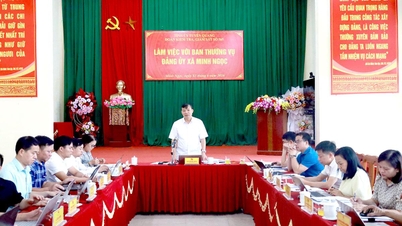
At the conference to implement tasks for the re-evaluation of the UNESCO Dong Van Karst Plateau Global Geopark, Vice Chairman of the Provincial People's Committee Vuong Ngoc Ha requested relevant departments and localities to completely address remaining criteria; and at the same time, tighten management of tourism activities and strictly handle violations affecting the landscape and image of the destination. In addition, he emphasized strengthening inter-sectoral coordination, developing tourism in a green and sustainable direction to meet the requirements of the re-evaluation; and diversifying communication and promotion to spread the value of heritage associated with community culture.
Preparations for the 4th reassessment are strongly focused on sustainable development, enhancing community participation, and deepening heritage values. Based on this, localities are coordinating the review, adjustment, and upgrading of rest stops, experiential routes, signage systems, information centers, and exhibition spaces. Resources for implementation are prioritized from the budget, while also mobilizing social investment to upgrade and build new tourism infrastructure; ensuring a workforce capable of meeting the requirements of the reassessment. The provincial Department of Culture and Tourism is focusing on applying scientific research and international cooperation to exploit heritage values for sustainable tourism development, landscape preservation, and local culture.
Based on comprehensive solutions aimed at sustainable development, the Dong Van Karst Plateau is making important preparations for the 4th UNESCO reassessment – a “test” to affirm the vitality and sustainable value of this heritage region.
Pham Hoan
Source: https://baotuyenquang.com.vn/van-hoa/du-lich/202606/hanh-trinh-giu-vung-danh-hieu-toan-cau-1aa758d/

![[Photo] First session of the 14th Congress of the Vietnam Trade Union](https://vphoto.vietnam.vn/thumb/1200x675/vietnam/resource/IMAGE/2026/06/03/1780465947883_ndo_br_img-3852-jpg.webp)






































![[Video] Sunset at Lap An Lagoon – Where the sun sets over the fishing nets](https://vphoto.vietnam.vn/thumb/1200x675/vietnam/resource/IMAGE/2026/05/31/1780192137701_beach-landscape-sea-water-nature-grass-745871-pxhere-com.jpeg)

























Comment (0)