

On the morning of November 28th, a Samsung phone user shared a story about being "hacked" on their device, along with questions about the security of the company's account. Specifically, Mr. D.T. stated that a few days ago, while using Facebook, he came across a post about testing Samsung's new OneUI 7 Beta interface, which included a link to a website.
This user identified it as a fake website with an interface similar to the official Samsung Beta program page (for developers and users who want to test software). When interacting with the page, users are directed to another link to log in directly to their account in the Samsung Member app (available on Samsung phones).
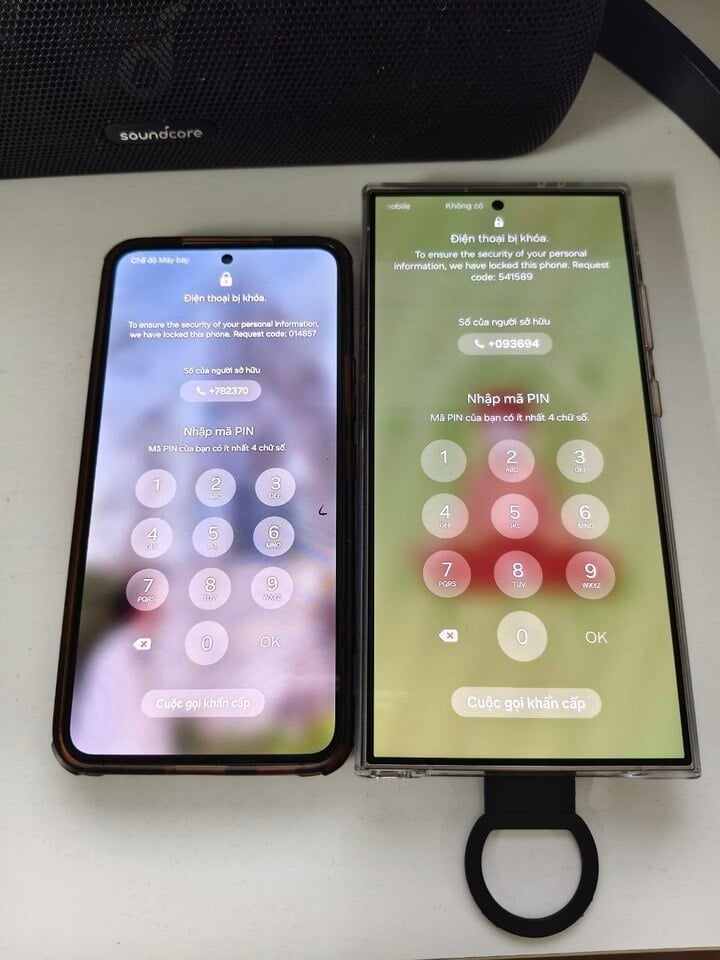
Two Samsung phones sharing the same account were locked after the users "tinkered" and tried accessing a fake link.
"Out of curiosity, I tried logging in, thinking there was nothing to worry about if I didn't provide any information. However, just 6 days later, both of my Samsung phones were permanently locked," Mr. D.T shared. When he took the phones to a Samsung service center, the staff informed him that the phones could not be unlocked and advised him to create a new account for any other device.
" This incident shocked me because of the poor security of Samsung phones, and I'm disappointed with the way the service center handled it, as they couldn't unlock the phone even though I provided all the necessary information," Mr. D.T said angrily.
In the video attached to the post, this user did not enter any personal information such as username or password. Therefore, Mr. D.T believes that Samsung accounts are very easy to hack and control can be lost with just a few clicks.
Agreeing with the above viewpoint, many other users in the community group commented that this is a wake-up call for other members, and expressed concern that a large company like Samsung has such lax account security mechanisms, leaving loopholes that allow hackers to easily attack. Facebook user Vu Duy Long commented: " I agree with the poster. How can someone be targeted just by clicking 'Login', without providing anything? If I clicked on a strange link that wasn't from the company, how could my account be automatically synchronized there…it's illogical."
HT, another user, also expressed surprise that his Samsung account could be hacked even without entering a password: "How could it be lost if you just clicked the login link directly in the official app? It must be because you entered your account information into a fake website, right?" This is also a concern for many people, as users lose their accounts and have their devices locked even without entering any information.
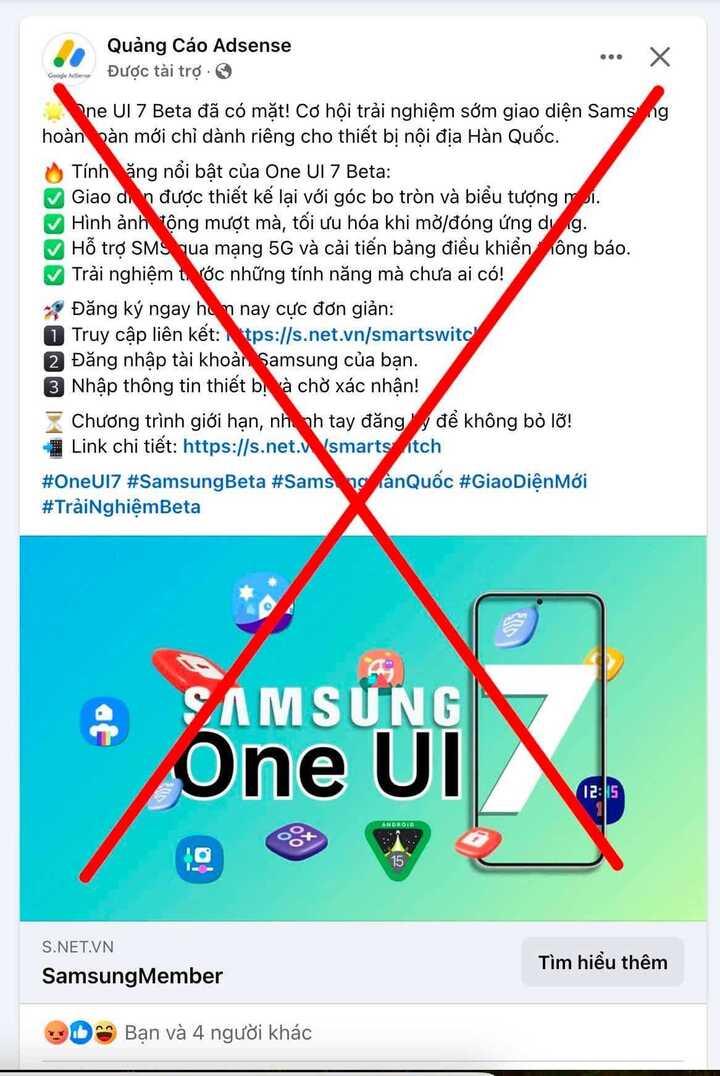
A Facebook page is running ads with a fake link to Samsung's OneUI 7 Beta testing program.
However, some argue that when a user clicks the "Log in" button with their Samsung account on the app, they are agreeing to allow the system to use that information to verify the account.
Duy Luan, an influential reviewer in the tech community, claims that Mr. D.T. allowed login using a Samsung account during the process recorded in the video provided by Mr. D.T. himself.
" Because it looked so real, you trusted it and allowed it. I think this is a lesson to be learned and a warning, because this scam is really sophisticated. As for allowing login, it's similar to Google Account One Click or even Apple ID ," Luân explained.
Several other users agreed with this assessment and argued that the error originated from the poster's owner. From the beginning, this person admitted knowing the website was fake but still clicked on it, which was a mistake. Furthermore, when the interface directed the user to the Samsung Member app, the user agreed to authenticate using that account to log in on another system. Because the user's device was already authenticated as a "Trust Device," manually clicking "agree" interpreted it as consent to using account information (username, password) to log into another system.
Be wary of all information on social media.
The Information Security Department of the Ministry of Information and Communications advises users to be cautious when purchasing products and services from technology companies advertised on Facebook. Any discount programs will be announced on the company's official website, not through Facebook ads as seen here.
If you have any doubts about the authenticity of a promotion, contact the brand's customer service directly to verify. Promotions that are too good and too attractive are often a sign of a scam.
Do not click on links sent via text messages, emails, or social media if you are unsure of their authenticity to avoid having your device compromised and your assets stolen.
Do not provide personal or financial information: Reputable brands will never ask you to provide sensitive information such as passwords, credit card numbers, or OTP codes through promotions.
People are urged to remain vigilant and refrain from sending donations or support money to accounts of unknown origin to those affected by the disaster.
When receiving online information calling for donations or sales to support flood and storm relief efforts, it is necessary to carefully verify the content. It is essential to monitor official media outlets to identify legitimate organizations and reliable addresses that accept donations of money and goods to support people in areas severely affected by the storm.
Absolutely do not transfer money to individuals or organizations without a clear identity. Only make donations through official accounts belonging to government agencies or reputable organizations/individuals.
If you encounter a situation that you suspect is fraudulent, report it immediately to the authorities or the brand being impersonated so they can take timely action.
Source







































































































Comment (0)