

 |
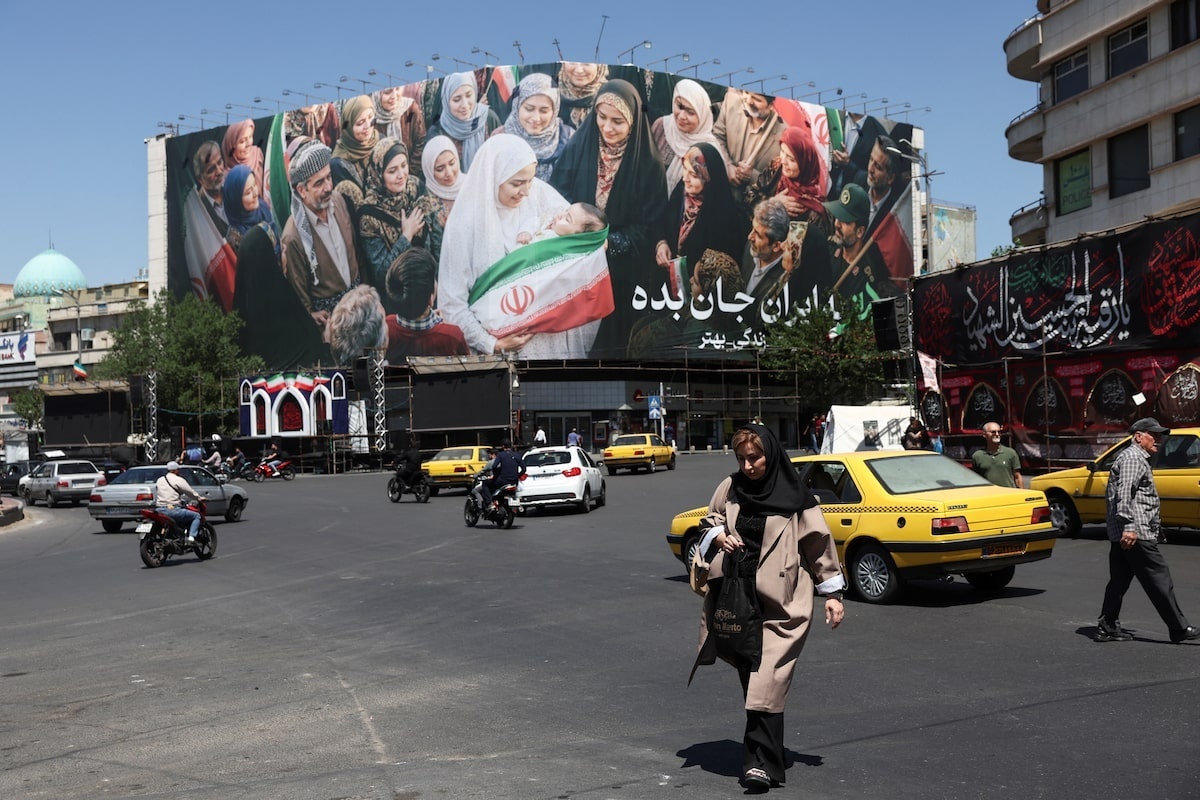
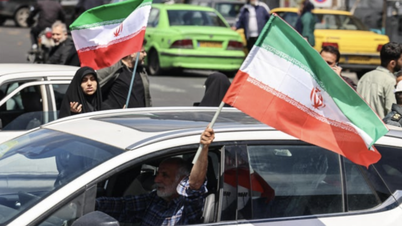
Streets in Tehran during the ceasefire. Photo: Reuters . |
According to Reuters , on May 26, Iran accused the United States of violating the ceasefire by carrying out attacks near the Strait of Hormuz, and stressed that the US move could further complicate efforts to end the conflict.
Iran maintains a tough stance.
The Iranian Foreign Ministry said the US airstrikes in southern Iran on May 25 were a “serious violation” of the fragile ceasefire that has lasted nearly seven weeks.
The US said the attacks were purely defensive, targeting Iranian missile launchers and ships that were attempting to lay mines.
Iran's Islamic Revolutionary Guard Corps (IRGC) has stated that it reserves the right to retaliate against US airstrikes. The force said that Iranian air defenses shot down a US drone and fired on another fighter jet and UAV that allegedly entered Iranian airspace.
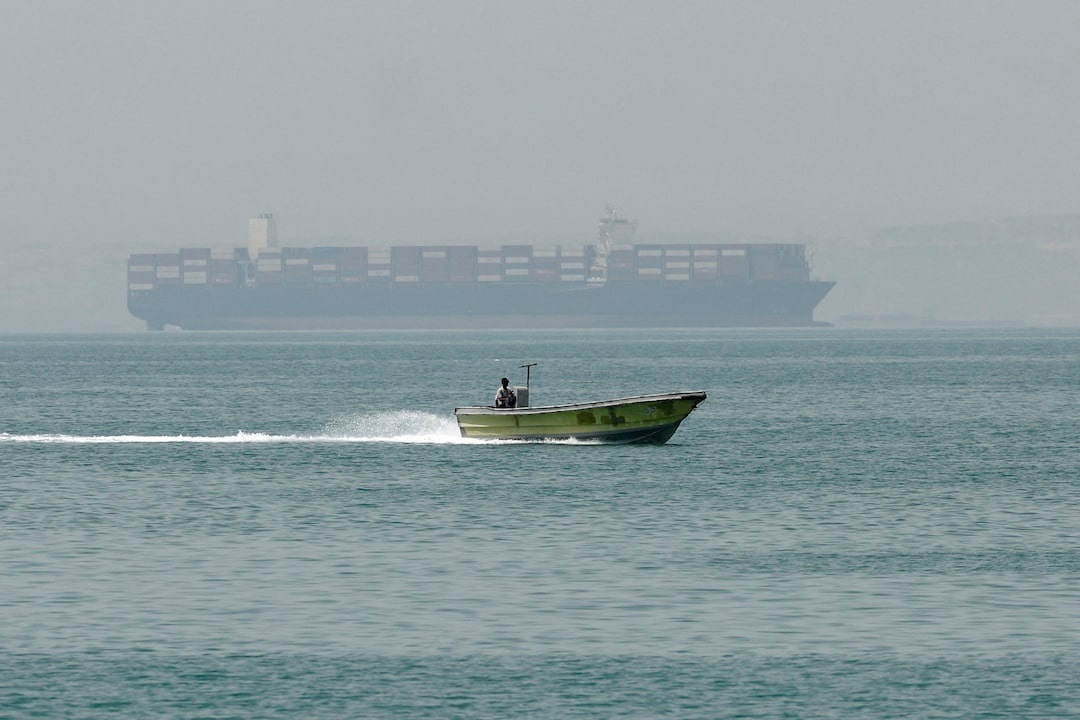 |
Cargo ship anchored near the Strait of Hormuz. Photo: Reuters . |
According to Iranian media, chief negotiator Mohammad Baqer Qalibaf has just returned from Doha after conducting negotiations through Qatar, aimed at advancing Iran's demand for the release of approximately $24 billion in frozen assets.
The Fars news agency, citing a source, reported that the issue of Iranian assets being frozen is the final obstacle to the agreement. Meanwhile, the ISNA news agency stated that the negotiations in Qatar are proceeding "quite positively."
According to Iranian sources, the initial agreement that the US and Iran are aiming for would end fighting on all fronts, restore shipping through the Strait of Hormuz within 30 days, and possibly provide some financial assistance to Iran. More difficult issues, such as Iran's nuclear program, would be discussed in subsequent rounds of talks.
America's soft approach reveals its weaknesses.
According to the US Central Command (CENTCOM), the recent US airstrikes in southern Iran were for "self-defense," to "protect US forces from threats posed by Iranian forces."
According to the New York Times , a senior U.S. military official said that Iranian surface-to-air missile systems threatened nearly two dozen U.S. Navy warships, including two aircraft carriers and escort ships operating in the Gulf of Oman and the Arabian Sea. These ships were present to enforce a blockade of vessels entering and leaving Iranian ports.
In addition, some Iranian ships are allegedly "attempting to lay mines" in the Strait of Hormuz. The US views this as a serious provocation, especially as the two sides are nearing substantive peace talks.
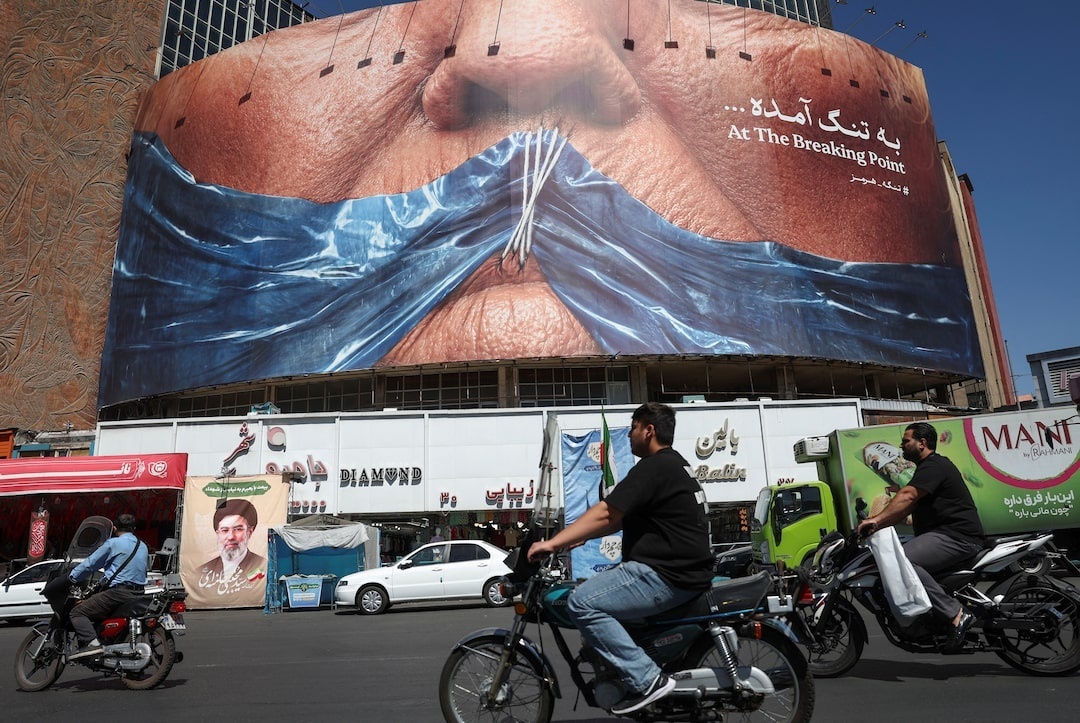 |
The latest US attack on southern Iran, near the Strait of Hormuz, is attracting close attention and analysis from experts. Photo: Reuters . |
According to CNN , the reactions of both sides to the latest US attack on the South reveal a great deal.
Tehran accused the US airstrikes of being a blatant "violation" of the ceasefire and threatened retaliation.
Meanwhile, the US insists the ceasefire "continues to be maintained," despite Washington accusing Iran of signaling aggression.
CENTCOM spokesman Captain Tim Hawkins affirmed: “Central Command will continue to protect U.S. forces while exercising restraint during the ongoing ceasefire.”
According to CNN , the current response shows that the Trump administration is eager to end the conflict as soon as possible, but this psychological factor could weaken the US's negotiating position.
While Iran's response remained firm, the US response was more conciliatory. Besides CENTCOM's assertion that the ceasefire "is in place," Secretary of State Marco Rubio twice evaded reporters' questions about the latest US attacks on southern Iran.
When first questioned, Rubio shifted the conversation to peace negotiations. When questioned a second time, he chose to address the need to reopen the Strait of Hormuz. Overall, he avoided directly mentioning the attacks, a way to prevent escalating tensions.
The current developments are reminiscent of two events that took place in early May.
In the first development, on May 5th, Chairman of the Joint Chiefs of Staff Dan Caine stated that Iran had fired on commercial vessels nine times, seized two container ships, and carried out “more than 10” attacks targeting U.S. forces.
However, Caine immediately added that all the incidents "did not cross the threshold for the U.S. to restart large-scale combat operations." He described them as merely "low-intensity" military activities.
When asked whether the ceasefire was still in effect, Defence Secretary Pete Hegseth affirmed that the ceasefire had not ended.
At one point, the Trump administration even considered conducting a freedom of navigation operation in the Strait of Hormuz, while separating what happened in the Strait of Hormuz from the military operation "Operation Fierce Rage."
At that time, the US also called on Iran to "act cautiously" and ensure that military actions did not cross the "limit" of violating the ceasefire.
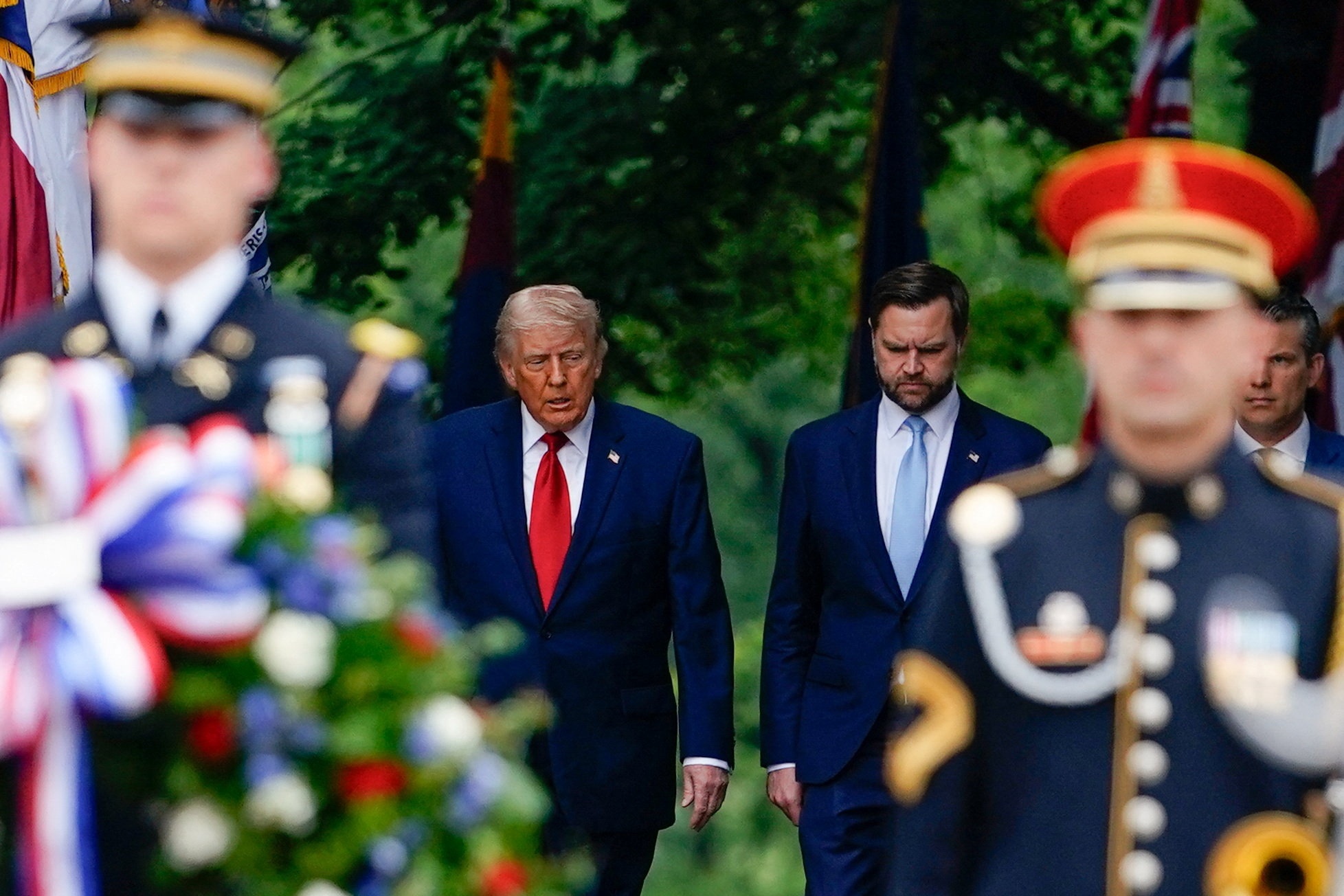 |
US President Donald Trump, US Vice President JD Vance, and US Secretary of War Pete Hegseth participated in a wreath-laying ceremony at the Tomb of the Unknown Soldier at Arlington National Cemetery in Virginia, USA, on May 25. Trump is reportedly eager to reach an agreement with Iran to end the conflict. Photo: Reuters . |
In a second incident that occurred a few days later, the U.S. launched airstrikes on military facilities that Washington claimed were linked to attacks on U.S. warships in the Strait of Hormuz. However, President Donald Trump continued to downplay the severity of the event.
"The ceasefire is still in effect," he emphasized to ABC News on May 7, while describing the new US airstrikes as merely "a light hit."
Currently, the situation remains similar: the Trump administration continues to reassure the public that the ceasefire is still in place. However, Iran insists that the ceasefire agreement has been violated by the US. Iran reserves the right to retaliate, emphasizing that Iranian firepower targeting US fighter jets and drones was a "proportionate response."
Furthermore, there is the reality that Iran continues to tightly control the Strait of Hormuz. When President Trump announced the ceasefire on April 8th, he made it clear that the agreement would only exist if Iran reopened the Strait of Hormuz.
At the time, in a social media post, he wrote: "Provided Iran agrees to reopen the Strait of Hormuz completely, immediately and absolutely safely, I agree to suspend bombing and attacks on Iran for two weeks."
However, the reopening of the strait "completely, immediately and absolutely safely" as Trump demanded did not happen. After 7 weeks of ceasefire, the Strait of Hormuz remains "blocked".
The repeated affirmations that the ceasefire is in effect, along with the de-escalation of tensions between the two sides, show that the Trump administration is striving to prevent a resurgence of hostilities and is eager to reach an agreement.
Trump has repeatedly ignored deadlines he set for himself regarding Iran, and has avoided resuming large-scale attacks, despite frequently issuing stern warnings.
According to CNN , this approach is revealing Washington's new position in negotiations with Iran. Iran remains hardline, while the US opts for a softer approach. The US may be growing impatient, while Iran remains calm. The differing reactions of the two sides to the latest developments are a significant signal.
However, there's a fairly universal truth in life in general: Haste makes waste. Being impatient to achieve something can inadvertently make the goal even more out of reach.
Source: https://znews.vn/dieu-my-muon-che-giau-post1654594.html




![[Photo] General Secretary and President To Lam presides over the meeting to approve the draft report on the results of the second inspection by the Politburo of the Standing Committee of the Hanoi City Party Committee.](https://vphoto.vietnam.vn/thumb/1200x675/vietnam/resource/IMAGE/2026/05/26/1779789811432_a2-bnd-4430-9620-jpg.webp)


















































































Comment (0)