

Some articles in the Indochine Weekly – later translated and compiled in the books "Ancient Cities in Vietnam" and " Vietnam Through the Indochine Weekly" (1941-1944) – reflect the formation of resorts such as Do Son, Sam Son, Da Lat, Sapa, and Tam Dao... more than 100 years ago.
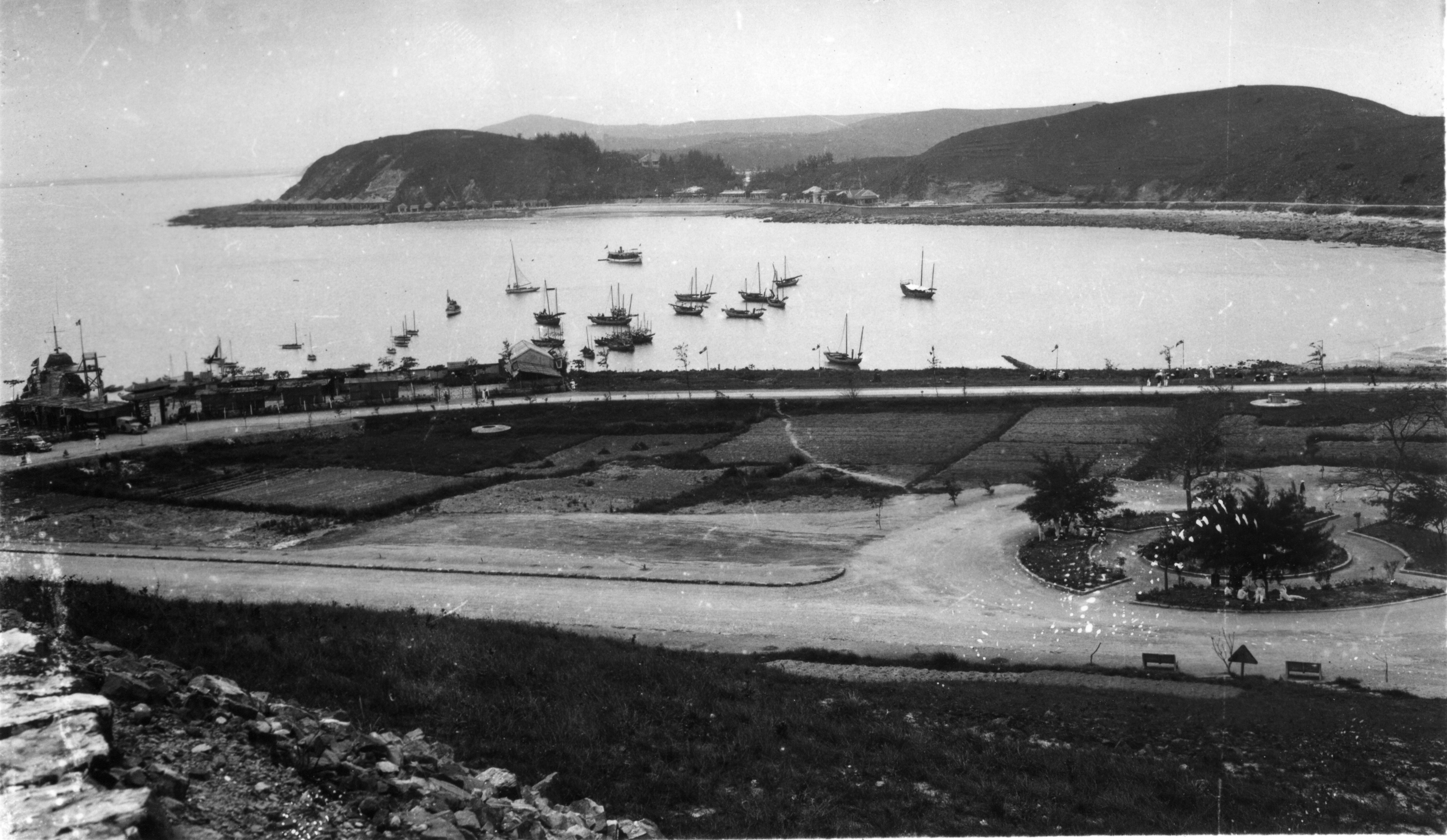 |
A view of Do Son in 1938-1939. Photo: Archival . |
Coastal areas have been transformed into resorts.
Among the coastal resorts in Tonkin, Do Son attracted attention very early on. According to the article "Coastal Resorts of Tonkin: Do Son ," Jean Dupuis landed on the peninsula in 1880 for a preliminary survey. However, it wasn't until 1886, when three Frenchmen, Vlaveanos, Costa, and Gouma, arrived, that Do Son truly came under scrutiny as an ideal resort destination.
Attracted by the fresh air and coastal scenery, they advised European families in Tonkin to go to Do Son to "escape the sweltering heat." At that time, travel was difficult. Many people had to ride horses across swamps or take sampan boats to the peninsula to build temporary thatched houses by the sea.
Just a few years later, Do Son began to receive systematic infrastructure investment. A barge-based transportation route connecting Do Son to the mainland was opened. In 1891, the Hai Phong - Do Son road was started and completed in 1892.
The arrival of roads and cars has rapidly transformed this resort area. Footpaths have been gradually replaced by major paved roads. Villas, hotels, and shops have sprung up everywhere. The article states that during the summer vacation season, from May to October, the beaches in Do Son are always crowded with tourists. Approximately 150 villas and 3 hotels are still insufficient to meet the demand.
Not content with simply being a seaside resort, the French gradually planned Do Son as an urban area. In 1909, the Governor-General of Indochina, Klobukowski, signed a decree elevating Do Son to the status of a city. Subsequently, the area was further divided into administrative zones, and additional coastal roads, sports fields, markets, and public facilities were built.
Later than Do Son, Sam Son attracted the attention of the French around 1900, when the Trans-Indochina route opened to Thanh Hoa . According to the article "Sam Son" by Ung Qua, many French officials soon recognized the potential of this coastal area and promoted its development into a resort.
By the mid-20th century, Sam Son had become one of the most important coastal resorts in Indochina, with a planned area of approximately 244 hectares.
Sam Son is divided into two areas. Sam Son Thuong is located on the hillside overlooking the sea, featuring many villas, wide roads, and rows of lush green casuarina and pine trees. Meanwhile, Sam Son Ha is a residential and service area running along the coastline. Here you can find hotels, offices, a post office, a telegraph and telephone shop, and even a power plant. A large row of casuarina trees has been planted to prevent sand from encroaching on the residential area.
The article notes that the pleasant climate and beautiful location make Sam Son "one of Indochina's top seaside resorts".
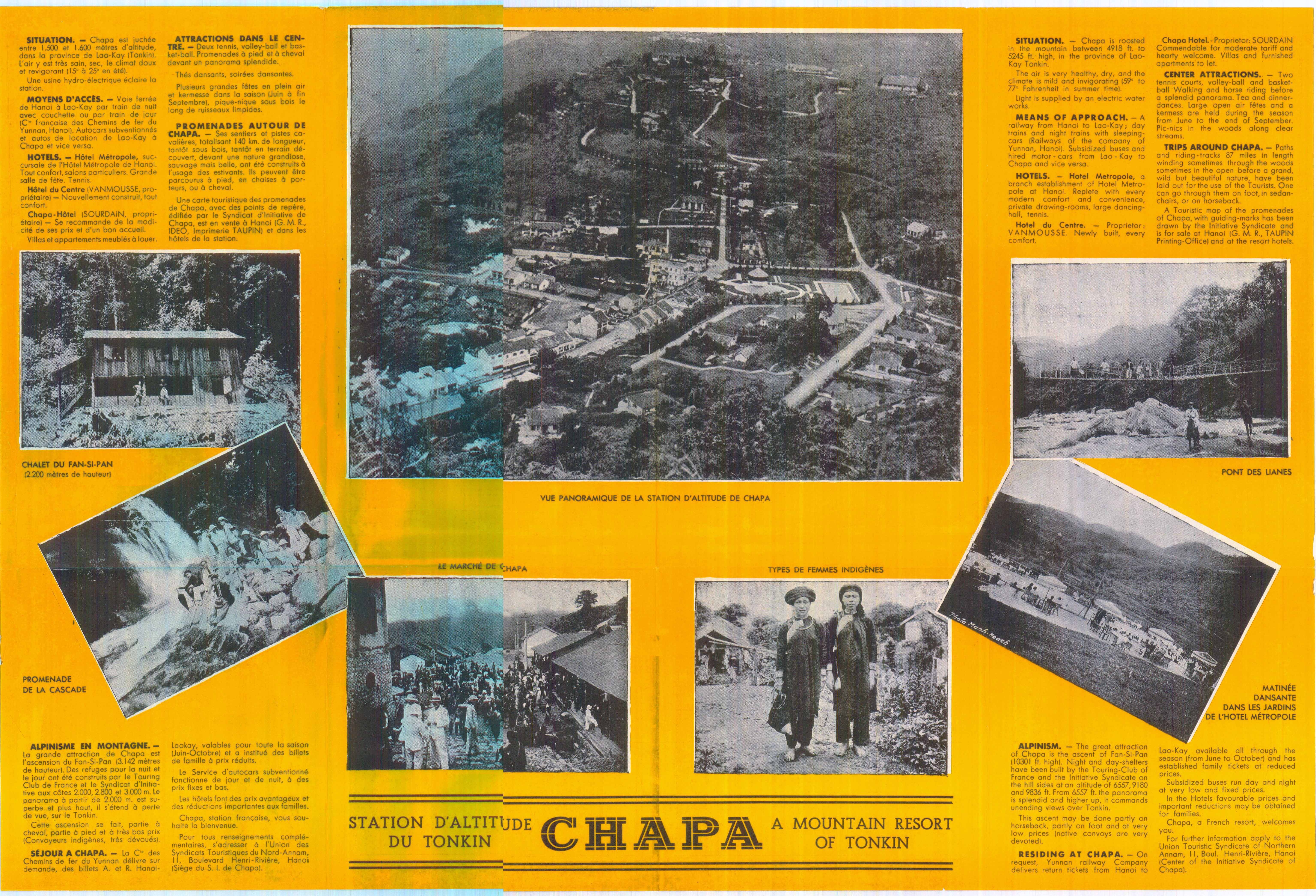 |
An advertising image of the Sapa resort in Lao Cai province in the past. Source: National Archives Center I. |
The hunt for "cold places" in the middle of the Indochina summer.
Beyond coastal areas, high mountain regions with cool climates year-round also attracted attention. From the late 19th century to the first half of the 20th century, numerous locations such as Da Lat, Sapa, Tam Dao, Bach Ma, and Ba Na... were successively surveyed for the construction of resort centers.
In 1893, Dr. Alexandre Yersin set foot on the Lam Vien plateau. Later, when the Governor-General of Indochina, Paul Doumer, wanted to find a highland resort, Yersin suggested this area. From then on, Da Lat gradually developed into a famous resort city.
In northern Vietnam, Sapa was proposed as a health resort as early as 1909. Within just a few decades, it had dozens of villas, hotels, churches, and offices serving tourists.
Tam Dao was also surveyed by the French starting in 1904. After many years of studying the topography and climate, the Governor-General's Office decided to build a resort there in 1906.
In Central Vietnam, Bach Ma was chosen by engineer Girard in 1932 after surveying the mountainous area near Hue. The first wooden houses of the resort were built in 1933.
Meanwhile, Ba Na was discovered in 1901 thanks to its cool climate and favorable terrain. After World War I, it gradually became a mountain resort.
Over 100 years ago, expeditions aimed at escaping the heat began. Many of these places are now popular tourist centers, preserving traces of a very early period of resort planning in our country.
Source: https://znews.vn/nhung-thien-duong-tron-nong-100-nam-truoc-post1654603.html
![[Image] Pleasant weather helps students enter the 10th grade entrance exam with confidence.](https://vphoto.vietnam.vn/thumb/1200x675/vietnam/resource/IMAGE/2026/05/29/1780034401612_ngay-1-thi-lop-10-minh-duy-8-5009-jpg.webp)



![[Photo] Ba Lang An Lighthouse - the "eye of the sea" amidst the "rock museum" of Quang Ngai province.](https://vphoto.vietnam.vn/thumb/1200x675/vietnam/resource/IMAGE/2026/05/29/1780038698840_anh-man-hinh-2026-05-29-luc-14-10-42.png)





















































































Comment (0)