

According to a citizen's account, around the 1970s, their family owned a plot of land adjacent to what is now Provincial Road 419. At that time, the People's Committee of the commune encouraged the family to exchange this plot of land to be allocated to a family with meritorious service to the revolution.
In return, the local authorities gave the family another plot of land within the same hamlet. However, the land exchange took place so long ago that the family no longer possesses any related documents. Nevertheless, many residents living nearby, along with the elders in the hamlet, are aware of the event and can testify to it.
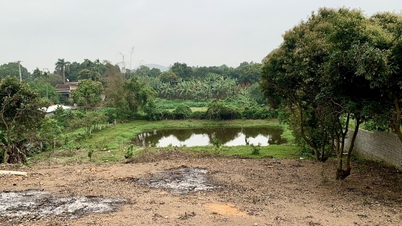
After being allocated the new land, the family has used it continuously to build a house, create a garden, and plant annual and perennial crops. The land has been used continuously without any disputes.
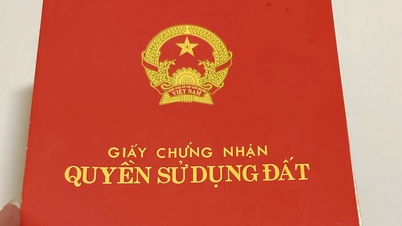
Based on the above situation, citizens are asking whether their family is eligible to receive a land use certificate (red book) for the first time, and if so, under which category does it fall according to the 2024 Land Law?
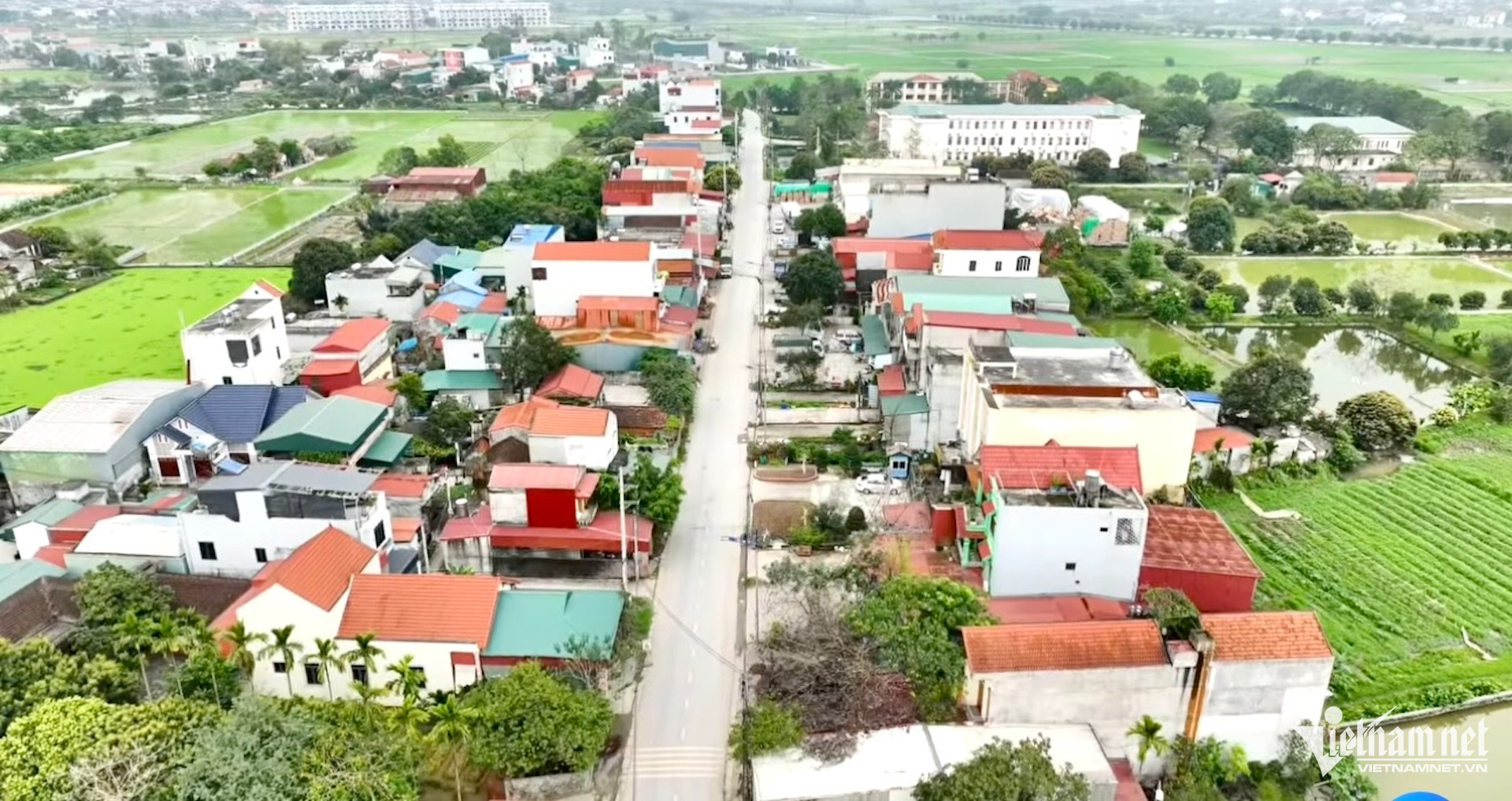
In response to this issue, the Ministry of Agriculture and Environment stated that this is a specific case falling under the jurisdiction of the local government. The issuance of land use certificates must be based on archived records, the origin of land use, and regulations issued by the local authorities to implement the Land Law.
Therefore, the Ministry has no basis to respond. However, the agency cites several current legal regulations related to the initial issuance of certificates.
Accordingly, current land law has specifically stipulated the issuance of land use right certificates and ownership certificates for assets attached to the land (land title certificates) to households and individuals currently using the land.
These regulations are stipulated in Articles 137, 138, 139, and 140 of the 2024 Land Law. These provisions relate to the recognition of land use rights in cases of stable land use, without documentation, or with a history of prior land use.
Notably, many cases of long-term, stable land use prior to the law's effective date, without disputes, may be considered for the issuance of land use certificates as stipulated.
In addition, the Government has also issued detailed regulations on the dossiers, procedures, and processes for granting land use rights certificates for the first time in Decree No. 101/2024 and Decree No. 151/2025.
The Ministry of Agriculture and Environment further stated that, according to Clause 1, Article 15 of Decree No. 49/2026, provincial People's Committees are assigned to issue specific regulations on the administrative procedures for land-related matters arising in their localities, with a deadline for completion no later than July 1, 2026.
Until new regulations are issued locally, the provincial People's Committee decides to apply the procedures according to the old regulations or issue a processing procedure for each specific case.
Regarding the authority to issue land use right certificates for the first time, according to the provisions of point b, clause 1, Article 136 of the Land Law and point h, clause 5, Article 1 of Decree No. 151/2025, the People's Committee at the commune level has the authority to issue land use right certificates for the first time to domestic individuals currently using the land.
Based on the above regulations, citizens should contact the relevant authorities for implementation.
According to Decree No. 151/2025/ND-CP (effective from July 1, 2025), the time limit for initial land and property registration procedures is no more than 17 working days; and the time limit for issuing the certificate for the first time is no more than 3 working days. The procedures for issuing land use right certificates are outlined in Appendix I attached to this Decree. Accordingly, households, individuals, residential communities, or people of Vietnamese origin residing abroad who have received confirmation of land and property registration results and wish to obtain a land title certificate should submit their applications to the One-Stop Service Department. The dossier includes the notification confirming the registration results and the application form according to Form No. 15 issued with the decree. 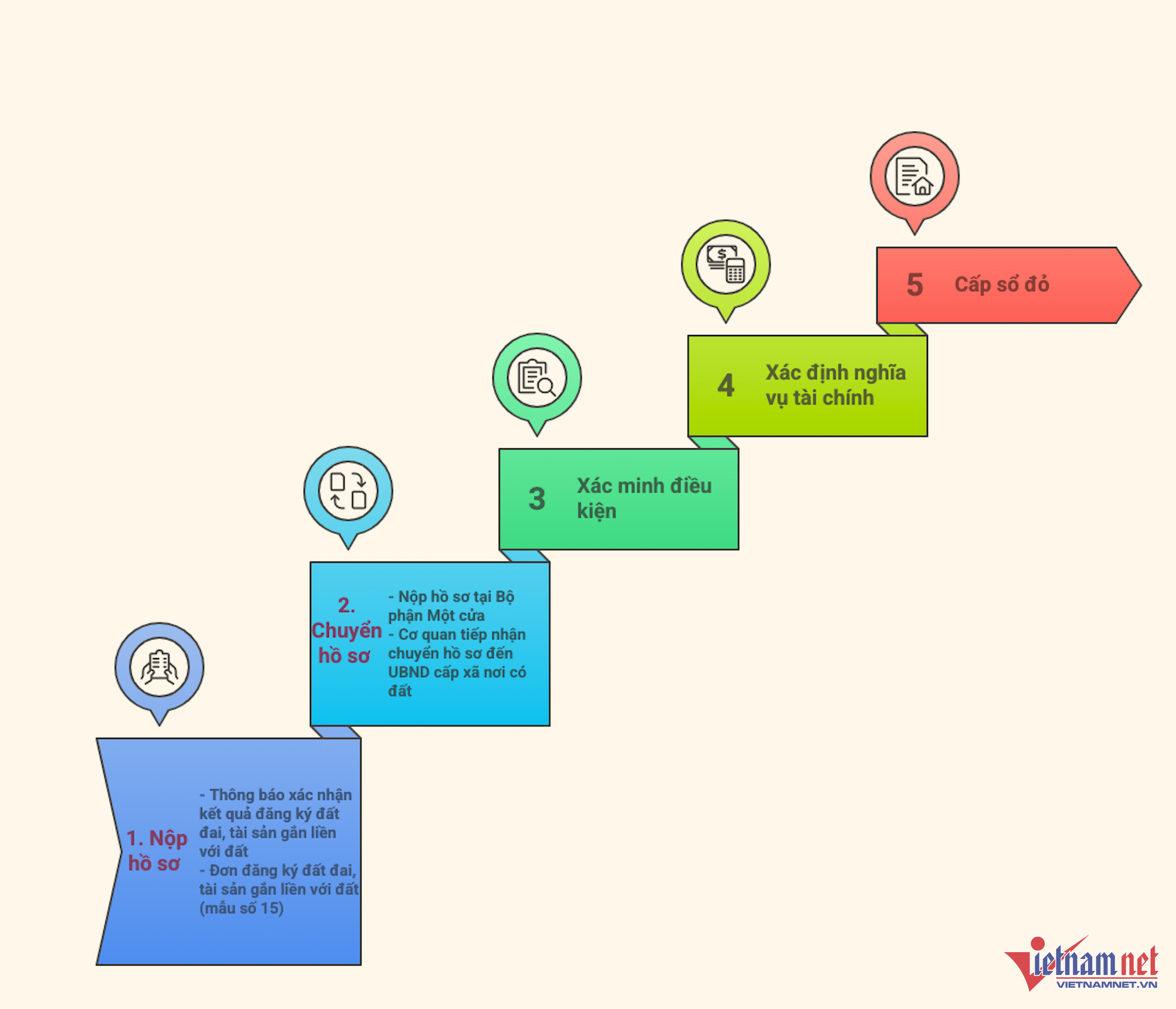 Next, in cases where the notification confirming the results of land registration shows that the property attached to the land meets the conditions for granting a land title certificate, and at the time of issuance does not fall under the cases specified in points d and e, Clause 1, Article 151 of the Land Law, the land management agency at the commune level shall send an information transfer form to determine the financial obligations regarding land according to Form No. 19 issued with this Decree to the tax authority so that the tax authority can determine and notify the land user and owner of the property attached to the land to collect the financial obligations. In cases where the notification confirming the results of land and property registration does not indicate that the conditions for granting a land title certificate are met, the land management agency at the commune level shall carry out the tasks stipulated in points b, c, d, e, f, and g of Section 3, Part II of "Part C. Procedures for land and property registration" of this Decree. Subsequently, the commune-level People's Committee issues the land ownership certificate in accordance with regulations. |
Source: https://vietnamnet.vn/doi-dat-tu-nam-1970-mat-toan-bo-giay-to-co-co-hoi-duoc-cap-so-do-2516725.html

![[Image] Close-up view of the interchange connecting the two expressways and Long Thanh Airport.](https://vphoto.vietnam.vn/thumb/1200x675/vietnam/resource/IMAGE/2026/05/25/1779703378210_ndo_br_z7863716673926-224453a31600126cce10622af6290afd-4549-jpg.webp)



![[Image] Hanoi's urban life under the challenge of a "scorching hot" environment](https://vphoto.vietnam.vn/thumb/1200x675/vietnam/resource/IMAGE/2026/05/25/1779706979265_nang-nong-t5-2026-minh-duy-7-4636-jpg.webp)












































































Comment (0)