

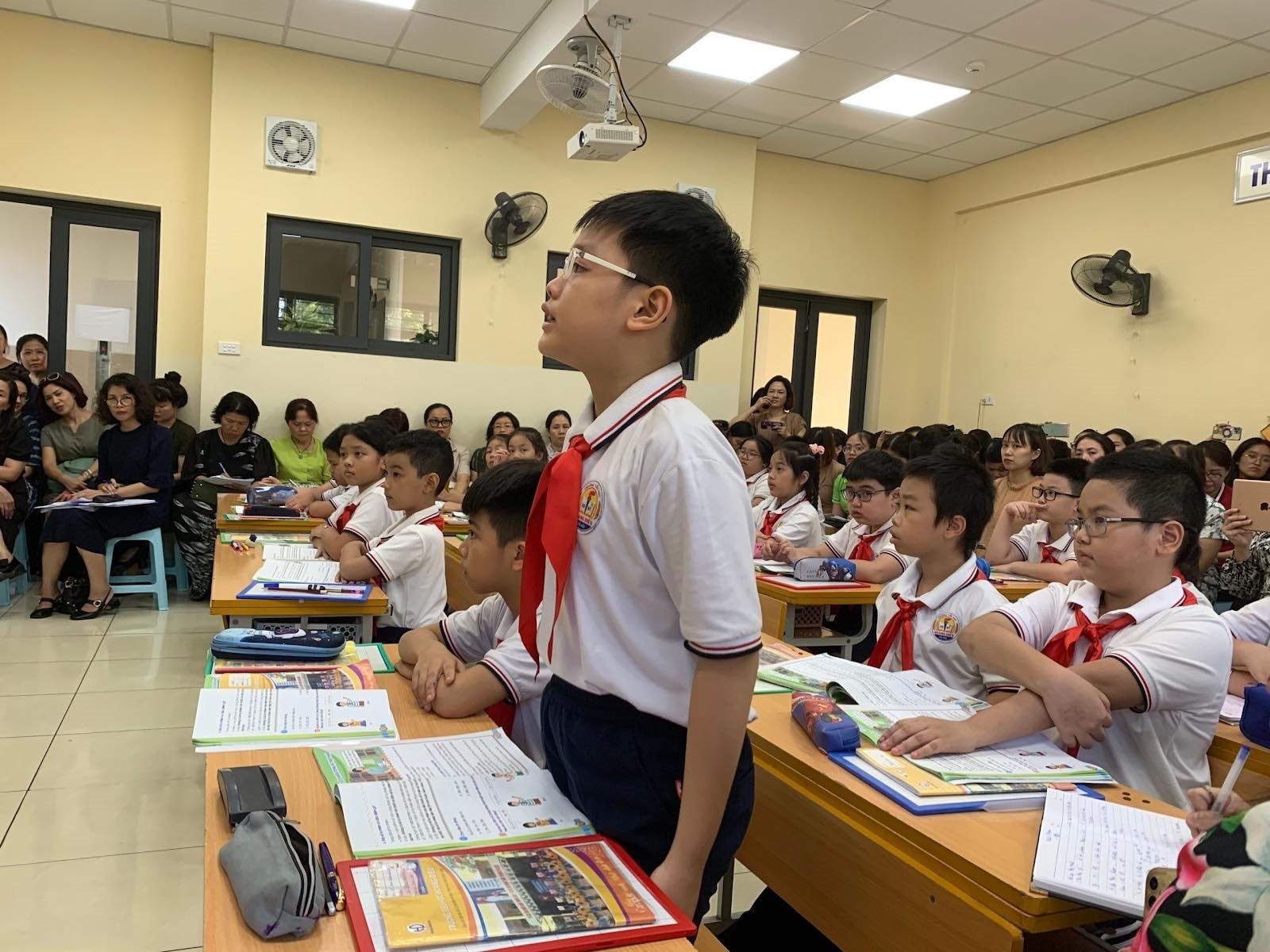
The ingrained habits in the thinking of most teachers and administrators regarding classroom observation have kept the practice in place, hindering its adaptation to new trends. This is truly like a headwind on the path to innovation aimed at comprehensively developing students' qualities and competencies.
Currently, the essence of classroom observation is teacher-centered, based on the old teaching philosophy that places the teacher at the center of professional activities and school development. Although the Ministry of Education and Training (MOET) has issued a document (currently at the primary school level) requiring innovation in classroom observation, many schools still adhere to the old teaching approach. Furthermore, due to a misunderstanding of the new way of conducting classroom observation, many schools continue to create significant pressure on teachers and students. This leads to classroom observation remaining largely a formality, sometimes even creating negative perceptions in education and society.
Teacher-centered teaching is a traditional, very old-fashioned method that has existed for generations. Its basic characteristic is that the teacher presents and explains the knowledge, while the students listen, take notes, memorize, and apply the knowledge to exercises. Therefore, classroom observation focuses only on assessing whether the teacher is following the old teaching approach. The observation plan is meticulously "scripted," involving the participation and input of many teachers, and the teaching conditions are maximized, far removed from the actual school environment. Teachers are also selected from among the most reputable teachers in the school, so the lessons are mostly "demonstrations." While the observing teachers praise the lessons, they find it difficult to learn and implement them, as the students in each school have very different real-world circumstances compared to the students in the observed class.
In particular, the purpose of classroom observation is evaluation and ranking, which puts pressure on teachers, subjecting them to unfair scrutiny despite the teachers' hard work and investment in their lessons, sometimes even months in advance.
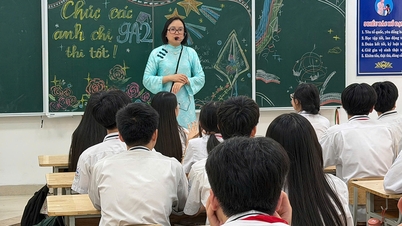
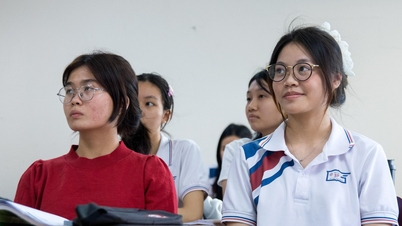
Innovative classroom observation must be learner-centered. It is based on the perspective of placing students at the center of the teaching and educational process. Therefore, learning activities are guided and directed by teaching activities. The purpose of classroom observation is to evaluate student learning, not teacher teaching as in the old method. Observers need to see if the teacher guides and organizes students to explore, discover, and apply knowledge and develop skills. Do they regularly assess students' learning process and how positively does this impact their learning? Regarding the students' attitudes – are they joyful, enthusiastic, and happy during the learning process, or are they indifferent?
Teachers must always foster students' initiative and active participation. They should accept differences and love each individual student. They should not manage the classroom in a way that demonstrates the teacher's authority and should not create distance between teachers and students, or between students themselves.
Teachers must guide and support students so that they can gradually discover knowledge on their own and apply it in practice. Have they paid attention to each student's learning? To what extent have students completed the tasks assigned by the teacher?
Therefore, observers can still sit facing the same direction as the teacher or move around (in an orderly manner) to observe the students, and even record images of students' expressions. Observers need to see if the teacher "neglects" the students or if their comments and evaluations are objective and encouraging. They should absolutely not draw conclusions that the lesson was wrong or a failure, causing harm to their colleagues. Because of this difference, some teachers who were recognized as excellent teachers under the old curriculum may still not meet the standards of an excellent teacher under the new curriculum.
Therefore, the innovative lesson observation is now called "lesson study" and referred to as "illustrative lesson" instead of "model lesson" as in the old way.
Source



![[Photo] General Secretary and President To Lam presides over the meeting to approve the draft report on the results of the second inspection by the Politburo of the Standing Committee of the Hanoi City Party Committee.](https://vphoto.vietnam.vn/thumb/1200x675/vietnam/resource/IMAGE/2026/05/26/1779789811432_a2-bnd-4430-9620-jpg.webp)
































































Comment (0)