

In Huu Lien commune, often called the "green meadow" of Lang Son province by many tourists, social media has become the primary channel for promoting community-based tourism. Videos of kayaking, camping, cloud hunting, experiencing traditional Tay stilt houses, or bathing in herbal remedies constantly appear on TikTok, Facebook, and YouTube, contributing to a rapid increase in tourist numbers in recent years.

According to our research, while before 2018, visitors to Huu Lien were mainly backpackers who spread the word through travel groups, nowadays, most tourists learn about the area through short videos on social media. Simply searching for the keyword "Huu Lien Lang Son " on TikTok or Facebook can bring up thousands of experience videos with high levels of interaction.
Currently, many fanpages and community tourism groups in Huu Lien maintain a posting schedule of 10 to 20 videos and articles per week to promote the scenery, homestays, and local experiences. Some Huu Lien travel review groups attract thousands of members who share photos, itineraries, and travel experiences.

Along with the spread on digital platforms, the scale of community-based tourism in the locality has also increased rapidly. According to the tourism industry, Huu Lien commune alone currently has 36 homestay businesses, including a cluster of homestays that meet ASEAN standards.
Digital technology is not only promoting beautiful scenery, but it is also changing the way community-based tourism operates. At many homestays, young people handle almost all aspects of communication, from filming and editing videos, managing fan pages, responding to guests via Facebook, TikTok, and Zalo, to guiding them through online bookings.
Mr. Phan Van Mon, a homestay owner in Huu Lien, said that in the early days of making videos to promote tourism, his family faced many difficulties because they were not yet familiar with using social media or filming and editing content.
"Initially, making videos was very simple; many clips only got a few dozen views. Some days we'd spend the whole day filming, but almost no one interacted with what we posted. My wife and I had to learn how to film, edit, choose music, write content, and watch others to learn from them," Mon shared.

According to Mr. Mon, the turning point came when a video of a kayaking experience in the Dong Lam area unexpectedly attracted a large number of views on TikTok. The images of the blue water, the sprawling grassy fields, and the pristine landscape of Huu Lien were then shared by many tourists on social media, leading to a significant increase in the number of visitors to the area.
"There were groups from as far away as the South who saw TikTok and messaged to book tours. That's when my family realized that social media really helps community tourism develop," Mon said.
Currently, most guests booking rooms at the homestay contact them through social media. On average, the family posts many new experience videos each week to maintain interaction with customers and promote the local scenery.
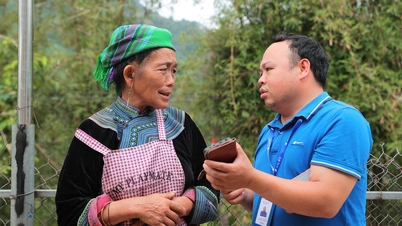
What's remarkable is that this digital transformation isn't just happening among young people; it's also spreading to many older households. Many young people in Huu Lien are now directly guiding their parents and relatives on how to record videos with their phones, livestream, post promotional content, or use digital platforms to communicate with tourists.
At many homestays, older people are in charge of cooking and welcoming guests, while younger people take on the role of "media team" with tasks such as creating videos, taking drone photos, managing fan pages, and building content on TikTok.

According to preliminary statistics from the youth organization, there are currently about 20 homestay models in the province directly managed, operated, or co-managed by youth union members; and about 100 youth union members participate in activities within the community tourism chain. Beyond just accommodation and food, young people are also involved in many new services such as flycam filming, experiential photography, renting camping equipment and ethnic costumes, working as local guides, or operating online booking platforms.
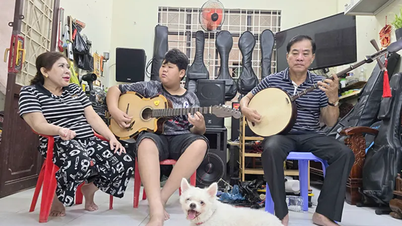
In Bac Son, Mr. Duong Cong Trong developed a homestay business in 2018 when the number of tourists visiting the Quynh Son community tourism village increased. Besides accommodation, his family organizes various experiences such as rice planting and harvesting, making banh chung (traditional Vietnamese rice cakes), pounding mugwort, and performing then singing and dan tinh (traditional Vietnamese string instrument) for tourists.
According to Mr. Trong, social media currently plays a huge role in maintaining a stable flow of tourists. Many tour groups, after experiencing the local culture, continue to post videos and images on Facebook, TikTok, and YouTube, creating a ripple effect that helps the area become more widely known.
Beyond spontaneous promotion, digital transformation in community-based tourism in Lang Son is now being systematically promoted by the local authorities. According to the Department of Culture, Sports and Tourism, in 2025, the tourism sector organized approximately 10 training courses on digital skills, foreign languages, and cultural etiquette for more than 1,800 direct tourism workers.

In addition, the Provincial Investment, Trade and Tourism Promotion Center has implemented the digitization of tourism data using 360-degree technology for 31 tourist destinations, building a tourism data warehouse that has attracted more than 7.1 million visits; and simultaneously boosting promotion on Facebook, TikTok, and YouTube.
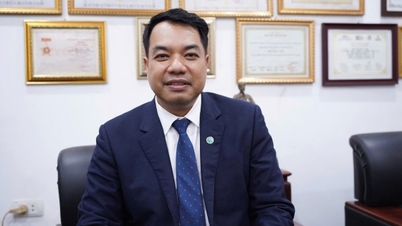
According to Mr. Doan Thanh Cong, Vice Chairman of the Vietnam Fatherland Front Committee of the province and Secretary of the Provincial Youth Union, digital technology is opening up new entrepreneurial opportunities for young people in community tourism areas.
"In addition to traditional tourism practices, many young people today know how to build local brands on social media, connect directly with customers, and develop services from digital platforms," Mr. Cong said.
From the experience in Huu Lien, Bac Son, it is clear that digital technology is contributing to the "take-off" of community tourism in Lang Son. With just smartphones and social media, many young people have helped spread images of their villages, ethnic culture, and local life widely online. Through this, community tourism is no longer a small-scale model but is gradually becoming a direction for economic development, creating jobs and retaining young people in their hometowns.
Source: https://daidoanket.vn/lang-son-cong-nghe-so-dua-du-lich-cong-dong-cat-canh.html



![[Photo] General Secretary and President To Lam presides over the meeting to approve the draft report on the results of the second inspection by the Politburo of the Standing Committee of the Hanoi City Party Committee.](https://vphoto.vietnam.vn/thumb/1200x675/vietnam/resource/IMAGE/2026/05/26/1779789811432_a2-bnd-4430-9620-jpg.webp)













![[Video] Plagiarism or data falsification can result in an indefinite ban from scientific research.](https://vphoto.vietnam.vn/thumb/402x226/vietnam/resource/IMAGE/2026/05/27/1779841122844_khoa-hoc-jpg.webp)

![[INFOGRAPHIC] A look back at serious coal mine accidents in China](https://vphoto.vietnam.vn/thumb/402x226/vietnam/resource/IMAGE/2026/05/27/1779840222951_thumb-tai-nan-mo-than-o-trung-quoc-jpg.webp)

![[GALLERY] 5 extremely important things to note when using ChatGPT for search](https://vphoto.vietnam.vn/thumb/402x226/vietnam/resource/IMAGE/2026/05/27/1779840226248_gp-2-png.webp)






























































Comment (0)