

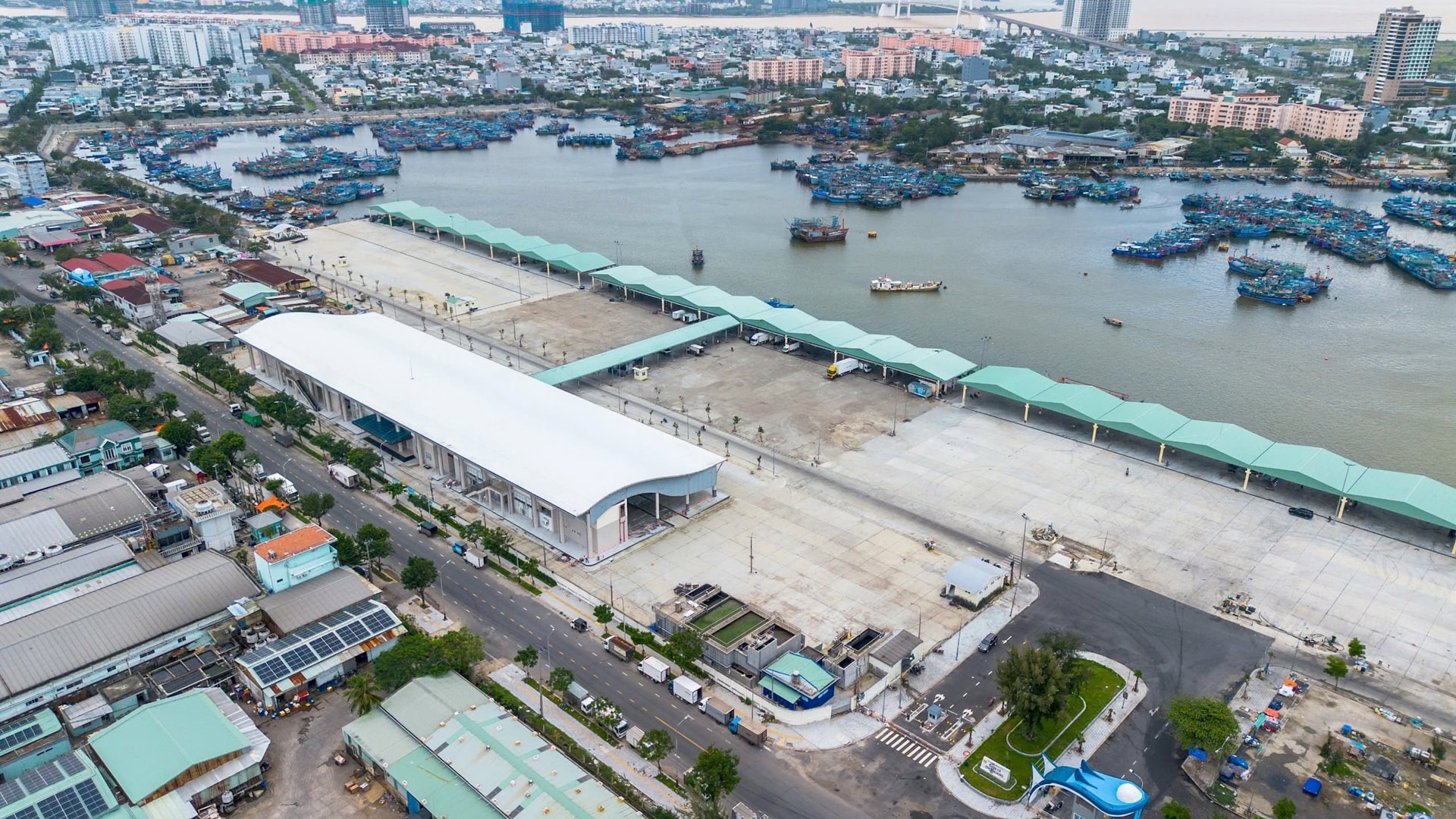
One of the most noticeable changes in Da Nang recently is its approach to air quality management, which now relies on an automated monitoring and early warning system. In the city center, authorities maintain a regular environmental monitoring program, conducting passive monitoring at 52 locations, with monitoring frequency of once a month.
The city has also invested in 13 automatic, continuous environmental monitoring stations. In addition, there are currently 3 automatic, continuous air quality monitoring stations operated by the Ministry of Agriculture and Environment within the city.
According to the Department of Agriculture and Environment, monitoring results show that urban air quality in Da Nang generally remains at a fairly good level. The percentage of days with a good Air Quality Index (AQI) recorded at automatic monitoring stations ranges from 90-96%. Concentrations of PM2.5 and PM10 dust are mostly within permissible limits.
In addition, the city is promoting green transformation in transportation to reduce emissions in the long term. The city is piloting a public bicycle system with 60 stations and 600 bicycles; and putting into operation 400 electric taxis and 85 four-wheeled electric vehicles for tourism. From 2025, 100% of replacement or newly invested buses in the city will use electricity or green energy.
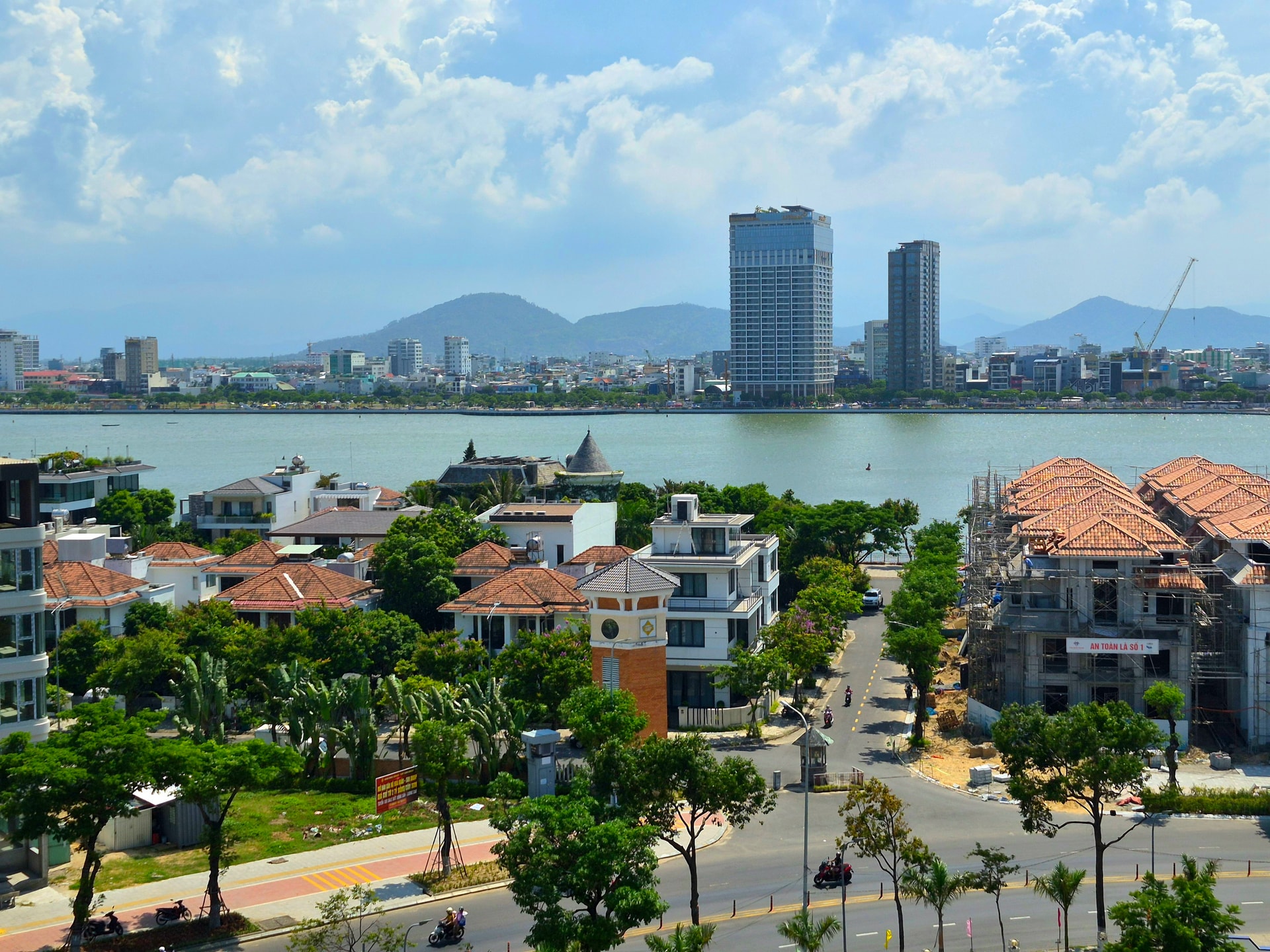
The city is also operating a water monitoring system including coastal seawater and river water monitoring stations and a continuous automatic monitoring system; and has invested in two automatic water environment monitoring systems in the Vu Gia - Thu Bon river basin.
In the industrial sector, industrial parks undergo regular inspections of their centralized wastewater treatment systems; authorities also conduct unscheduled sampling to monitor the quality of treated wastewater and the surrounding environment in areas bordering residential areas...
In land environmental management, Da Nang's notable achievement lies in gradually tightening solid waste management, controlling mineral exploitation activities, and promoting resource reuse models.
According to the city's People's Committee report, the rate of household solid waste generated in the area that is collected and processed has reached 100%. This is an important foundation for limiting the risk of soil pollution from illegal dumpsites or uncontrolled landfilling.
Mr. Vo Thanh, Head of the Environmental Protection Sub-Department (Department of Agriculture and Environment), said that the city has invested in upgrading waste transfer infrastructure, mechanizing collection activities, and gradually forming a more modern sorting and processing system; implementing the 3R plan, promoting waste reduction, reuse, and recycling.
In agricultural areas, the city is researching models for producing vermicompost from mushroom cultivation waste, and applying biological preparations to treat agricultural by-products to reduce the pressure of waste on the soil environment. For craft villages and stone quarrying areas, the city is also beginning to implement a plan to relocate production facilities to industrial clusters with integrated environmental protection infrastructure...
Source: https://baodanang.vn/dong-bo-giai-phap-kiem-soat-moi-truong-3338483.html
![[Image] Pleasant weather helps students enter the 10th grade entrance exam with confidence.](https://vphoto.vietnam.vn/thumb/1200x675/vietnam/resource/IMAGE/2026/05/29/1780034401612_ngay-1-thi-lop-10-minh-duy-8-5009-jpg.webp)

![[Photo] Ba Lang An Lighthouse - the "eye of the sea" amidst the "rock museum" of Quang Ngai province.](https://vphoto.vietnam.vn/thumb/1200x675/vietnam/resource/IMAGE/2026/05/29/1780038698840_anh-man-hinh-2026-05-29-luc-14-10-42.png)


















































































Comment (0)