

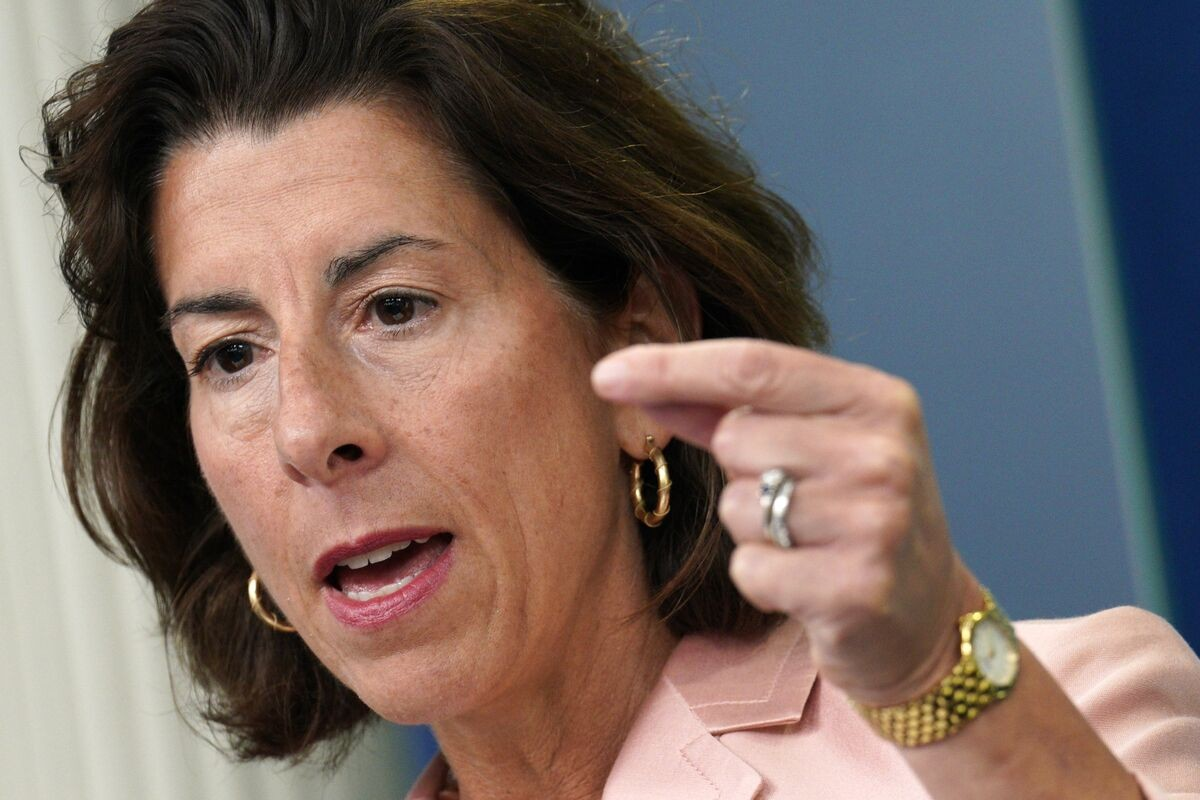
In a CBS News program on 60 Minutes, the US Commerce Secretary downplayed the chips in Huawei phones and argued that the technological gap demonstrated the US's success in imposing export restrictions on China. When Ms. Raimondo visited Beijing in August 2023, Huawei had already introduced new smartphones using its own 7nm chips.
"It's several years behind what we have in the US," Raimondo said in the interview. "We have the most advanced semiconductors in the world . China doesn't. We are far more innovative than China," she continued.
Alan Estevez, a U.S. Commerce Department official, said SMIC – Huawei's chip manufacturing partner – may have violated U.S. law. The Biden administration is considering adding companies suspected of manufacturing chips for Huawei to its trade sanctions list.
The U.S. Commerce Department is playing a key role in the Biden administration's China strategy, including efforts to keep cutting-edge technology away from the Chinese. After drawing the Netherlands and Japan closer with some export controls last year, the U.S. is tightening regulations further this fall. Raimondo wants allies to further restrict China's access to foreign technology.
In addition, the U.S. Department of Commerce is also responsible for providing over $100 billion in grants and loans to boost domestic semiconductor production. In recent weeks, the U.S. announced grants under the CHIPS Act of 2022 for Intel, TSMC, and Samsung Electronics.
Huawei – a symbol of the US-China technology war – was sanctioned by the US in 2019 due to national security concerns. Despite this, Huawei's suppliers, such as Intel, were still granted licenses to sell to the company. This month, the Chinese giant announced its first AI laptop using Intel chips. The Mate 60 Pro smartphone, set to launch in 2023, also prompted a US investigation into the details behind the chip.
(According to Reuters and Bloomberg)
Source


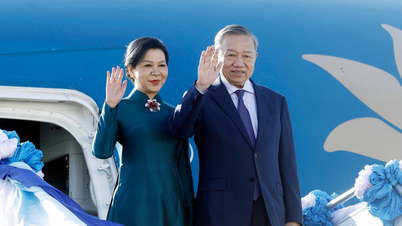
![[Photo] General Secretary and President To Lam and his wife begin their state visit to the Republic of Singapore.](https://vphoto.vietnam.vn/thumb/1200x675/vietnam/resource/IMAGE/2026/05/29/1780011284377_vna-potal-tong-bi-thu-chu-tich-nuoc-to-lam-va-phu-nhan-bat-dau-chuyen-tham-cap-nha-nuoc-toi-singapore-va-phat-bieu-dan-de-tai-doi-thoai-shangri-la-8791484-2-jpg.webp)




















![[Photo] Standing Committee member of the Party Central Committee Tran Cam Tu working with the Central Inspection Committee](https://vphoto.vietnam.vn/thumb/1200x675/vietnam/resource/IMAGE/2026/05/28/1779969579668_ndo_br_bnd-2495-jpg.webp)



























































Comment (0)