

Projects will commence rapidly in June.
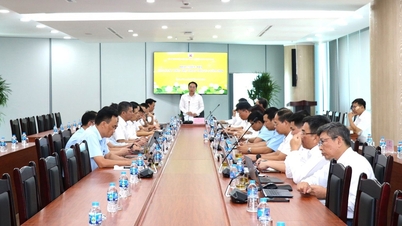
Presiding over a working session on June 1st with leaders of Hai Phong City and the provinces of Quang Ninh, Bac Ninh, Ninh Binh, and Hung Yen on the development of rental housing as directed by General Secretary and President To Lam, Prime Minister Le Minh Hung emphasized: The Northern key economic region is a central area for industrial development, currently experiencing a very high rate of urbanization and a large concentration of labor. Hai Phong, Quang Ninh, Bac Ninh, and Hung Yen all have some of the highest economic growth rates in the country, with hundreds of thousands of workers employed in industrial zones. The pressure on rental housing for workers is very urgent, and the development of rental housing in this region also serves as a precedent for piloting and replicating this approach in other localities nationwide.

The government is rapidly implementing rental housing projects.
Photo: Dinh Son
In a decisive and urgent action-oriented manner, the head of government issued an unprecedented ultimatum: By June, each of the four aforementioned provinces and cities must strive to commence at least one rental housing project; and simultaneously complete the procedures to implement large-scale rental housing projects in the third and fourth quarters of this year. Significantly, this directive, no longer merely a guideline with phrases like "striving" or "making an effort," emphasizes that this is an urgent requirement, rejecting reports on paper and demanding concrete results. In cases where localities encounter difficulties or obstacles, central ministries and agencies must proactively provide immediate support and solutions.
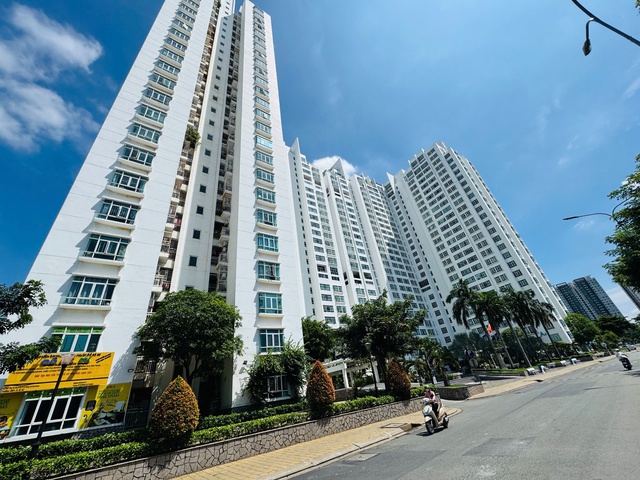
Creating mechanisms to attract private capital to participate in the development of rental housing is a good way to implement the policy of the state and the people working together.
PHOTO: DINH SON
The Prime Minister's directive is a swift and concrete step in bringing the Party's strategic vision into reality, just over half a month after General Secretary and President To Lam issued the landmark directive: Rental housing must be a strategic pillar. This is an unprecedentedly rapid pace, because normally, it takes an average of 18-24 months for a social housing project to go from planning approval, investment policy approval, land allocation to obtaining a construction permit and commencing construction.
With over 40 years of research on the rental housing segment, Mr. Le Hoang Chau, Chairman of the Ho Chi Minh City Real Estate Association (HoREA), expressed his immense joy and emotion at the swift and decisive directives from the Government following the historic strategic shift in thinking by the General Secretary and President regarding the rental housing segment. He emphasized that this is not only great news for the real estate market but also directly impacts the lives of the majority of middle and low-income people in urban areas. At the same time, it opens up a new strategic vision, aiming to ensure citizens' rights as stipulated in the Constitution.
Currently, young people, especially Generation Z, are leading the trend of no longer prioritizing owning a permanent home. With the development of the Fourth Industrial Revolution, artificial intelligence (AI), and the sharing economy, they can work remotely from anywhere, from Hanoi and Ho Chi Minh City to Phu Quoc or Sa Pa. They enjoy exploring and frequently changing jobs to gain experience. For young people, flexible rental housing that suits their lifestyle and work is a top priority. Looking at the world, in developed countries like Japan and the West, the percentage of people renting in urban areas is around 60%. In Singapore, this figure reaches approximately 80%.
"The 14th National Congress of the Party has set the goal for Ho Chi Minh City, as well as the whole country, to become a developed industrial nation by 2045, with a major transformation in economic and social structure. Therefore, the demand for rental housing will increase and is an inevitable trend," Mr. Le Hoang Chau affirmed.
A boost for the real estate market.
Directing local authorities, Prime Minister Le Minh Hung also noted that developing affordable rental housing is an urgent issue that needs to be addressed. The State must take the lead and consider state resources as a leverage to support and attract private resources; effectively utilize the National Housing Fund and local housing funds to guide and create momentum for the market; and mobilize diverse resources, not just relying on the budget, focusing on unlocking private capital and long-term capital.

Developing rental housing contributes to solving the housing problem for the people.
Photo: Dinh Son
Responding to the call from the Party and Government, many businesses have also announced their readiness to participate. Last weekend, the leaders of Hoang Quan Real Estate Company shared that at the Golden City social housing project (Tay Ninh), the company is allocating half of its units for rent and will apply this ratio to all upcoming projects. Specifically, in the initial phase of the Golden City project, Hoang Quan has developed 4 apartment buildings with approximately 1,000 apartments. The company has divided them into 2 buildings for sale and 2 buildings for rent. In the near future, in all projects, Hoang Quan will allocate at least 50% for rent. The company has also received offers from two banks wanting to cooperate in building rental housing in response to the Government's call…
Mr. Le Hoang Chau commented that this is a reasonable and logical development direction, because in the development orientation, public investment cannot handle everything but only acts as a leverage. However, if we rely solely on the private sector as the main force, the road ahead will still be besieged by countless obstacles, from mechanisms to practical operations.
Specifically, the biggest obstacle for businesses investing in social housing and rental housing is the challenge of acquiring land and the burden of land clearance costs. Lessons from other countries show that the State needs to play a leading role by boldly using public land planned for housing or commercial services within industrial zones to organize public bidding, selecting reputable investors to build rental housing for workers and immigrants. In this case, businesses would be exempt from land use fees and land lease fees. For cases where businesses independently negotiate to acquire agricultural land use rights from residents for projects, the mechanism for deducting compensation costs for land clearance needs to be changed to reflect the actual value paid by the businesses, instead of applying the current, excessively low agricultural land price list, which leads to investors incurring losses.
Besides the issue of land availability, unlocking long-term credit is the next bottleneck requiring government intervention. Given the long payback period, which can extend to several decades, without preferential credit policies offering low interest rates and equivalent loan terms, private businesses will be unable to bear the pressure of debt, forcing them to raise rental prices and inadvertently undermining the humane aspect of this type of housing.
"The State's guidance at this time needs to be concretized by immediately resolving existing legal contradictions. For example, the Housing Law allows investors in social housing projects for rent to access preferential credit, but Government Decree 100 stipulates that the Social Policy Bank is not allowed to lend to this group. This inconsistency, this 'law-flashing document,' needs to be urgently amended to harmonize the legal system," Mr. Chau cited as an example.
Simultaneously, to truly incentivize the private sector to participate, according to Mr. Le Hoang Chau, the state needs to synchronize policies on taxation and urban infrastructure. Although the 2014 Housing Law stipulated that the tax rate for social housing projects for rent should be lower than for sale, this regulation has remained on paper for many years because the Tax Law has not yet allowed for corresponding amendments. Furthermore, the state must play a pioneering role by proactively investing budget to connect transportation and technical infrastructure to the boundaries of social housing projects. This synchronized connection not only helps low-income earners – the most vulnerable group in society – have the opportunity to access and settle in convenient urban models, but also serves as the most practical leverage to transform the strategic thinking of policy vision into tangible housing solutions.
Local authorities take the initiative, local authorities do the work.
Emphasizing that this is a completely correct policy, Professor Dang Hung Vo, former Deputy Minister of Natural Resources and Environment, stated that this issue had been addressed in the 2005 Housing Law - Vietnam's first housing law. However, the development of the rental housing segment has not been successful because investment in this sector requires a long capital turnover period of 40-50 years. Furthermore, the profit margin is not very high because rental prices must be low and affordable for many people. In contrast, if commercial housing is developed, investors can recover their entire investment within 5-7 years when the project is sold, plus a fairly high profit. Therefore, it is inevitable that private businesses are not enthusiastic. Relying solely on the state budget for investment in this segment is also difficult because the budget is limited and must be invested in essential economic sectors such as infrastructure…
Therefore, Professor Dang Hung Vo proposed that many initiatives are needed to implement this policy. First, businesses and even state management agencies must change construction technology and building materials technology, and make full use of space in apartment buildings... to help reduce the cost of building rental housing. Next, the state needs policies and mechanisms to pave the way for private capital to participate. Specifically, consideration should be given to applying the BOT or PPP model of a company partnership. In this model, the state is responsible for the land and businesses invest in building the housing. During the rental period, businesses will receive back the capital invested in construction plus profit, similar to other exploitation models. State support regarding land is also easier and less costly than having private companies handle everything themselves. This is also seen as a leverage from the state to encourage and attract private capital to participate in developing the rental housing market at the fastest speed, achieving the set goals. As a result, businesses will be more confident in participating in more projects, creating affordable rental housing for the majority of the population.
In particular, Professor Dang Hung Vo emphasized that to promote the development of rental housing in particular, or housing in general, for the people, localities themselves must be proactive and decisive, while the central government only builds a general legal framework. Localities must proactively propose solutions that are appropriate to their own realities. During implementation, if any regulations are found to be unsuitable, they should propose amendments to the central government.
"The policy of developing rental housing is correct and an urgent direction that needs to be accelerated to help solve the housing problem for the people. However, relying solely on state financial support will be difficult due to limited state budget resources. Only by creating mechanisms to encourage businesses to participate will the results be achieved quickly. This also means creating high consensus in society. This also reflects the spirit that when the state and the people work together, any policy will succeed," emphasized Professor Dang Hung Vo.
The supply of rental housing is insufficient to meet the demand.
Speaking at a working session on June 1st, Prime Minister Le Minh Hung stated that the demand for rental housing is very high while the supply of rental housing is very insufficient, especially for long-term rentals at reasonable prices, which is the first bottleneck. The majority of workers and laborers in the five provinces of Hai Phong, Quang Ninh, Bac Ninh, Ninh Binh, and Hung Yen are currently renting informally built houses by households – posing significant risks to safety, particularly fire safety, environmental hygiene, living conditions, and social infrastructure needs.
Previously, the Ministry of Construction announced, based on reports from 18 localities, that the total demand for rental housing in the period 2026-2030 is 71,187 units. Notably, the number of existing social housing units available for rent nationwide is approximately 42,275 units. Of these, Da Nang leads with over 12,400 units, followed by Bac Ninh with nearly 9,850 units and Ho Chi Minh City with about 5,700 units. These are also the localities that have developed and implemented housing models for workers and laborers to rent, creating many opportunities for workers to own homes and settle down.
Developing rental housing contributes to ensuring social security.
We are in the process of amending the Land Law, the Housing Law, and the Real Estate Business Law. I expect these laws to be passed and come into effect soon, possibly from January 1, 2027, to create a solid legal framework. We need to issue new regulations and standards for rental housing. Looking back at the history of Ho Chi Minh City, we once had corporations like Hui Bon Hoa (Uncle Hoa) or Mydeen that provided rental housing sustainably for hundreds of years, across many generations. I believe that with the correct direction of General Secretary and President To Lam, along with the swift and decisive actions of the Government, we will be able to form large, professional private corporations in the rental housing sector, contributing to ensuring sustainable social security in the new era.
Mr. Le Hoang Chau, Chairman of the Ho Chi Minh City Real Estate Association
Source: https://thanhnien.vn/dot-pha-toc-do-nha-o-cho-thue-18526060222145342.htm
![[Image] Affirming the aspirations and new standards of the Vietnamese real estate market in the new era.](https://vphoto.vietnam.vn/thumb/1200x675/vietnam/resource/IMAGE/2026/06/03/1780441948766_giai-thuong-bat-dong-san-2026-minh-duy-6-7364-jpg.webp)



![[Photo] General Secretary and President To Lam presides over a meeting on preparations for the review of one year of operation of the three-tiered government system.](https://vphoto.vietnam.vn/thumb/1200x675/vietnam/resource/IMAGE/2026/06/02/1780391821195_a1-bnd-4595-9717-jpg.webp)




















































































Comment (0)