

Exploiting and promoting the value of heritage for tourism development is a highly beneficial endeavor. It not only allows heritage to spread throughout contemporary life, improving community livelihoods and contributing to local socio -economic development, but also allows the revenue generated to actively contribute to the preservation and safeguarding of heritage values. This policy has been realized and concretized by the Provincial Party Committee in accordance with the province's practical conditions, stemming from the central government's resolution on building and developing Vietnamese culture and people to meet the requirements of sustainable national development . Most recently, this includes the issuance and implementation of Resolution No. 11-NQ/TU of the Provincial Party Committee dated March 9, 2018, on building and developing Quang Ninh's culture and people to meet the requirements of sustainable development. Following that is Resolution No. 17-NQ/TU dated October 30, 2023, on building and promoting the cultural values and human strength of Quang Ninh to become an endogenous resource and driving force for rapid and sustainable development.
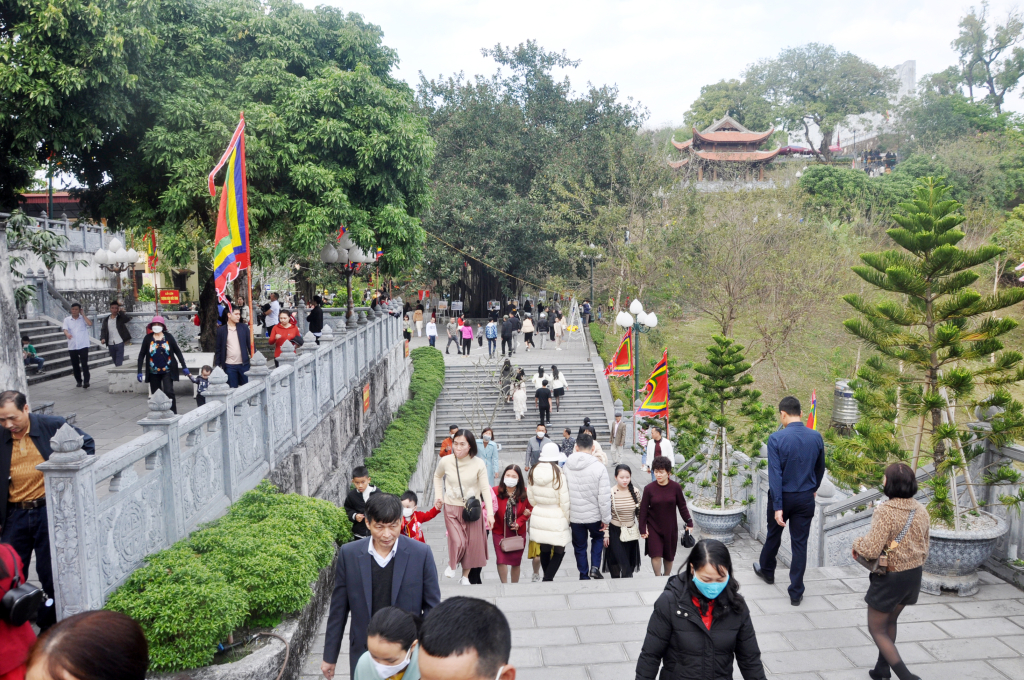
More than a decade ago, during visits to historical sites in the province, everyone was saddened by the dilapidated, even abandoned, state of many large and small relics stretching from Mong Cai to Van Don, Quang Yen, Uong Bi, Dong Trieu… At that time, the Cua Ong Temple complex (Cam Pha City) probably received the largest number of visitors, partly due to the regular pilgrimage of local people and those from neighboring coastal areas. Despite the large number of visitors, the complex remained small and cramped, with many relics only remaining as remnants, such as Trung Temple. The winding, narrow roads leading to the temple were a nightmare for locals and tourists during peak festival seasons and the spring festival at the beginning of the year.
Not only Cua Ong, but also the Yen Tu heritage complex, which was once famous nationwide, was quite rudimentary at that time. Many shrines and towers along the pilgrimage route had collapsed, leaving only their bases; the walking pilgrimage paths were narrow, winding, and had many bottleneck sections, causing congestion and danger for tourists. Perhaps the most heartbreaking was the Tran Dynasty relic site in Dong Trieu. Although it was specially recognized as a national relic site in the first round of recognition in 1962, due to time, war damage, and historical issues, most of the relics there have become ruins, almost forgotten amidst the overgrown bushes and weeds on the high hills and the orchards of the local people...
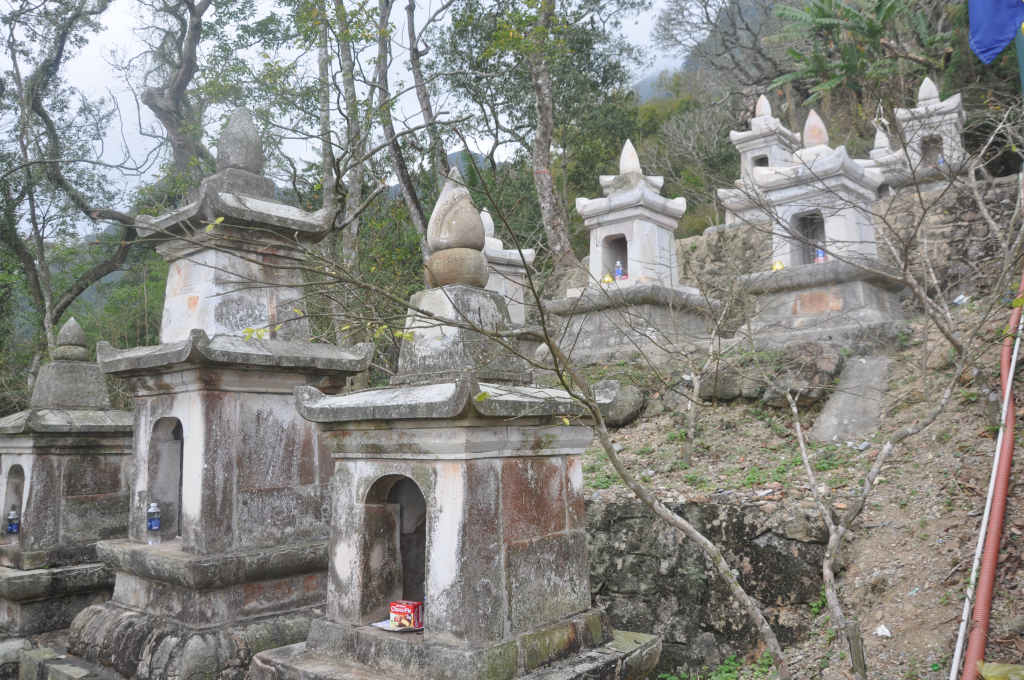
Despite the large complex of historical sites, most of the individual relics are in a state of disrepair, lacking funds for restoration and preservation. Each year, they rely solely on meager funding from the central government's National Target Program on Culture. Given this situation, the sites primarily serve the needs of tourists and pilgrims during the annual spring festival, a tradition of Vietnamese culture. For the rest of the year, the sites are quiet and sparsely visited…
Reviving and spreading the value of heritage.
Heritage sites are products left by our ancestors, many of which bear witness to the nation's struggle for independence and national defense. Reviving these sites fulfills the desire to honor the merits of our forefathers, serves the religious and spiritual needs of the people, and, further, becomes a tourist attraction for visitors from near and far. This contributes to increasing investment in these sites, spreading their value and vitality in contemporary life. Based on this understanding, the policy of socializing investment in heritage sites has gradually been realized by various units and localities, opening doors and creating breakthroughs in mobilizing large, potential resources for restoration, preservation, and the development and exploitation of heritage values for tourism, forming a unique cultural and spiritual tourism model in Quang Ninh.
I remember when Dong Trieu opened the road from Trai Loc Lake to the Ngoa Van temple and pagoda complex, they mobilized the participation of dozens of businesses, contributing labor, machinery, and manpower to rapidly level the ground and pour concrete. Since then, the wide road has replaced the small dirt road that previously crossed many streams and ravines, guiding pilgrims to the sacred land of Ngoa Van – where Emperor Tran Nhan Tong practiced Buddhism and attained enlightenment more than 700 years ago.
Not just one road, but many restoration and preservation projects of the Tran Dynasty heritage in Dong Trieu, along with supporting projects, have benefited from the joint contributions of businesses, the Buddhist Church, officials, local people, and tourists from all over, such as: the ancient tower in the Thong Dan area, the Ngoa Van hermitage and pagoda, Quynh Lam pagoda, Trung Tiet pagoda, Thai Mieu temple, and the tombs of the Tran kings… The Tran Dynasty heritage sites in Dong Trieu now have a more spacious and durable appearance than before, becoming a place that attracts tourists and people from all over, and a source of pride for every son and daughter of the heroic Fourth War Zone.
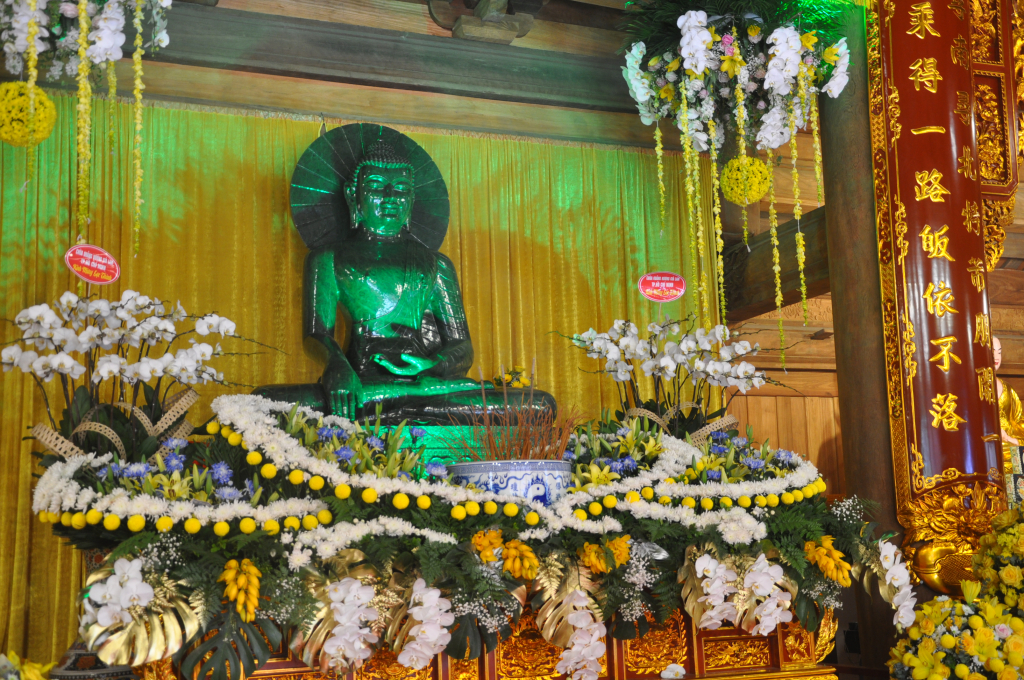
This improved, clean, and modern appearance can also be seen at many other large and small historical sites in Quang Ninh, from the "cultural landmarks" in the border region of Mong Cai, the highland and border temples in Binh Lieu and Ba Che, to the localities in the western region such as Uong Bi, Dong Trieu, Quang Yen, and Ha Long, which are rich in historical sites dating back thousands of years. These sites now meet the diverse needs of locals and tourists, serving not only as places of worship but also as places for rest, relaxation, quiet contemplation, and self-discovery before returning to the hustle and bustle of daily life. Contributing significantly to this achievement is the substantial contribution of businesses, most notably Tung Lam Development Joint Stock Company with its large-scale investments at the foot of the sacred Yen Tu mountain. The structures here were meticulously designed and built by businesses that hired consultants to emulate the architecture of the Hue Quang ancestral tower complex, reflecting the "Vietnamese spirit and Tran Dynasty style." Similarly, the products and services all embody the spirit of Truc Lam Zen Buddhism, the very essence of Yen Tu, aiming to provide visitors with a balance of body, mind, and spirit.
Towards new goals
Building upon the foundation established in previous implementations, Quang Ninh is setting new goals in the field of heritage in the coming period and gradually realizing them by continuing to implement Resolution 17-NQ/TU dated October 30, 2023, of the Provincial Party Committee on building and promoting the cultural values and human strength of Quang Ninh to become an endogenous resource and driving force for rapid and sustainable development.
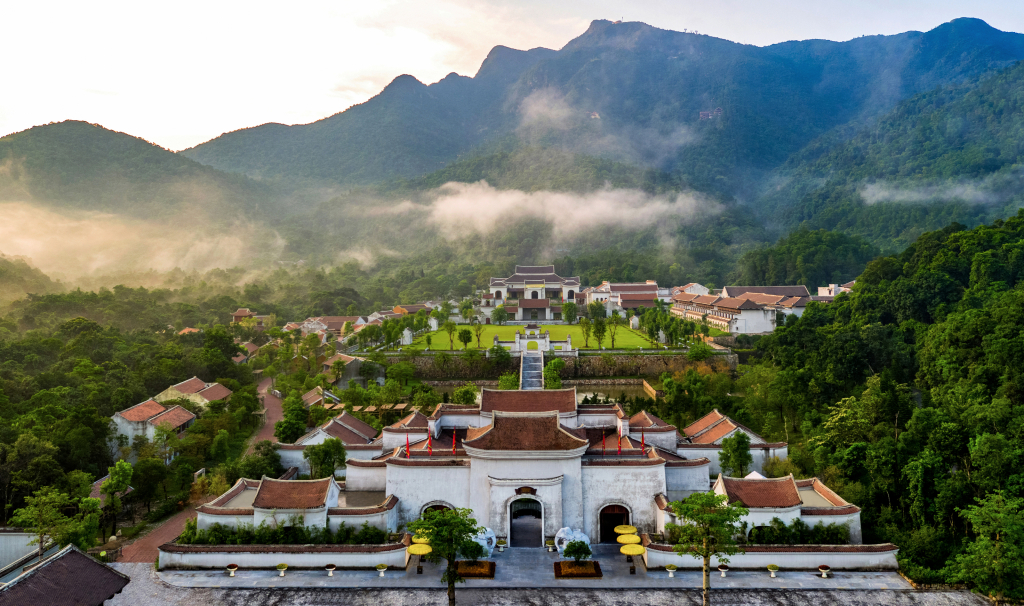
Accordingly, with a green and sustainable development perspective based on three pillars: nature, people, and culture, the development potential of heritage sites will continue to be promoted and exploited. Quang Ninh is determined to continue to utilize all resources for cultural and human development, bringing the system of heritage sites in localities into exploitation more and more effectively. In recent years, along with the process of preparing dossiers for upgrading relics and recognizing national treasures, Quang Ninh has achieved significant numbers with 13 national treasures and 8 special national relics. The Tran Dynasty relic sites in Dong Trieu, Yen Tu, and Bach Dang are important components within the Yen Tu - Vinh Nghiem - Con Son - Kiet Bac heritage complex, which has been submitted to UNESCO and has a wide-open opportunity to become a World Cultural Heritage site in the near future.
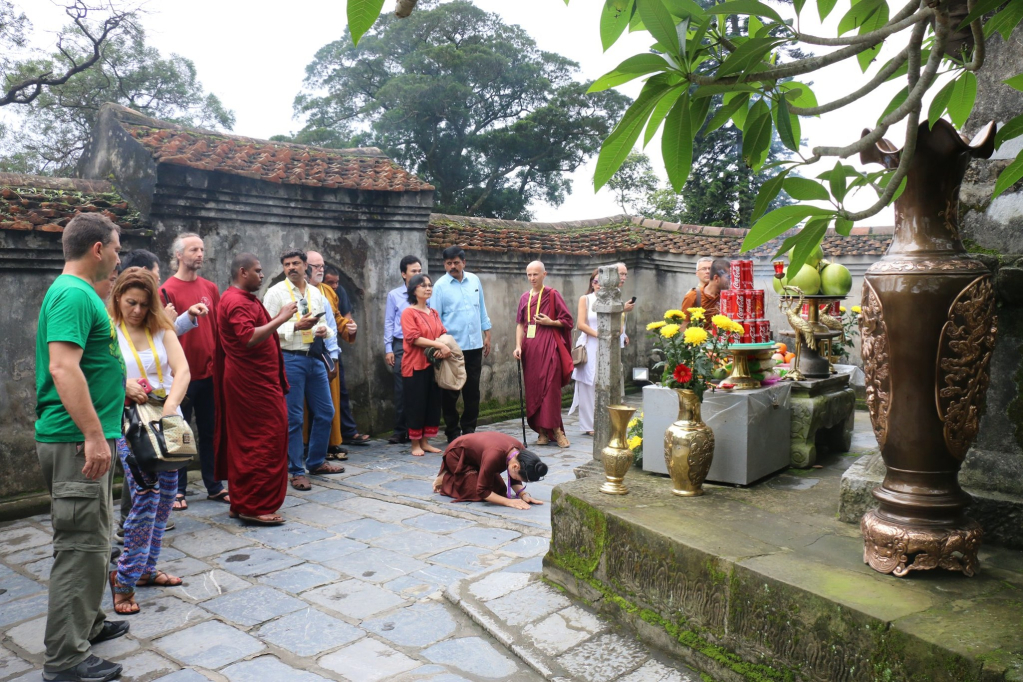
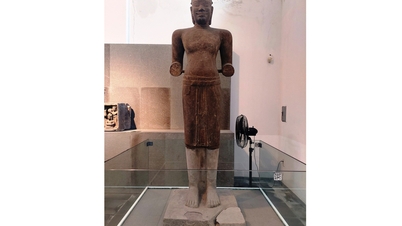
The opportunities for promoting cultural tourism potential in heritage sites are growing. Among them, Yen Tu has attracted a large number of foreign visitors in recent years, primarily from South Korea, China, Taiwan, Europe, America, and India. Yen Tu's recognition at the global level has also created opportunities for further tourism development, attracting broader attention from international tourists. It has also hosted impressive fashion shows showcasing the beauty of its heritage, contributing to the development of the local cultural industry. The Quang Ninh Museum is also a major tourist destination for both domestic and international visitors. The national treasures displayed there contribute to diverse experiential spaces, becoming a new tourism product for the cultural industry.
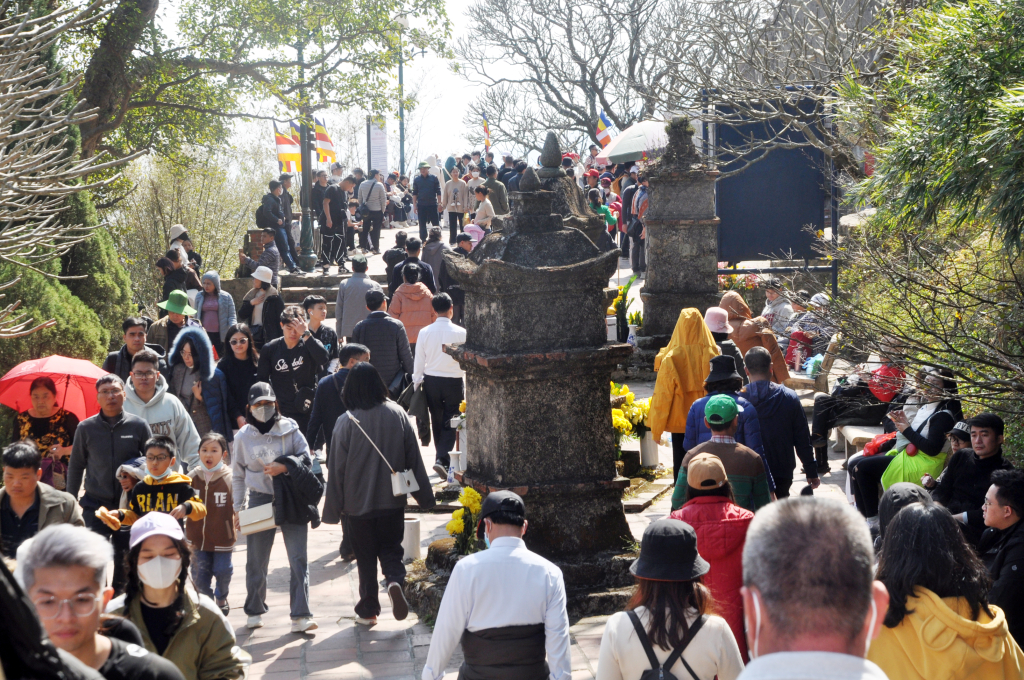
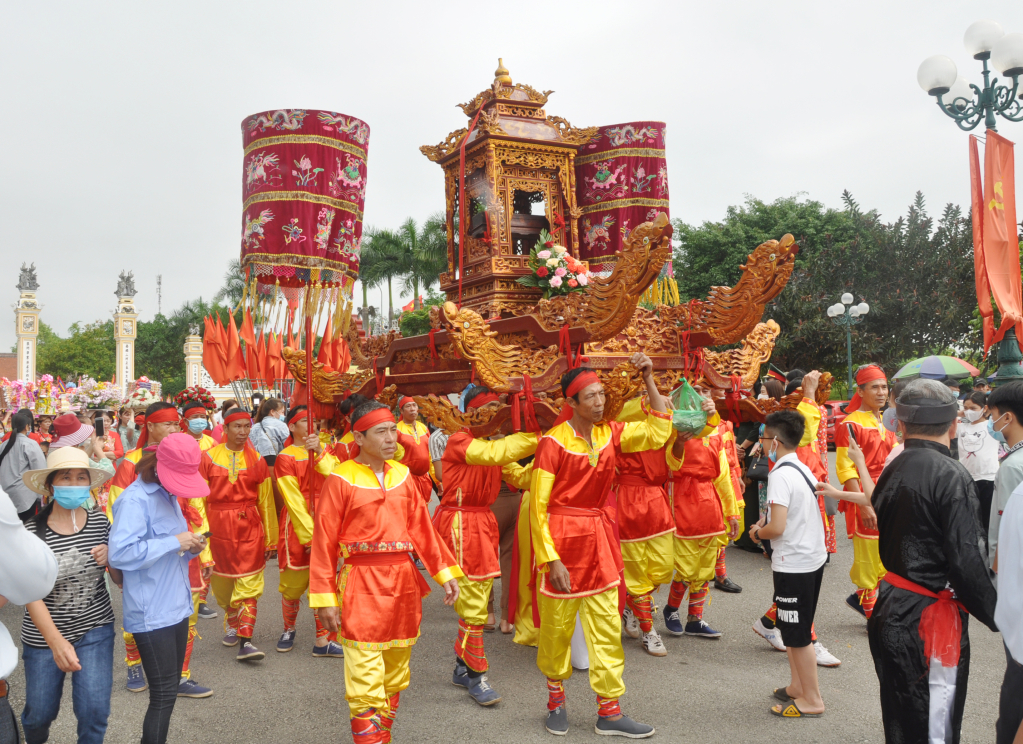
Quang Ninh has set several specific, absolute goals for 2030, such as: 100% of tour guides, employers, and tourism workers in the province will receive training on history and scenic spots. local culture. Digitize 100% of historical and cultural relics, scenic spots, and intangible cultural heritage sites that have been ranked, as well as provincial museums and libraries. 100% of ranked historical and cultural relics and scenic spots are managed, preserved, and their value promoted; 100% of special national relics are regularly managed, restored, renovated, and protected against degradation.
Furthermore, there is a need to strengthen the application of digital transformation with big data technologies, artificial intelligence, and virtual/augmented reality (VR/AR) in the conservation, preservation, restoration, and promotion of cultural heritage. This, along with the active management role of the state, should also promote the role of the community in protecting, restoring, and promoting the value of cultural heritage…
Source


![[Photo] General Secretary and President To Lam presides over the meeting to approve the draft report on the results of the second inspection by the Politburo of the Standing Committee of the Hanoi City Party Committee.](https://vphoto.vietnam.vn/thumb/1200x675/vietnam/resource/IMAGE/2026/05/26/1779789811432_a2-bnd-4430-9620-jpg.webp)



















































Comment (0)