


For the first time, the Vietnamese government has established a pilot legal framework for the cryptocurrency market for five years.
For the first time, the Vietnamese government has established a five-year pilot legal framework for the cryptocurrency market. This is a step expected to transform informal flows into a transparent resource linked to the capital market and affirm the nation's position in the digital age.
Legal framework for the cryptocurrency market
Government Resolution No. 05/2025 has attracted significant attention as it is the first time the government has recognized and established a pilot framework for the cryptocurrency market at the national level. According to this Resolution, the pilot process will last for five years, with the principles of cautious, controlled, and practical implementation. This is a step aimed at ensuring the safety and security of the market while protecting the legitimate rights of all participating parties.
Previously, cryptocurrency-related activities were largely unregulated and outside the purview of official oversight. Resolution 05 has eliminated this legal loophole by clearly stipulating that all transactions can only be conducted through legitimate entities licensed by the Ministry of Finance . This means that the massive flows of money that previously operated in the shadows will gradually be brought into a transparent framework.
To be allowed to issue cryptocurrency assets, businesses must be Vietnamese companies with a minimum charter capital of VND 10,000 billion and at least 65% domestic capital. In addition, businesses need to meet a series of stringent conditions: a team of professionally certified personnel, and a technology infrastructure that meets security level 4 standards. These conditions demonstrate a strict management approach, only accepting the participation of businesses with strong financial and technological capabilities, in order to minimize potential risks.
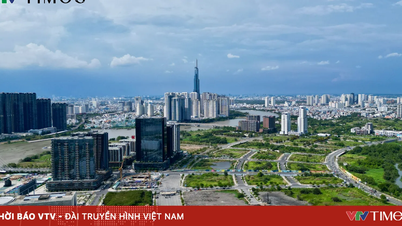
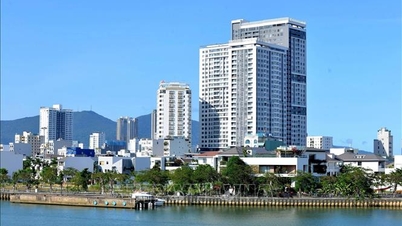
This event is also linked to the context of Vietnam building international financial centers in Ho Chi Minh City and Da Nang. Therefore, piloting the cryptocurrency market is not only a management solution but also a preparatory step for a comprehensive digital financial infrastructure, creating a foundation for connecting with global capital flows.
Ms. Nguyen Van Hien, Vice President and General Secretary of the Vietnam Blockchain and Digital Asset Association, believes that the new legal framework opens up many significant opportunities for the digital economy. “If the world took 10 years to mature, experiencing numerous failures along the way, Vietnam can absolutely shorten that to just a few years, provided it knows how to leverage the lessons learned from countries that have gone before,” Ms. Hien emphasized.

Resolution 05 clearly specifies the number of organizations licensed to provide crypto asset services during the pilot phase.
Choose up to 5 organizations that provide crypto asset services.
Resolution 05 clearly stipulates the number of organizations providing cryptocurrency services that will be licensed during the pilot phase. According to Ms. Pham Thi Thuy Linh, Head of Market Development at the State Securities Commission: “In coordination with the Ministry of Finance, the Ministry of Public Security, and the State Bank of Vietnam, we have selected a maximum of 5 organizations to provide cryptocurrency services and grant licenses. This maximum of 5 ensures healthy competition among service providers while also guaranteeing control and evaluation of the effectiveness of their operations during the pilot phase.”
The maximum limit of 5 exchanges reflects a proactive management approach: opening up the market while maintaining tight control, avoiding a rampant boom that could lead to imbalances or difficulties in management. This also serves as a "safe testing ground" for authorities to monitor, evaluate, and adjust policies before considering expansion.
Not only the quantity, but also the types of assets traded are specifically defined. According to the Resolution, crypto assets permitted to circulate in Vietnam must be linked to real-world assets (RWA). Thus, instead of focusing on purely speculative tokens (digital assets), the market will prioritize the digitization of real assets such as real estate, gold, commodities, and carbon credits. This ensures transparency while opening up opportunities to connect real assets with the digital economy.
This regulation aligns with the forecast by consulting firm BCG, that crypto assets pegged to real assets will account for approximately 10% of global GDP by 2033, equivalent to $18 trillion. This is precisely why Vietnam has chosen a cautious approach, prioritizing assets with clear underlying value.
Pilot programs are necessary to get to the right destination.
According to a 2023 survey, Vietnam ranks second in the world in the percentage of its population owning cryptocurrency: one in five adults has traded cryptocurrency at some point. Simultaneously, Chainalysis notes that the inflow of cryptocurrency assets into Vietnam consistently exceeds $100 billion annually. If properly managed, this capital will shift from the informal to the formal sector, thereby increasing government revenue and supplementing capital flows into the economy.
From a business perspective, Mr. Phan Duc Trung - Chairman of the Vietnam Blockchain Association - affirmed: “The law recognizes environments that allow public fundraising through exchanges. This is an opportunity; if there is a good legal framework, we will see a transparent flow of crypto assets contributing to the economy.” This means that businesses have an additional channel for raising capital through the issuance of tokens linked to real assets, alongside traditional instruments such as stocks and bonds.
From an overall perspective, Mr. Phan Duc Trung pointed out three major challenges facing the market: human resources, international competitiveness, and the maturity of the domestic market. Of these, human resources is the biggest bottleneck, as both regulatory agencies, businesses, and investors lack the in-depth knowledge base to meet new demands.
“Internationally, the question is whether cryptocurrency products from Vietnam are attractive enough to compete with established products in the global market. Domestically, the market is still nascent: the accounting framework, supervisory processes, and operational experience need more time to be perfected before they can operate smoothly and build lasting trust among investors,” Mr. Trung analyzed.
In terms of global competition, Ms. Tran Thi Thuy Ngoc, Deputy General Director of Deloitte Vietnam, emphasized: "Major financial markets such as the US, Hong Kong (China), Japan... are studying who will be the first to emerge victorious." With the issuance of Resolution 05, Vietnam has demonstrated its determination to move early and create a competitive advantage in the context of the emerging global digital financial market.
Beyond its role in managing and mobilizing capital, the cryptocurrency market is also a new infrastructure for the digital economy. Effective control and operation will help Vietnam maintain its digital sovereignty, unlock innovative resources, and connect with emerging international financial centers in the region. This is also a preparatory step for Vietnam to position itself actively in the global digital economic value chain.
Resolution 05/2025 marks a milestone, affirming Vietnam's pioneering step in the digital asset era. The five-year pilot program, with a maximum of five exchanges focusing on assets linked to real value, demonstrates a strategy of strict management while paving the way for innovation. If successful, the cryptocurrency market will not only help to increase transparency in capital flows but also create a new fundraising channel, promote the development of financial centers, and affirm the nation's position in the global race for the digital economy.
Source: https://vtv.vn/dua-tai-san-ma-hoa-ra-khoi-vung-xam-phap-ly-100251016153841693.htm


![[Photo] Secretary of the National Assembly Party Committee, Chairman of the National Assembly presides over the meeting of the Standing Committee and Executive Committee of the National Assembly Party Committee.](https://vphoto.vietnam.vn/thumb/1200x675/vietnam/resource/IMAGE/2026/06/03/1780480353201_ndo_br_bnd-2585-jpg.webp)

![[Photo] First session of the 14th Congress of the Vietnam Trade Union](https://vphoto.vietnam.vn/thumb/1200x675/vietnam/resource/IMAGE/2026/06/03/1780465947883_ndo_br_img-3852-jpg.webp)
![[Photo] General Secretary and President To Lam presides over a meeting with the Central Organizing Committee.](https://vphoto.vietnam.vn/thumb/1200x675/vietnam/resource/IMAGE/2026/06/03/1780482764658_a1-bnd-4741-3342-jpg.webp)













































![[Video] Sunset at Lap An Lagoon – Where the sun sets over the fishing nets](https://vphoto.vietnam.vn/thumb/1200x675/vietnam/resource/IMAGE/2026/05/31/1780192137701_beach-landscape-sea-water-nature-grass-745871-pxhere-com.jpeg)


































Comment (0)