

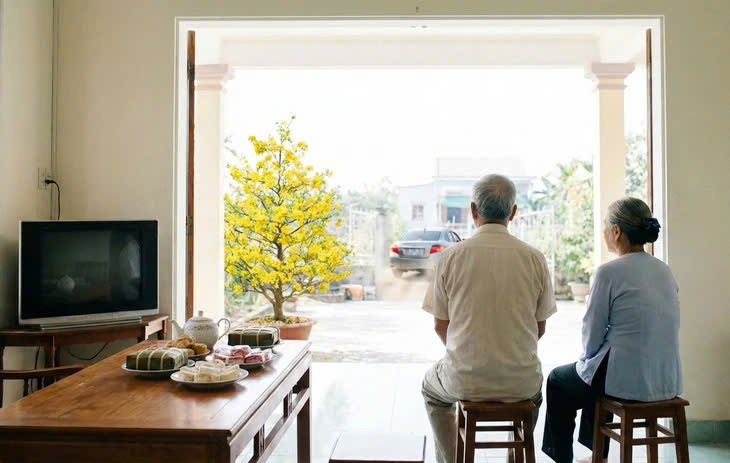
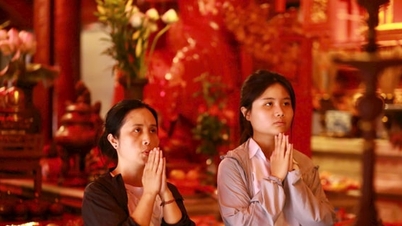
Parents living far away from their children also feel sad, but they always wish for their children to be successful and happy - Photo: AI
The story about assigning childcare duties for sick parents, "This week I'm on duty, next week my older brother," published on Tuoi Tre Online, resonates with many modern families.
Each family has one or two children, and each child has their own family, job, and career to manage, so when parents fall ill, it's not unusual for them to divide up the caregiving responsibilities.
Those who are fortunate get to take care of their parents more often.
Reader Noithatlong believes that for lasting relationships, clarity and transparency are essential. Clearly dividing responsibilities among siblings is crucial for maintaining sibling bonds. "Everyone has to make a living, and if a large family can balance things out, that's wonderful," reader Heo agrees.
If the children can't divide their time, they can divide the tasks: those who can help with childcare, and those who can afford it, can cover the expenses.
A reader named Phong commented that it's great that children still love and care for their parents, and that they still divide responsibilities and send money home. It's not about taking on everything just because you love them; you need to divide things so that everyone has a responsibility and everyone can express their love.
However, not all readers are happy with this way of dividing love.
A reader named Duy reminded us: "Someday, when you're in our parents' position, your children will also say they're very busy and just visit briefly. Please don't be so strict with them. Okay, I'm going to work now. Here's 10 million VND for you, eat whatever you want. I'm late for my meeting, bye Mom and Dad."
Many other readers immediately responded that only financially well-off children who shirk their responsibility to care for their parents, using money to fulfill their filial duties instead, would have such an attitude.
A user with the username "No Name" argues that parents today must accept the changes in society and life; no one can live someone else's life for them. "Our children will become parents themselves and have children of their own. Think about how they are dividing their attention among their grandchildren. If we keep wanting our children to spend more time with us, how will the grandchildren feel?"
"Things are different now than they used to be. Children are busy with work and pressure, so finding time to take care of their parents is already precious. Don't be too strict," reader Sang shared the same sentiment.
Another reader from Da Nang offered a different perspective: "This division of labor shows that the family is fortunate and happy. Many families no longer have the opportunity for siblings to sit down together and divide shifts because they have become estranged and haven't sat together for a long time. The saddest thing is that sometimes both children bring food, and sometimes neither brings anything because if siblings don't talk to each other, how would they know?"
"Only those who are truly fortunate get to take good care of their parents," one reader wrote.
My children will treat me the way I treated their parents.
Some people also condemn the clear division of parental care as calculating and heartless. Reader Quynh Nhu quotes the folk verse, "Parents raise their children with boundless love, but children repay their parents by counting the days and months," and writes: "Just thinking about it makes me feel heartbroken for my parents."
"We often use busyness as an excuse to mechanize family relationships. This article provides a necessary pause for each child to reflect on themselves," noted a reader named Lan.
However, a reader named Hong Ha commented: "Every tree has its own flower, every house has its own circumstances. There is no one-size-fits-all solution. In your situation, that's a great way to handle it, but in my situation, doing the same would be terrible, and vice versa."
Reader No Name agrees: "Each situation has a solution that suits the people involved. Perhaps the lesson learned is the ingenuity of the children in caring for their parents. That ingenuity allows them to fulfill their responsibilities to their parents, children, and their own small family."
And as reader Khoa wrote: everything has its own rules, so don't be too strict. In the old days, when parents were sick, the children would gather at home to take care of them. Those were farming families, where taking time off didn't significantly affect others. Society is different now; if you don't organize and arrange things for each other, you'll lose your job.
And the division of labor is simply about sharing responsibilities, and according to a reader named An, it is "the attitude, tone of voice, and accompanying emotions that determine the warmth of a family."
"What matters is sincerity and self-awareness. Making clear divisions is pointless if some people don't want to do it," reader Huu Nhan reminded. And this reader emphasized that their children will treat them the way they treated their parents.
Be proactive so you don't become overly dependent on your children.
Many readers, analyzing the situation from a child's perspective, argue that most children love their parents. However, to truly love them, one must first love oneself.
If a child is struggling financially and burdened with the responsibility of providing for their parents, the fatigue and pressures of life will be carried over into their hands and voice, sometimes causing their parents distress.
"I'd rather go back to my hometown and live with my vegetable garden and neighbors; it's more peaceful, and I won't have to ask my children for money. I'll prepare some money for myself," a reader named Lam planned for herself.
Or, as one reader put it: "You have to take care of yourself, not wait for a 'ding ding' from your children and grandchildren, not yearn for them to visit. If you want to, visit them; if you don't, go for a relaxing coffee break," shared reader Duong.
Source: https://tuoitre.vn/dung-tien-thay-minh-cham-soc-cha-me-cung-la-su-bao-hieu-20260524081504701.htm
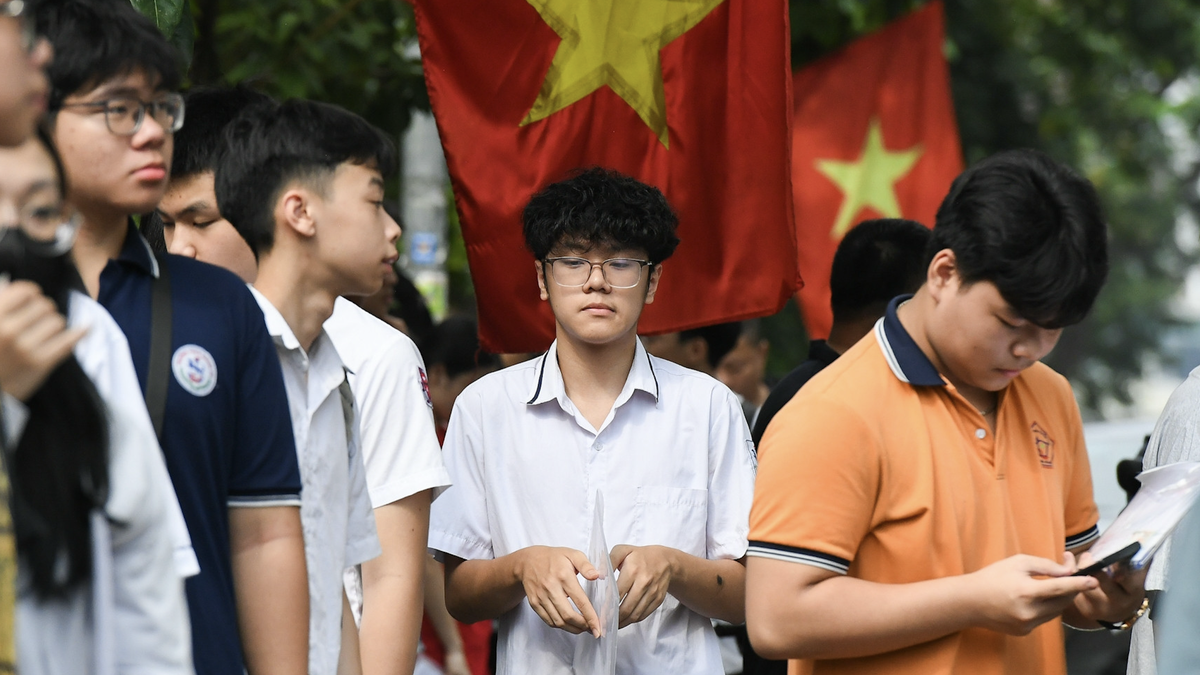
![[Image] Pleasant weather helps students enter the 10th grade entrance exam with confidence.](https://vphoto.vietnam.vn/thumb/1200x675/vietnam/resource/IMAGE/2026/05/29/1780034401612_ngay-1-thi-lop-10-minh-duy-8-5009-jpg.webp)

![[Photo] Ba Lang An Lighthouse - the "eye of the sea" amidst the "rock museum" of Quang Ngai province.](https://vphoto.vietnam.vn/thumb/1200x675/vietnam/resource/IMAGE/2026/05/29/1780038698840_anh-man-hinh-2026-05-29-luc-14-10-42.png)












































































Comment (0)