

Decisive, disciplined
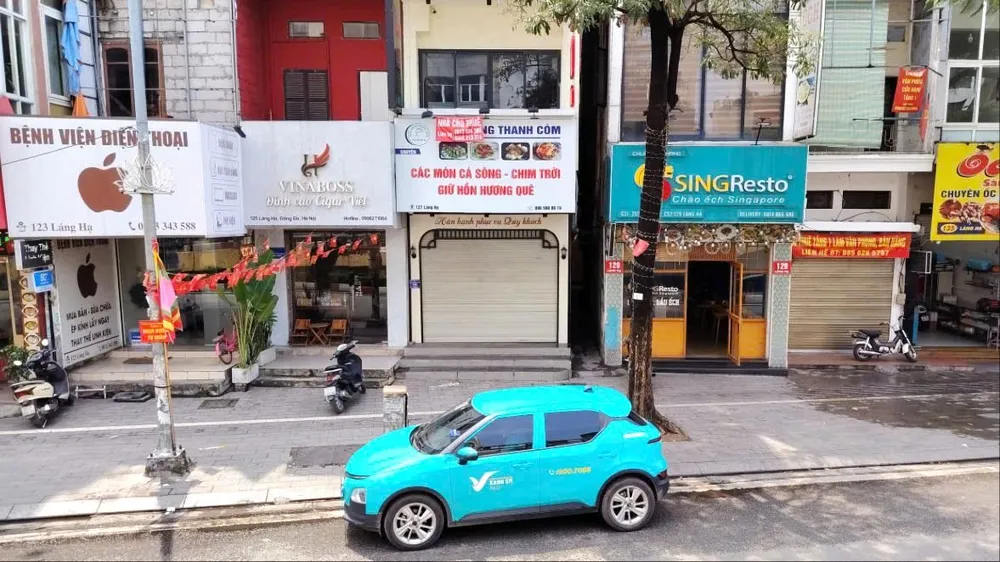
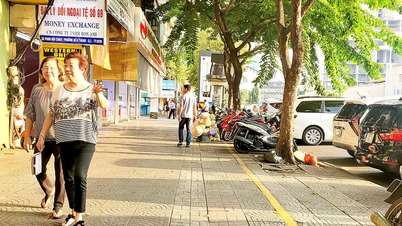
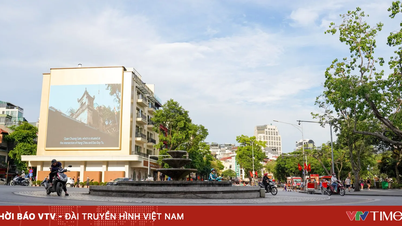
In early May, observations on many central streets in Hoan Kiem and Cua Nam wards showed that sidewalks were very clear and tidy, despite being areas with many shops, offices, and businesses. These streets no longer showed the chaotic scene of motorbikes, tables, and chairs from restaurants and cafes.
Everything has been tidied up, restoring the walkways for pedestrians. For many streets further from the city center, such as Nguyen Ngoc Vu, Lang Ha, Cau Giay, Thanh Xuan, Nguyen Thi Dinh, etc., pedestrians no longer have to navigate through the "maze" of motorbikes, tables, chairs, and stalls that clutter the sidewalks.
Ms. Le Thi Thu (32 years old, residing on Kim Ma Street) shared: “I work at the Ministry of Health on Giang Vo Street, which is only a little over 1km from my house, so I often walk to work. Previously, walking on the sidewalk was like ‘overcoming obstacles,’ with some sections almost completely impassable, forcing me to walk on the road. But recently, things have changed completely.”
Meanwhile, the owner of a popular cafe on Le Van Huu Street, upon seeing customers bring two plastic chairs out to sit on the sidewalk, quickly rushed out to ask them to take them inside, then bluntly stated: "Please understand, if we sit on the sidewalk now, the AI camera on the other side of the street will spot us and report it to the ward, and I will be fined 2.5 million VND."
The recent dramatic transformation of Hanoi's urban landscape stems from the concentration of resources and manpower, mobilizing the strength of the entire political system to thoroughly address bottlenecks in urban order, with the goal of ensuring urban order, discipline, and civility. This is coupled with the application of technology, with numerous AI cameras installed on many streets.
According to statistics from the Hanoi City Police, by the end of April 2026, 32 out of 126 communes and wards had established CCTV surveillance centers located at their local police stations, contributing to improved monitoring and violation handling capabilities. The entire city has dealt with 179 out of 231 illegal street markets, achieving over 77% of the plan; conducted over 1,000 inspections, and issued both "on-the-spot" and "direct" fines to over 6,600 cases of urban order violations.
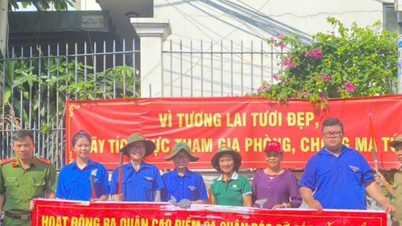
Investigations in Dinh Cong ward, one of the most densely populated areas in Hanoi, revealed that nearly 300 businesses there have signed commitments with the local authorities to maintain urban order and civility. Prior to this, the businesses were shown images of violations of urban order in the area.
Mr. Nguyen Tuan Anh, Chairman of the People's Committee of Dinh Cong Ward, said that these are factual documents to help each shop and household on the street identify violations, and the local government will focus on resolving the "bottleneck" in the awareness of the business owners.
Livelihood worries
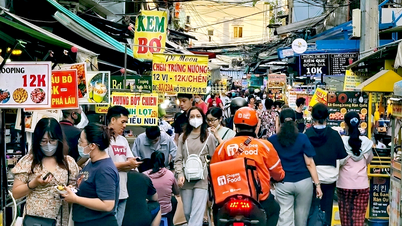
However, the implementation of clear sidewalks and unobstructed roads is having a significant impact on the long-standing sidewalk economy in the capital, as well as the main source of income for many residents. On many streets, one can see numerous shops and stalls struggling, or "Shop for Rent" signs pasted over old ones. For many businesses, the sidewalk is not just a passageway, but a space for doing business and earning a living. When there is no longer parking space for customers, and no more spacious seating area, a decrease in customer numbers is inevitable.
A beer shop owner on Phan Chu Trinh street lamented: "Hanoi residents and tourists enjoy sitting on the sidewalk, eating and drinking while watching the street life. Now that everyone is forced to go inside, it's cramped and there's no parking space, so customers are dwindling. For almost a month now, my shop's revenue has decreased by more than 50%."
Restoring urban order is absolutely the right thing to do, but it also raises concerns about the livelihoods of many people. Through our research, we found that many street-front businesses hope the city and relevant authorities will implement more reasonable and sustainable measures, such as planning designated areas for paid sidewalk businesses, with the revenue reinvested in urban infrastructure.
For small businesses severely affected, the government needs to implement policies to support their transition to online business, or relocate them to central markets or well-planned pedestrian streets. Simultaneously, the city needs to address the issue of centralized parking within a 200-300m radius of bustling business districts to reduce pressure on sidewalk parking; and classify streets by function: allowing sidewalk businesses during certain hours in heritage and tourist areas, while tightening regulations on main traffic arteries to ensure safety.
Recently, Hanoi Party Secretary Tran Duc Thang agreed with the proposal from Lieutenant General Nguyen Thanh Tung, Director of the Hanoi Police, to consider holding local Party committees and authorities accountable for repeated violations of urban order within their jurisdiction.
Accordingly, local Party committees, authorities, and commune/ward police who allow violations to occur and receive three warnings from the city will be recommended for a "Failure to complete tasks" rating, and if violations continue to occur, their personnel will be reviewed.
Source: https://www.sggp.org.vn/duong-thong-he-thoang-and-bai-toan-kinh-doanh-post852175.html



![[Photo] General Secretary and President To Lam presides over the meeting to approve the draft report on the results of the second inspection by the Politburo of the Standing Committee of the Hanoi City Party Committee.](https://vphoto.vietnam.vn/thumb/1200x675/vietnam/resource/IMAGE/2026/05/26/1779789811432_a2-bnd-4430-9620-jpg.webp)
























































































Comment (0)