

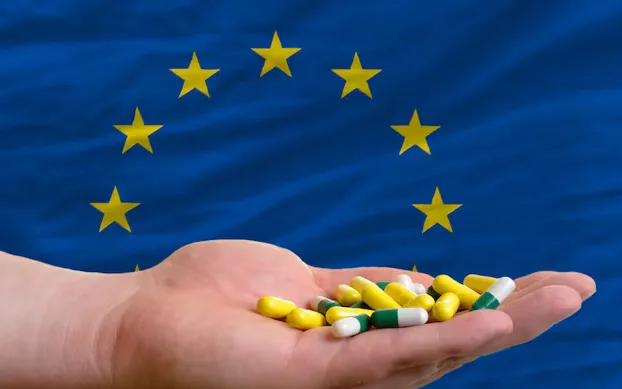
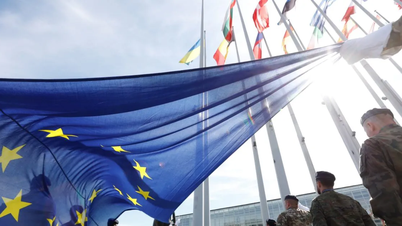
The European Parliament and the European Council recently reached a preliminary agreement on the Essential Medicines Law, a legal framework proposed by the European Commission in March 2025 to strengthen production capacity, ensure supply, and prevent shortages of medicines in the EU.
According to the European Commission, this law is part of the “European Health Union” strategy, aimed at ensuring all EU citizens have access to essential medicines in the context of an increasingly volatile global pharmaceutical market.
Strengthening self-sufficiency in drug supply
According to the European Council, the law focuses on addressing shortages of essential medicines such as antibiotics, insulin, and painkillers by expanding domestic production capacity, diversifying supply chains, and encouraging joint procurement among member states.
One notable point is that the EU will prioritize European pharmaceutical manufacturers in public tenders. According to the EU Council, the new criteria allow procurement bodies to evaluate suppliers based on the proportion of drugs and pharmaceutical ingredients produced within the EU, rather than solely on the lowest price as before.
According to Reuters, more than 80% of the active ingredients used to manufacture antibiotics in Europe currently originate from Asia, mainly from China and India. This makes the EU vulnerable to global supply chain crises.
The EU's list of essential medicines currently includes around 270-300 drugs, ranging from paracetamol, vaccines, and insulin to drugs for rare diseases, antibacterials, and immunosuppressants. According to the European Medicines Agency (EMA), these are drugs of particular importance to the health and public health systems of the entire bloc.
Croatian MEP Tomislav Sokol believes that a centralized procurement mechanism at the EU level would help reduce the risk of drug shortages and increase the ability to coordinate supply among member states.
Meanwhile, Danish Minister of Home Affairs and Health Sophie Løhde stressed that the law will help build a pharmaceutical supply chain that is “more sustainable and resilient” to global shocks.
Europe faces a prolonged drug shortage crisis.
Recent figures suggest that the drug shortage crisis in the EU has become a structural problem rather than just a temporary phenomenon.
According to Euronews, the EMA is currently reporting shortages of dozens of drugs across the EU, including many essential medications such as the antibiotic amoxicillin, stroke medication, and cyanide antidote.
According to a report by the European Court of Auditors (ECA), between 2022 and October 2024, EU countries reported 136 serious shortages of essential medicines. European auditors warned that this situation is worsening due to the lack of a common EU-wide coordination mechanism and a fragmented data system.
German MEP Klaus-Heiner Lehne stated that the current drug shortage has become a "strategic weakness" for Europe, affecting not only patients but also putting pressure on the entire public health system.
According to Pharmaceutical Technology, more than 50% of drug shortages in the EU during 2022-2023 stemmed from manufacturing issues, particularly shortages of active pharmaceutical ingredients (APIs). This reflects Europe's deep dependence on global supply chains.
What motivated the EU to act?
According to the EMA, the Covid-19 pandemic and geopolitical tensions in recent years have clearly exposed the fragility of the global pharmaceutical supply chain.
The World Health Organization reports that more than 90 countries experienced severe shortages of medicines or medical supplies between 2020 and 2022. According to The New York Times, during the peak of the Covid-19 pandemic, many hospitals in Europe were forced to limit the use of anesthetics and antibiotics due to a lack of imported supplies from Asia.
The crisis continued into the post-pandemic period. AP News reported that the winter of 2022-2023 saw a severe shortage of pediatric antibiotics in many European countries, particularly amoxicillin, due to soaring demand coupled with limited production capacity.
The EMA then had to coordinate with member states to redistribute supplies and recommend doctors use alternative drugs to avoid a complete shortage of some essential antibiotics.
In addition to the post-Covid-19 impact, current geopolitical instability is also increasing concerns about pharmaceutical security.
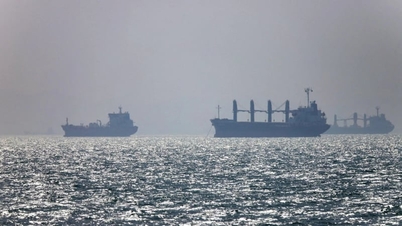
According to the EMA, conflicts in the Middle East and disruptions to trade through the Strait of Hormuz, one of the world's strategic shipping lanes, continue to put pressure on global pharmaceutical raw material and logistics supply chains.
EMA CEO Emer Cooke stated: “In a time of increasing global disruptions, a resilient and safe supply chain for essential medicines is key to protecting public health across the EU.”
The cost and competitiveness challenge of the pharmaceutical industry.
Although the Essential Medicines Act has received widespread support from many EU governments, experts believe that bringing pharmaceutical production back to Europe will not be easy.
According to the Financial Times, the sharp rise in energy prices following the Russia-Ukraine conflict has driven up the operating costs of pharmaceutical and active ingredient manufacturing plants in Europe, diminishing the competitiveness of the EU pharmaceutical industry compared to outside markets, particularly China and India.
According to the European Fine Chemicals Group (EFCG), Europe now accounts for only about 25% of global pharmaceutical active ingredient production capacity, a sharp decline from over 50% in the early 1990s. Politico Europe reports that many pharmaceutical companies believe the EU is facing a "policy contradiction" as it seeks to increase domestic production while maintaining strict drug price controls.
Pharmaceutical companies argue that low profit margins make it difficult for them to invest in expanding factories in Europe, especially for inexpensive generic drugs like antibiotics or painkillers, which are the product groups most frequently subject to shortages.
Many experts believe that the European market currently prioritizes low-cost drugs too much, while not paying enough attention to the stability and safety of the supply chain. This has led many pharmaceutical companies to lose interest in maintaining production operations in Europe.
Competition with the US and the trend towards "strategic autonomy"
In addition to pressure from Asia, the EU also faces increasing competition from the US in the high-tech pharmaceutical sector.
Many major pharmaceutical companies have pledged to invest hundreds of billions of dollars in the US amid Washington's implementation of strong protectionist policies and significant incentives for domestic production.
Some pharmaceutical companies have delayed launching new drugs in Europe due to concerns that the EU's low-price policy could affect prices in the US market through the international price reference mechanism.
Meanwhile, European pharmaceutical companies are concerned that the new law could increase the legal burden. According to Euronews, the European Pharmaceutical Companies Association (EUCOPE) has urged the European Commission to slow down the implementation to allow more time to assess its impact on the pharmaceutical industry.
However, EU policymakers believe that "medicinal security" has now become a strategic priority, on par with energy, semiconductor chips, or rare materials.
The Essential Medicines Act also aims to build a Europe-wide monitoring and early warning system to detect potential drug shortages before a crisis occurs. In addition, the European Union is considering establishing strategic drug reserves similar to the energy reserves implemented after the Russian gas crisis.
Some countries, such as France and Germany, began taking action even before the law was fully passed. For example, France announced plans to bring the production of around 50 essential medicines back into the country after repeatedly facing shortages of paracetamol and antibiotics in recent years. The German government also implemented financial support packages for domestic manufacturers of generic drugs and antibiotics to reduce dependence on Asian supplies.
According to McKinsey & Company, the process of re-localizing the pharmaceutical supply chain in Europe could take 5-10 years due to the significant investment required in factories, technology, and personnel.
However, many experts argue that the cost of continued reliance on external sources of supply could be far greater in the context of increasingly unpredictable geopolitical competition and global crises.
Source: https://daibieunhandan.vn/eu-thuc-day-luat-thuoc-thiet-yeu-de-bao-ve-an-ninh-y-te-10417616.html
![[Image] Hanoi's urban life under the challenge of a "scorching hot" environment](https://vphoto.vietnam.vn/thumb/1200x675/vietnam/resource/IMAGE/2026/05/25/1779706979265_nang-nong-t5-2026-minh-duy-7-4636-jpg.webp)


![[Image] Close-up view of the interchange connecting the two expressways and Long Thanh Airport.](https://vphoto.vietnam.vn/thumb/1200x675/vietnam/resource/IMAGE/2026/05/25/1779703378210_ndo_br_z7863716673926-224453a31600126cce10622af6290afd-4549-jpg.webp)






















































































Comment (0)