


Promoting the defense industry
Most recently, on May 19th, the European Union (EU) reached an agreement on two of three proposals aimed at boosting the defense industry. The most contentious issue concerns access to intellectual property in projects funded by the European Defence Fund (EDF). Under the final agreement, member states are granted common access but are prohibited from transferring intellectual property rights. However, this agreement still needs to be ratified by EU member states.
Furthermore, the EU has also made progress on expediting the licensing of new defense plants. Under this system, local authorities must respond to licensing applications within 42 working days, with a maximum extension of 60 days. Automatic refusal of licenses will only apply in cases posing a serious risk to human health or national security. However, the parties have yet to agree on simplifying the transport of defense goods between EU member states and increasing flexibility in defense procurement, as many member states are concerned that a common transport license could affect national jurisdiction.
The Project Syndicate news site argues that, with the US almost ceasing support for Ukraine and announcing a troop withdrawal from Germany, Washington's commitment to European security is more fragile than ever. Therefore, to accelerate rearmament, the EU is building new mechanisms to coordinate investment and strengthen its defense industry.
Become more connected.
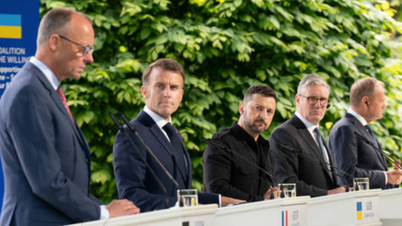
The EU is also increasingly prominent in international discussions on foreign policy and security, thereby building an image of a more cohesive Europe. This is demonstrated by successive sanctions against Russia, large-scale financial support for Ukraine, and funding for the transfer of military equipment to Kyiv through the European Peace Facility. These actions show strong political consensus among European governments.
With the conflict in the Middle East, EU member states share the common goal of preventing Iran from acquiring nuclear weapons, avoiding a wider war that could further destabilize energy markets and exacerbate security risks on Europe's southern flank. The EU is also particularly concerned with preventing a recurrence of the large-scale migration wave that occurred after the Syrian civil war broke out.
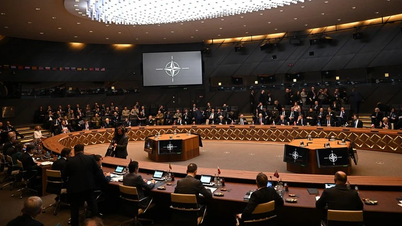
For decades, Europe relied heavily on the American security umbrella through NATO. However, recent statements by US President Donald Trump about potentially cutting commitments to NATO have heightened concerns in Europe, further reinforcing the concept of strategic autonomy, not only in defense but also in technology, energy, and industry. Germany has loosened fiscal rules to increase military spending, while France and many other EU member states are calling for the development of a common defense capability.
According to analysts, the conflict in Ukraine and the US prioritizing domestic interests are forcing Europe to shift its post-Cold War security thinking. Instead of continuing to depend on Washington, the EU is gradually shaping its role as a more independent center of power in a volatile world order.
Source: https://www.sggp.org.vn/eu-dinh-hinh-vai-role-trung-tam-quyen-luc-doc-lap-post854012.html
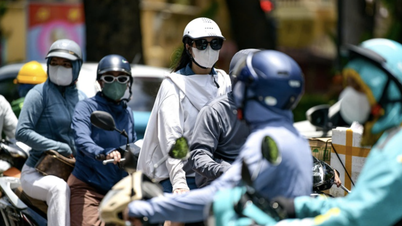
![[Image] Hanoi's urban life under the challenge of a "scorching hot" environment](https://vphoto.vietnam.vn/thumb/1200x675/vietnam/resource/IMAGE/2026/05/25/1779706979265_nang-nong-t5-2026-minh-duy-7-4636-jpg.webp)

![[Image] Close-up view of the interchange connecting the two expressways and Long Thanh Airport.](https://vphoto.vietnam.vn/thumb/1200x675/vietnam/resource/IMAGE/2026/05/25/1779703378210_ndo_br_z7863716673926-224453a31600126cce10622af6290afd-4549-jpg.webp)





































































Comment (0)