

 |
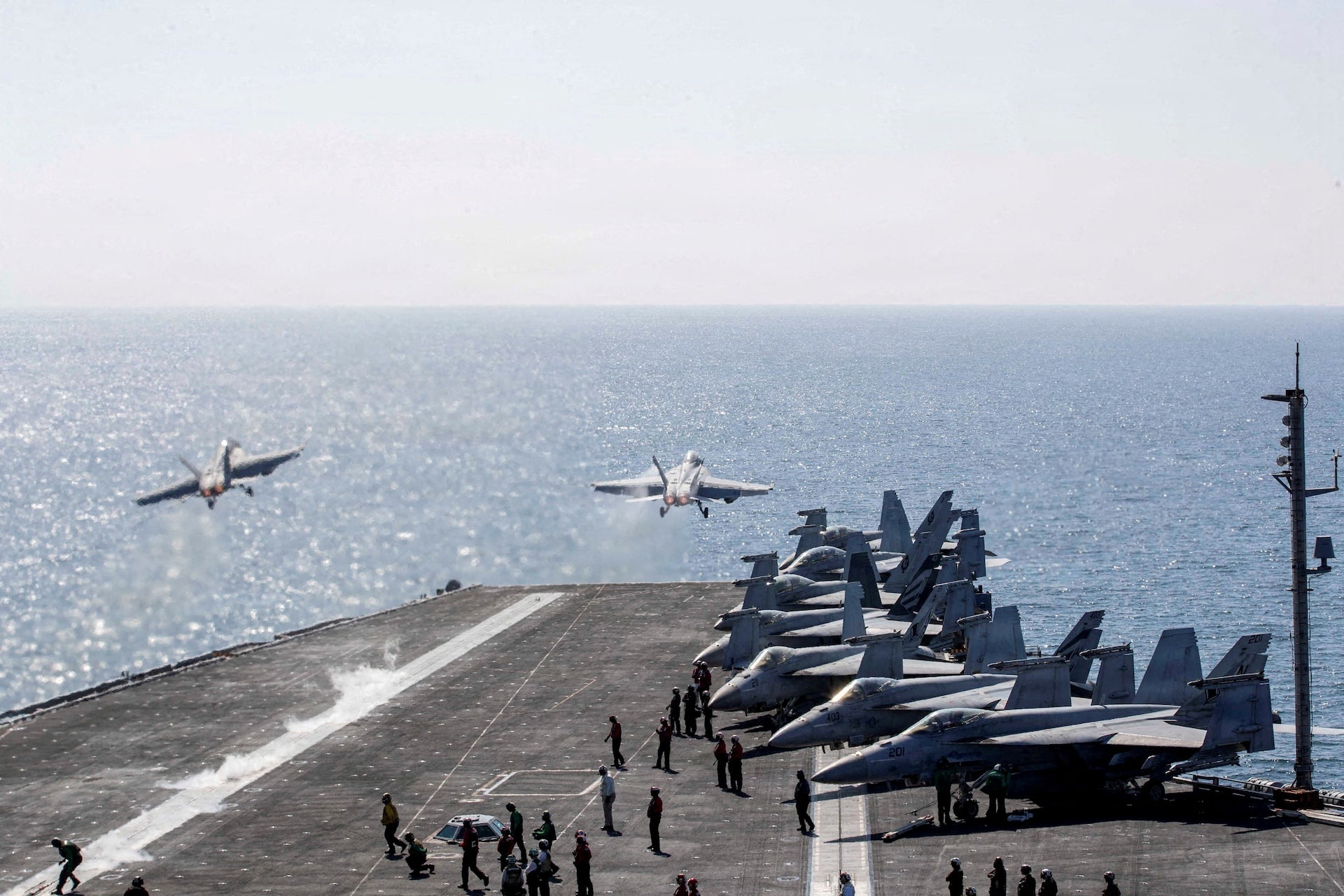
Two F/A-18 Super Hornet fighter jets take off from the deck of the USS Abraham Lincoln aircraft carrier of the US Navy to support an undisclosed attack on Iran. Photo: US Navy. |
According to the New York Times , a senior U.S. military official said that Iranian surface-to-air missile systems threatened nearly two dozen U.S. Navy warships, including two aircraft carriers and escort ships operating in the Gulf of Oman and the Arabian Sea. These ships were present to enforce a blockade of vessels entering and leaving Iranian ports.
The fact that Iranian missile sites are allegedly targeting US warships is not surprising given the country's current military capabilities. According to classified assessments from US intelligence agencies sent to policymakers earlier this month, Iran has restored most of its missile launchers.
Although the US has sunk most of Iran's regular naval vessels, the Iranian Islamic Revolutionary Guard Corps (IRGC) still possesses hundreds of small speedboats that could be used to lay mines in the Strait of Hormuz.
What particularly worries some senior U.S. officials is evidence that Iran has restored operational capability at 30 of the 33 missile sites located along the Strait of Hormuz. These sites could threaten U.S. warships and oil tankers transiting this shipping lane.
Senior U.S. military officials have also expressed internal concerns about Washington's dwindling stockpiles of long-range missiles and heavy ammunition, weapons that are crucial for destroying Iran's fortified underground missile sites.
According to these officials, instead of attempting to completely destroy the facilities, the Pentagon initially chose to use lighter munitions to cripple the entrances. However, Iran is believed to be capable of restoring these positions faster than the U.S. anticipated.
Intelligence assessments indicate that Iran still maintains approximately 70% of its nationwide missile launchers and retains about 70% of its pre-war missile stockpile.
This missile arsenal includes ballistic missiles capable of striking countries in the region, along with a small number of cruise missiles that can be used against short-range targets on land or at sea.
Until last weekend, before President Trump announced that the U.S. and Iran were close to reaching an agreement, U.S. military planners were still preparing plans to resume large-scale bombing campaigns along the Strait of Hormuz, including missile strikes, aimed at weakening Iran's control over this shipping lane. Nevertheless, a diplomatic solution remains Trump's preferred option.
Source: https://znews.vn/ly-do-my-ra-don-tan-cong-iran-giua-lenh-ngung-ban-post1654166.html
![[Photo] General Secretary and President To Lam presides over the meeting to approve the draft report on the results of the second inspection by the Politburo of the Standing Committee of the Hanoi City Party Committee.](https://vphoto.vietnam.vn/thumb/1200x675/vietnam/resource/IMAGE/2026/05/26/1779789811432_a2-bnd-4430-9620-jpg.webp)





























































































Comment (0)