

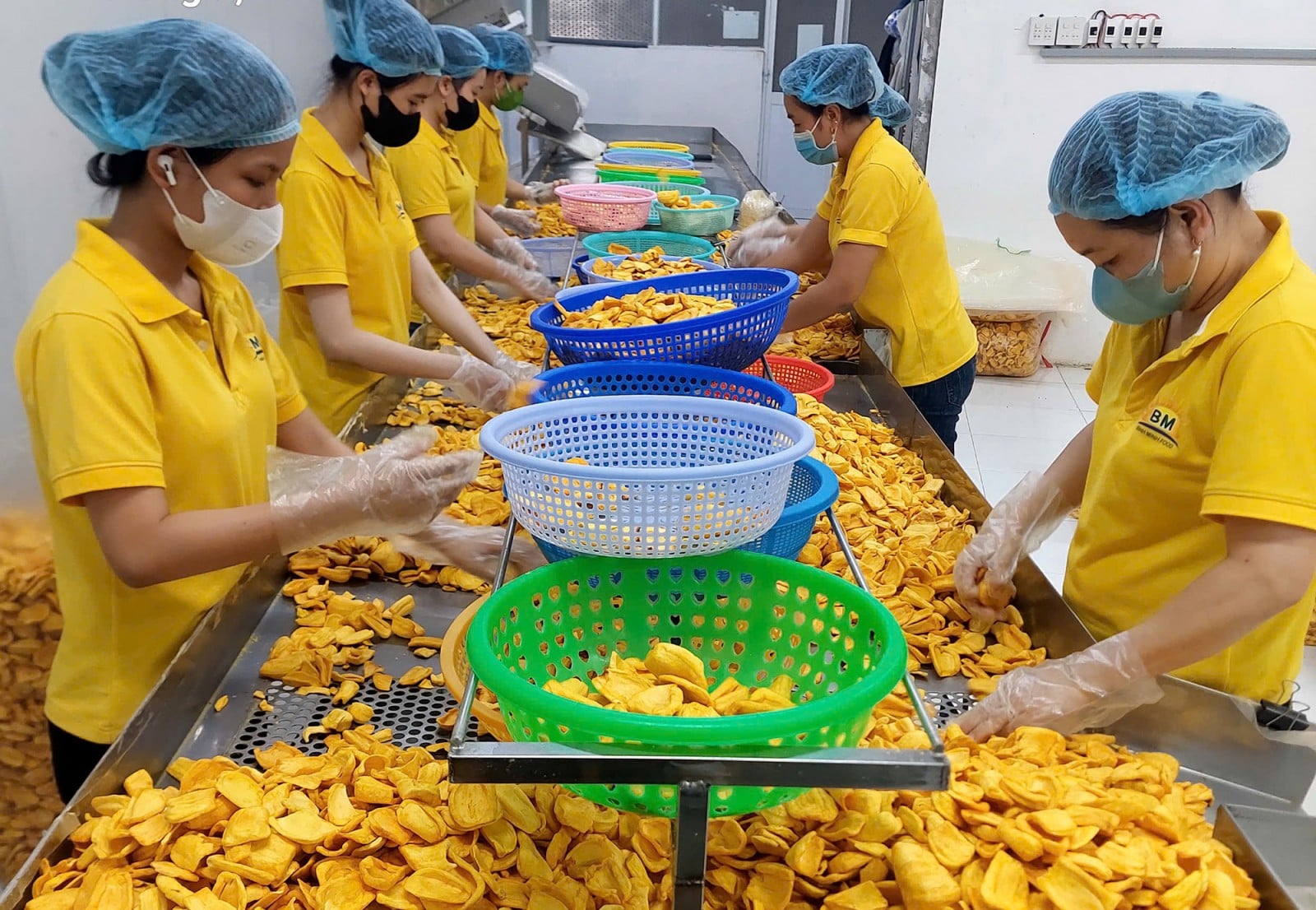
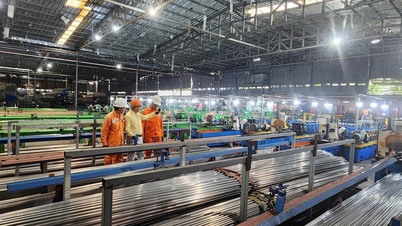
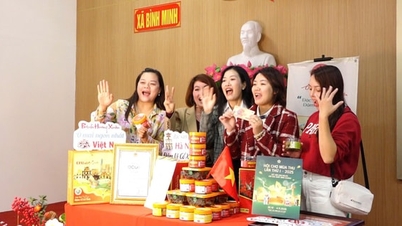
Binh Minh Food Company brings products made from local resources into its green transformation journey. Photo: GIA KHANH
According to Fulbright Master of Public Policy Nguyen Thi Thu Nga from AEA Vietnam, the traditional economy is called the "brown economy" because its development is based on the overexploitation of natural resources, causing degradation and destruction of ecosystems. This model is characterized by the consumption of large amounts of fossil fuels, indiscriminate waste disposal, and the emission of large amounts of greenhouse gases, contributing to climate change. With a mindset prioritizing short-term profits, businesses in the "brown economy" often show little concern for the environment and lack social responsibility.
Conversely, the "green economy" emerges as a sustainable solution to balance economic development and planetary protection. This economy focuses on resource conservation, waste reduction, efficient energy use, and biodiversity preservation. More importantly, the green economy aims to create better value for customers, workers, and society as a whole in an ethical and transparent manner.
Expert Nguyen Thi Thu Nga cited the case of cadmium residue, inspection bottlenecks, and the risk of losing export markets for the durian industry in the Mekong Delta in May. Among the lessons learned, emphasis should be placed on strictly adhering to technical procedures, ensuring traceability, building a sustainable production and consumption chain, along with a fast and cost-effective transportation system.
At a seminar titled "Green Transformation - Opportunities for Young Entrepreneurs" held in Long Xuyen ward in mid-May, Ms. Nguyen Thi Thu Nga shared: "The economic shift from brown to green is driven by five core global and national factors: Environmental technical barriers, carbon pricing mechanisms (such as the EU's CBAM), and strict regulations in Vietnam are forcing businesses to change if they don't want to be rejected. Large corporations worldwide are restructuring their supply chains according to green standards. Businesses that stand outside this trend will be immediately eliminated. Along with that, consumer behavior is changing significantly. The modern generation of consumers, especially young people, tend to choose products that are safe for their health and environmentally friendly. We always recommend: Those who are ahead in the green transformation will have an advantage. Those who are slow to change may be eliminated from the game."
To realize a green economy, the ESG standard is being chosen as a guiding principle for businesses entering this new playing field. ESG is composed of three core pillars: E (Environment), meaning businesses need to proactively reduce plastic waste, save electricity and water, reduce greenhouse gas emissions, and increase the use of renewable energy. S (Social) focuses on ensuring customer health and safety; fair treatment, building a safe working environment, and making positive contributions to community development. Finally, G (Governance) requires transparency in production and business operations, clear financial records, and strict compliance with legal regulations on taxes, contracts, and product quality.
Green transformation doesn't necessarily have to start with expensive, high-tech mega-projects; it can begin with "looking back at what our homeland has" to exploit intelligently, creating a circular model that transforms waste into resources. The clearest example is the Nàng Nương termite mushroom production model of Ms. Châu Thị Nương, residing in Cô Tô commune, considered the first Khmer woman in the province to participate in a circular agriculture model using agricultural by-products.
“By utilizing the vast and readily available local agricultural by-product, straw from the fields, I transform agricultural waste into clean mushroom spawn to produce high-quality products for the market, solving the problem of burning straw and causing air pollution,” Ms. Nuong shared. Thanks to this innovation, she became the “Outstanding Vietnamese Farmer of 2025” selected by the Central Executive Committee of the Vietnam Farmers’ Association. Prior to that, her business was also among the top 10 best businesses in the Vietnam ESG Initiative Competition in 2023.
In Long Xuyen ward, Binh Minh Food Company, established in 2022, specializes in producing and supplying crispy dried fruit products, with a capacity of 5 tons per day. Mr. Huynh Lan, Director of Binh Minh Food Company, stated: “With the aim of bringing Vietnamese agricultural products closer to consumers both domestically and internationally, we select fresh raw materials from certified growing regions, ensuring natural ripeness and the distinctive flavor of tropical fruits.”
The crispy dried jackfruit product is processed using modern drying technology, with a production process strictly controlled from raw material selection and processing to packaging, meeting export standards. According to Ms. Vuong Mai Trinh - Chairwoman of the People's Committee of Long Xuyen Ward, the company's product group has been connected by the ward to e-commerce platforms, recording high sales and is a potential OCOP product of the locality, aiming to achieve GlobalGAP standards for export.
Applying ESG standards to production helps Vietnamese agricultural products in general, and those from An Giang in particular, become greener and cleaner, while also achieving transparency and enhancing local value to confidently enter international markets. Green transformation begins with small, kind actions, turning the challenges of climate change into golden opportunities for sustainable development.
Source: https://baoangiang.com.vn/chuyen-kinh-te-nau-thanh-xanh-a486892.html


![[Photo] General Secretary and President To Lam presides over the meeting to approve the draft report on the results of the second inspection by the Politburo of the Standing Committee of the Hanoi City Party Committee.](https://vphoto.vietnam.vn/thumb/1200x675/vietnam/resource/IMAGE/2026/05/26/1779789811432_a2-bnd-4430-9620-jpg.webp)
































































Comment (0)