

As a native farmer, it's been over 35 years since the early years of the country's reform period that I last had a meal of fragrant rice, but it was the fragrant rice from Cho Dao market that a friend in Long An gave me as a gift of 5 kg.
When cooking rice, the aroma of boiling rice brings back memories of a time of hardship in my homeland. I remember vividly, after the Sixth Party Congress in December 1986, the country continued to promote the reform of the economic management mechanism towards socialist business; reforming state management, reforming organizational and personnel work, and reforming the Party's leadership style and mass work. Farmers were allocated land according to rations. At that time, my family had 10 members: my parents, my grandmother, and my seven siblings, so we were allocated 5 sao (approximately 0.5 hectares) of rice land. After more than a year of independent production and paying the product quota to the cooperative, the remaining rice in my family provided us with enough to live on. And from then on, each year my parents set aside 1 sao of rice land to grow fragrant rice, while the rest was still grown with regular rice.
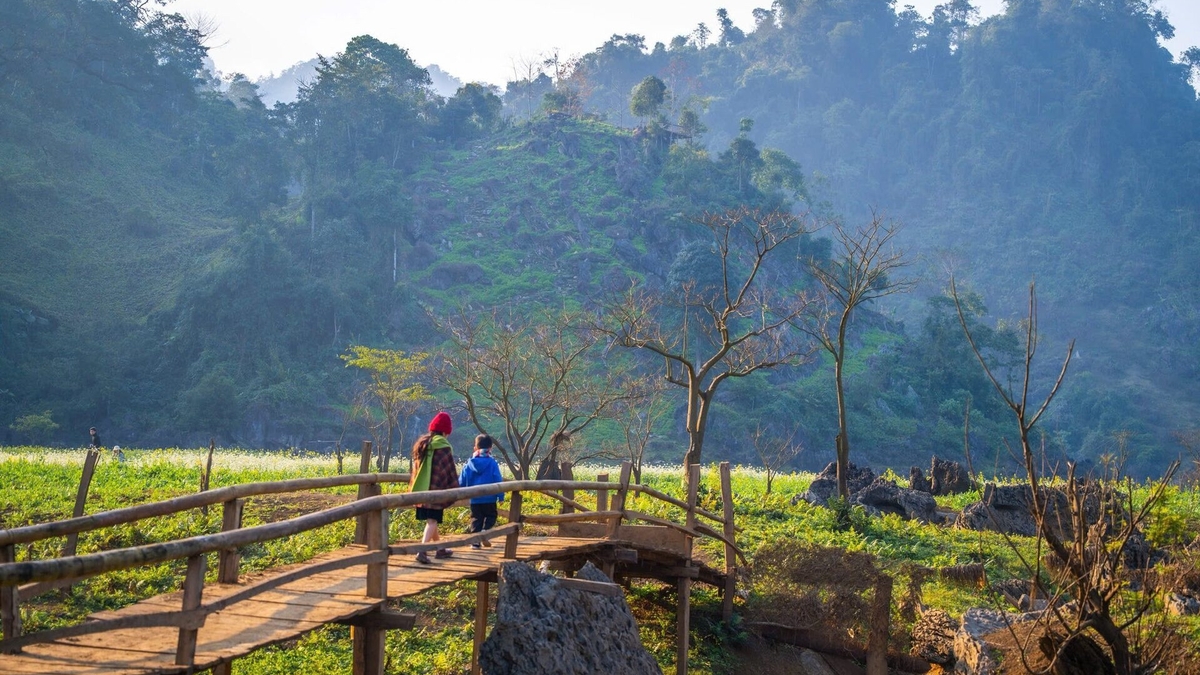
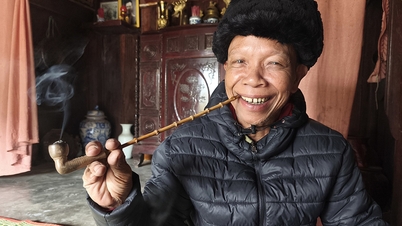
In late November and early December, walking along the rice paddies and admiring the golden ripe rice stalks, I saw my father's radiant smile. With his thin, bony face, the hardships of a farmer, his smile and eyes brightened the future for my siblings and me since the country entered the period of reform. At that time, on the several dozen hectares of rice paddies, only a few plots were planted with fragrant rice, because they had to grow short-season rice to meet the production demands of the cooperative and support the family. Short-season rice varieties only take about three months to harvest, but fragrant rice required twice that time.
The rice paddies chosen for growing fragrant rice were slightly higher than others to avoid flooding during prolonged periods of rain, allowing for easier drainage to lower fields. Furthermore, fragrant rice plants are taller than regular rice, reaching a height of 1.2-1.4 meters, making them more susceptible to breakage and lodging in waterlogged areas. At that time, fertilizers and pesticides were scarce, but fragrant rice was less prone to pests and diseases and thrived on organic fertilizers; however, its yield was lower compared to other short-day rice varieties. Transplanting and transplanting began in early June of the lunar calendar, but the rice only began to flower during the cold winter months. After six months, harvesting took place during the chilly days. The rice grains were long and slender, with a thin, fragrant bran layer on the outside and a pink center. The harvested rice was bundled, threshed by buffalo or oxen, or hand-beaten, then dried and stored for consumption during the Tet (Lunar New Year) holiday. In the past, rice milling and pounding were mainly done manually using human power, and the bran layer remained, so fragrant rice cooked with it was very aromatic. The rice was very sticky, didn't spoil easily even when left overnight, and when eaten cold with peanut salt or sesame salt, it was so delicious it made my throat ache. Those meals of fragrant rice erased the memories of poverty and hardship from the subsidy era, and when I think back, I swallow hard.
According to folklore, the name "Nang Thom" rice originates from a sad love story between a girl named Thom and a poor young man from the village. Due to social class differences, the two could not be together, and Thom died of grief. Hearing of his lover's death, the young man went to her grave, wept, and then died himself. Where they died, a rice variety with a fragrant scent grew, its grains a milky white color like the tears of the lovers.
Because of the value and quality of Nang Thom rice, my parents used to set aside some each year to give as gifts to grandparents and relatives during the Lunar New Year. Especially those living in cities, they highly value hand-milled rice, as the nutrients in the bran are very beneficial to human health. For a long time, the quality of Nang Thom rice was no longer what it used to be; farmers and many organizations abandoned it for many years, possibly due to seed degeneration. There were also cases where traders, for their own benefit, mixed Nang Thom rice with other types of rice, resulting in lower quality and a loss of brand reputation. During the winter, living far from home, receiving a gift of this specialty rice from a friend filled me with immense joy. I silently thanked heaven and earth, thanked my parents for bringing me into this world; I silently thanked my homeland, and thanked the rice of the farmers who nurtured me into adulthood. Today, my hometown no longer has rice paddies like before; all the land has become vast, lush dragon fruit orchards. At night, electric lights illuminate the entire countryside, illuminating the dragon fruit crops for the Lunar New Year. I pray that with the arrival of spring and the Lunar New Year, the dragon fruit harvest in my homeland will be bountiful and fetch good prices, bringing smiles to the faces of the farmers.
Source


















































Comment (0)