

This was shared by Mr. Cao Hong Phong, Deputy General Director of Gemalink, at the 2nd Vietnam Logistics Conference - 2024, organized by Investment Newspaper on the morning of October 31st.
Gemadept remains committed to building a smart and green port and logistics ecosystem.
This was shared by Mr. Cao Hong Phong, Deputy General Director of Gemalink, at the 2nd Vietnam Logistics Conference - 2024, organized by Investment Newspaper on the morning of October 31st.
For over 34 years, Gemadept Corporation (GMD - HoSE) has steadfastly built an integrated port and logistics ecosystem stretching from North to South Vietnam. Continuing its pursuit of sustainable development and the construction of a smart and green port and logistics ecosystem, Gemadept is actively collaborating with the Government to realize its Net Zero commitment by 2050, as outlined at the 26th United Nations Climate Change Summit (COP26).
To pursue sustainable development goals and build green, smart ports, Mr. Cao Hong Phong, Deputy General Director of Gemalink (a member unit of Gemadept), shared: “For Gemadept, we have established an ESG Committee, conducted annual greenhouse gas emission inventories at Gemadept's ports, developed a roadmap for emission reduction, developed green ports, invested in modern, environmentally friendly equipment; switched to using electricity instead of diesel, increased the use of renewable energy; initiated the Seed for Sea reforestation project in Vinh Long ; and signed a contract with HSBC for a sustainable linked credit agreement. This is the next “Green Footprint” in Gemadept's development plan and access to green capital.”
Furthermore, as a member of Gemadept's Port-Logistics ecosystem, Gemalink deep-water port is committed to environmental protection, improving resource efficiency, and minimizing negative impacts on the surrounding environment.
In particular, Gemalink Port has achieved ISO 14001:2015 Environmental Management System certification from Bureau Veritas Certification Vietnam. This is a testament to Gemalink's efforts in environmental protection, while also affirming its commitment to service quality and sustainable development.
It is known that Gemadept in general and Gemalink Port in particular have made significant progress in applying modern technology to port operations and exploitation. Typical examples include SmartPort applications, RiverGate, SmartGate, and other advanced applications and software…
 |
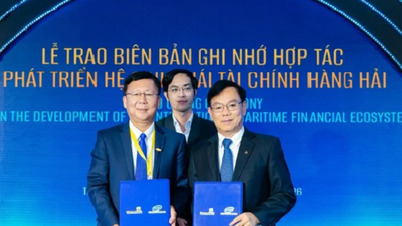
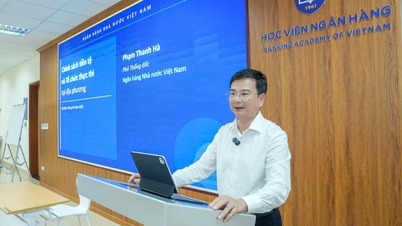
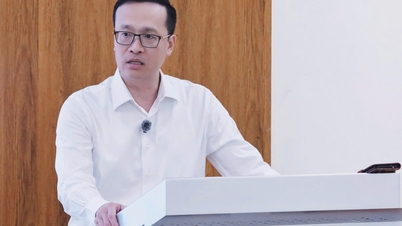
| Mr. Cao Hong Phong, Deputy General Director of Gemalink (Photo: Le Toan) |
Gemalink's leadership further stated that the aforementioned applications are not only tools for digitizing transactions and automating processes, but also demonstrate the company's continuous efforts to enhance operational efficiency while delivering the highest value to customers and partners, making a practical contribution to the digitalization of the port and logistics sector.
As proof of its sustainable development strategy and recognition from partners and the market, on May 28th, HSBC Vietnam Limited (HSBC Vietnam) and Gemadept signed a Sustainable Linked Credit Financing Agreement. This agreement also marks the first sustainable linked credit facility that HSBC has successfully arranged for a Vietnamese enterprise in the port and logistics sector.
Developing smart and sustainable ports requires the collaboration of many parties.
Besides sharing the successes that Gemalink Port in general and Gemadept in particular have achieved, in his capacity as the leader of a large port, Mr. Cao Hong Phong also offered suggestions on what the enterprise needs to do to move towards developing a smart and sustainable port.
Mr. Cao Hong Phong emphasized: "Developing smart and sustainable ports is a long process and requires businesses to have appropriate strategies, roadmaps, and investments. In addition, businesses urgently need the support of the Government, relevant agencies, and the cooperation of stakeholders to achieve this goal."
From the business perspective, companies need to focus on developing a roadmap that aligns with their current situation, resources, and sustainable development goals. This is crucial.
“I wholeheartedly agree with the statement by Mr. Nguyen Manh Hung, Minister of Information and Communications, to the Ministry of Transport . The most important question regarding any project is whether it is effective, not whether it is large or small. Effectiveness means that for every 100 dong spent, it must bring in more than 100 dong in return. Smart ports or digital transformation are new endeavors and will be a very long and continuous process.”
Therefore, let's start with projects that deliver results and effectiveness within one year, or at most two years. These experiences will build confidence in digital transformation and lead to bigger decisions. Always look at the value and effectiveness that digital transformation projects bring. Be cautious of grandiose projects with unclear results and effectiveness,” Mr. Phong said.
Furthermore, businesses also need to train personnel who are aware of green development trends, have expertise in advanced technology, and possess skills in managing and operating smart ports; invest in modern, environmentally friendly technology and equipment to minimize emissions; build a corporate culture oriented towards innovation, creativity, and sustainability; strengthen cooperation and connections with stakeholders: the government, regulatory agencies, consulting firms, and other businesses in the industry to promote the creation of a smart port ecosystem; and participate in domestic and international associations: joining port associations, industry associations, trade associations, etc., to update information, share experiences, and learn from best practices.
From the perspective of regulatory bodies, businesses urgently need support and favorable conditions from the Government and relevant agencies through policy support. This includes minimizing barriers, simplifying procedures, reducing fees and charges; tax incentives; financial support including preferential loan capital and financial support packages for businesses to invest in green transformation; and perfecting the legal framework to encourage green investment and create a stable business environment.
Furthermore, regulatory agencies also need to strengthen support for businesses in the port and logistics sector to build and develop green supply chains through the development of connecting infrastructure, including enhancing port connectivity with other transportation systems such as roads, railways, and air routes to create an efficient logistics network.
For example, public investment in the inland waterway sector (currently accounting for only nearly 2% of the investment budget but contributing up to 20% of the transport volume): dredging waterways, increasing ship clearance… and implementing groundbreaking model transport routes (such as the Cai Mep - Mekong Delta model transport route).
Furthermore, policies and mechanisms are needed to encourage ports to invest in developing smart and sustainable ports. This includes adjusting port handling fees, which are currently very low compared to the region and the world (approximately 50% of the regional average), to provide ports with additional revenue to continue investing in digital transformation and greening of the port infrastructure.
Gemalink Port Phase 2A is expected to be operational from 2026.
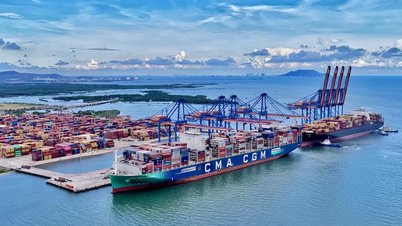
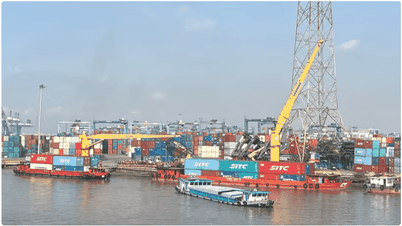
In fact, Gemalink deepwater port has a total berth length of up to 1.5km, a total capacity of up to 3 million TEU/year across two phases, and can simultaneously accommodate 3 mother vessels and 5 feeder vessels, as well as river vessels, for cargo handling. Phase 1 of the port has been operational since the beginning of 2021, boasting the deepest draft at the river mouth and capable of receiving the largest vessels in the world today (up to 250,000 DWT).
 |
| Gemalink Port welcomes two mother vessels. |
Furthermore, since its commissioning in early 2021, Gemalink Deepwater Port has consistently been a highlight in the Cai Mep - Thi Vai port area, a cluster of ports ranked 7th in the world for the most efficient container ports by the World Bank in 2024.
“To maximize the potential and advantages of the Cai Mep - Thi Vai port cluster, including Gemalink Port, and to meet the growing needs of the market and partner shipping lines, the company is finalizing procedures to soon commence Gemalink Phase 2A, expected to be operational from 2026,” Mr. Cao Hong Phong revealed the timing for the commissioning of Gemalink Phase 2A.
Source: https://baodautu.vn/gemadept-kien-dinh-with-muc-tieu-xay-dung-he-sinh-thai-cang---logistics-thong-minh-va-xanh-d228840.html

![[Photo] First session of the 14th Congress of the Vietnam Trade Union](https://vphoto.vietnam.vn/thumb/1200x675/vietnam/resource/IMAGE/2026/06/03/1780465947883_ndo_br_img-3852-jpg.webp)
![[Photo] General Secretary and President To Lam presides over a meeting with the Central Organizing Committee.](https://vphoto.vietnam.vn/thumb/1200x675/vietnam/resource/IMAGE/2026/06/03/1780482764658_a1-bnd-4741-3342-jpg.webp)

![[Photo] Secretary of the National Assembly Party Committee, Chairman of the National Assembly presides over the meeting of the Standing Committee and Executive Committee of the National Assembly Party Committee.](https://vphoto.vietnam.vn/thumb/1200x675/vietnam/resource/IMAGE/2026/06/03/1780480353201_ndo_br_bnd-2585-jpg.webp)








































![[Video] Sunset at Lap An Lagoon – Where the sun sets over the fishing nets](https://vphoto.vietnam.vn/thumb/1200x675/vietnam/resource/IMAGE/2026/05/31/1780192137701_beach-landscape-sea-water-nature-grass-745871-pxhere-com.jpeg)



























Comment (0)