Oil prices surged after plummeting more than 5% on May 27th due to reports of new US military airstrikes against Iran, while the US and Iran remain deadlocked in negotiations to reopen the Strait of Hormuz.
On the market, North Sea Brent crude oil prices have surpassed $96 per barrel, while US West Texas Intermediate (WTI) sweet crude oil is trading near $90 per barrel.
Citing a U.S. official, a Reuters reporter on the X platform said the U.S. military had just carried out another attack on a facility in Iran. This facility is alleged to pose a threat to U.S. forces and vessels transiting the Strait of Hormuz. Earlier this week, the U.S. also launched airstrikes on multiple targets around this vital waterway.
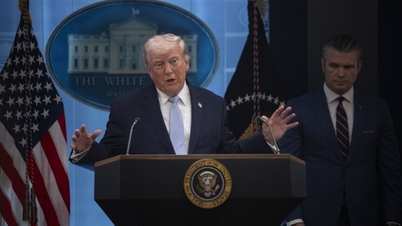
Diplomatically , US President Donald Trump declared he was "not happy" with the current pace of negotiations. The White House immediately rejected reports from Iranian media about a draft agreement that proposed joint monitoring of the Strait of Hormuz by Iran and Oman.
At a White House meeting, Trump asserted that the U.S. would not accept an unclear deal and remained resolute in its refusal to ease sanctions against Iran. This stance is in stark contrast to Iran's demands for an end to the attacks and an easing of financial strangleholds. The U.S. president is also currently under pressure from Republican lawmakers to continue the war that began in late February.
The biggest sticking points in the negotiations currently revolve around the Middle Eastern nation's nuclear program and Iran's ambition to maintain control of the Strait of Hormuz, an area currently under a "double blockade" from both the US and Iran.
Despite a price surge in this session, the oil market is still heading for its second consecutive weekly decline.
Regarding supply in the U.S., the American Petroleum Institute (API) reported that nationwide crude oil inventories fell by 2.8 million barrels last week, including a decrease at the main distribution hub in Cushing, Oklahoma. Official government data is expected to be released on May 28.
Joe DeLaura, global energy strategist at Rabobank, believes investors are being overly optimistic. He argues that the US release of its Strategic Petroleum Reserve (SPR) and China's sharp reduction in imports are helping to offset some of the supply shortfalls caused by the conflict.
However, this expert warns that a price surge could occur in mid-July 2026, when the SPR inventory release program ends and China resumes imports.
Macroeconomic experts predict that if the parties do not reach an agreement to end the conflict, disruptions to oil supply will continue. The persistently high energy prices are reviving inflation concerns, driving bond yields higher since the end of February 2026. The inevitable consequence is that central banks, including the US Federal Reserve (Fed), are expected to raise interest rates to respond to the situation.
(VNA/Vietnam+)
Source: https://www.vietnamplus.vn/gia-dau-bat-tang-sau-dot-khong-kich-moi-cua-my-post1113063.vnp




![[Image] Nearly 125,000 Hanoi students completed the Literature exam for the 10th grade entrance exam.](https://vphoto.vietnam.vn/thumb/1200x675/vietnam/resource/IMAGE/2026/05/30/1780117233041_ndo_br_thiet-ke-chua-co-ten-2-png.webp)


































































































Comment (0)