

The growing global influence of BRICS positions the group as a key player in future global governance as a new era of international relations unfolds.
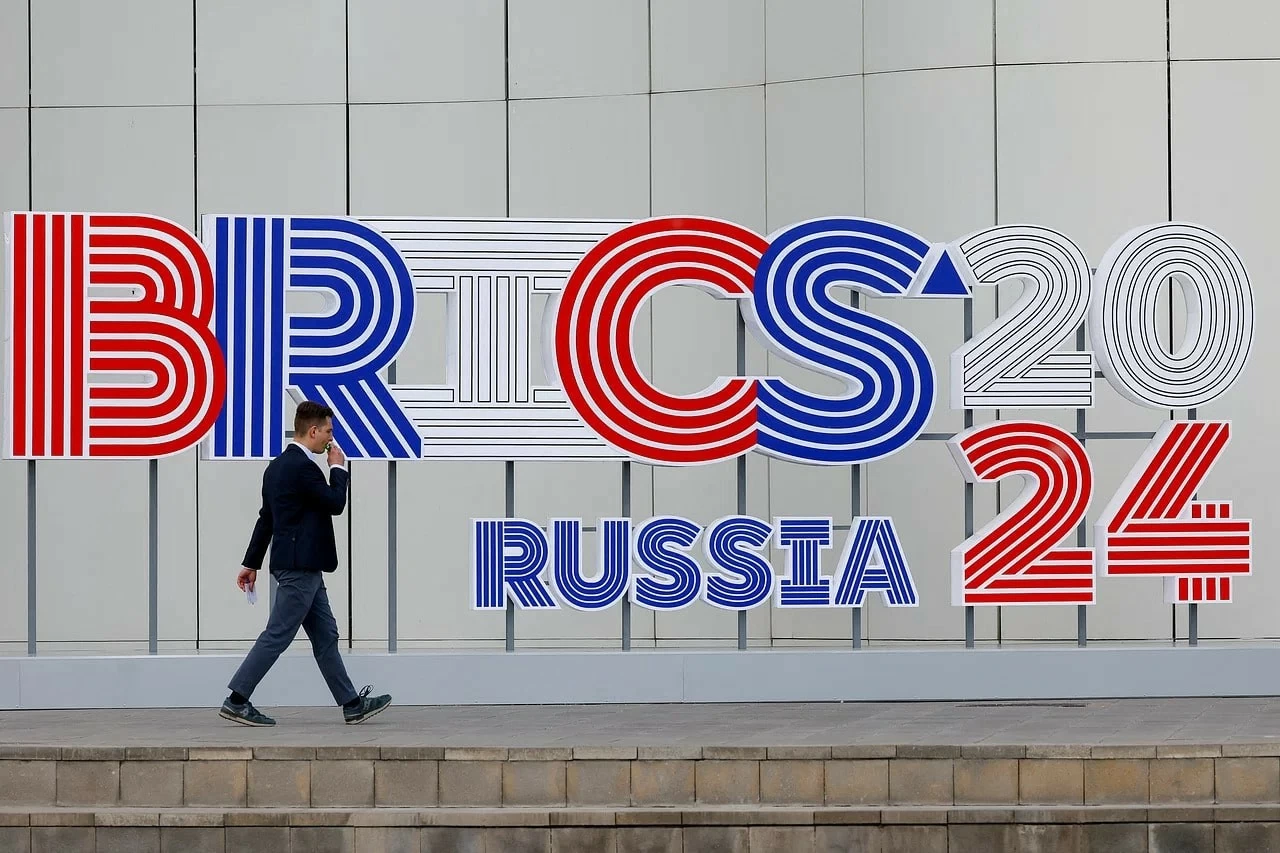 |
| The BRICS summit and the BRICS expanded meeting are taking place in Kazan, Russia. (Source: Reuters) |
In an article published in The Japan Times on October 20th, Professor Brahma Chellaney of the Centre for Policy Research in New Delhi (India), and also a research fellow at the Robert Bosch Institute in Berlin (Germany), wrote titled "The Development of BRICS and an Emerging Multipolar World ." Below is the content of the article:
A new era of international relations is dawning. With the West's share of global gross domestic product (GDP) shrinking and the world becoming increasingly multipolar, nations are competing to assert their position in the emerging order.
This includes emerging economies , represented by the expanded BRICS group, which are seeking leadership in shaping the rules of the new order, and smaller nations attempting to strengthen ties to protect their interests.
The appeal of BRICS
From a group of economies, BRICS has become a symbol of the aspiration for a more inclusive and representative global order, a counterweight to Western-led institutions, and a tool for navigating growing geopolitical instability. All of this demonstrates BRICS' appeal.
Earlier this year, BRICS expanded from five countries (Brazil, China, India, Russia, and South Africa) to nine (adding Egypt, Ethiopia, Iran, and the United Arab Emirates - UAE). And nearly 30 more countries, including NATO member Turkey; close US partners like Thailand and Mexico; and the world's largest Muslim-majority nation, Indonesia; have also applied to join BRICS.
While the diversity of members (and candidates) within the group highlights the broad appeal of BRICS, it also presents numerous challenges. This is because the group comprises countries with vastly different political systems, economies, and national goals. Some even disagree with each other on certain issues.
Harmonizing common interests into a shared plan of action and becoming a unified force on the international stage is very difficult, even with BRICS having only 5 members. With 9 member countries, and possibly more, establishing a common identity and agenda will require sustained effort.
Other multilateral groups that are not formal, charter-based organizations with permanent secretariats, such as the Shanghai Cooperation Organization (SCO), the Group of Twenty (G20), or even the Group of Seven (G7), also grapple with internal divisions.
Furthermore, BRICS has demonstrated remarkable adaptability and resilience. Some Western analysts predicted from the outset that the group would disintegrate or fade into oblivion. However, the ongoing BRICS Summit and the BRICS Expanded Summit in Kazan (Russia) – the first summit since the group expanded – have confirmed the group's continued growth and may spur further expansion.
Significant challenges
This does not mean that BRICS underestimates the challenge of cohesion. Even the group's founding members may not have agreed on BRICS' fundamental goals of directly challenging the Western world order or seeking to reform existing international institutions and avoid any anti-Western tendencies.
Given this disagreement, expansion could shift the balance. Six of the nine members, including the four new members, are officially part of the non-aligned movement, and two (Brazil and China) are observers. This suggests there will be significant internal pressure on BRICS+ to chart a middle ground, focusing on democratizing the global order rather than challenging the West.
When it comes to fostering mutual trust with developing countries, the West has recently been at a disadvantage. The weaponization of finance and the seizure of interest earned on frozen Russian central bank assets have caused deep unease in the rest of the world.
As a result, an increasing number of countries appear interested in considering alternative arrangements, including new cross-border payment mechanisms, with some also reassessing their reliance on the US dollar for international transactions and reserve assets.
All of this could support larger plans by Russia and China, two rivals of the West. China would benefit, for example, from the increasing international use of the CNY. Russia currently generates the majority of its international export earnings in CNY and stores them primarily in Chinese banks, thus essentially handing over a portion of the profits to China. China's ultimate goal, which the West's financial war inadvertently supports, is to establish an alternative financial system based on the CNY.
BRICS has been involved in institution building, establishing the New Development Bank (NDB), founded by India and headquartered in Shanghai, in 2015. The NDB is not only the world's first multilateral development bank founded and led by emerging economies, but it is also the only one whose founding members are equal shareholders with equal voices, even with greater national participation.
The expansion of BRICS has significantly increased its global influence. The group now overshadows the G7, both demographically (accounting for nearly 46% of the world's population, compared to 8.8% for the G7) and economically (representing 35% of global GDP, compared to 30% for the G7).
The economies of these group members are also likely to be the most important source of global growth in the future. Furthermore, with Iran and the UAE joining their oil-producing partners Brazil and Russia, the expanded BRICS now accounts for approximately 40% of crude oil production and exports.
Essentially, BRICS faces significant challenges, not only in uniting to become a meaningful global force with defined political and economic goals, but the group nonetheless holds the potential to act as a catalyst for a global governance reform that better reflects the realities of the 21st century.
Source: https://baoquocte.vn/gia-tang-suc-nong-brics-duoc-dinh-vi-la-nhan-to-chu-chot-trong-quan-tri-toan-cau-tuong-lai-291180.html

![[Photo] Enchanting ancient rose garden on the mountainside in Nghe An](/_next/image?url=https%3A%2F%2Fvphoto.vietnam.vn%2Fthumb%2F1200x675%2Fvietnam%2Fresource%2FIMAGE%2F2025%2F12%2F19%2F1766109900916_vuon-hong-chin-do-thu-hut-du-khach-toi-check-in-o-ha-noi-3-20162778-1671624890024-1671624890104198100259.jpeg&w=3840&q=75)


![[Photo] General Secretary To Lam visits the exhibition space showcasing books, photo exhibitions, and achievements of digital transformation in journalism.](/_next/image?url=https%3A%2F%2Fvphoto.vietnam.vn%2Fthumb%2F1200x675%2Fvietnam%2Fresource%2FIMAGE%2F2025%2F12%2F19%2F1766110879215_1766110240024-jpg.webp&w=3840&q=75)




















![[INFOGRAPHIC] Overview of the Hoa Phat Dung Quat Rail and Special Steel Production Plant Project](https://vphoto.vietnam.vn/thumb/402x226/vietnam/resource/IMAGE/2025/12/19/1766111183203_z7339170069817-126a3e5a095f62e606a0be41015c1b80.jpeg)

































Comment (0)