

Opening the trading session on the morning of February 10th in the Asian market, gold prices fell quite sharply, at times dropping below $5,020 per ounce after soaring to nearly $5,100 per ounce in the US market.
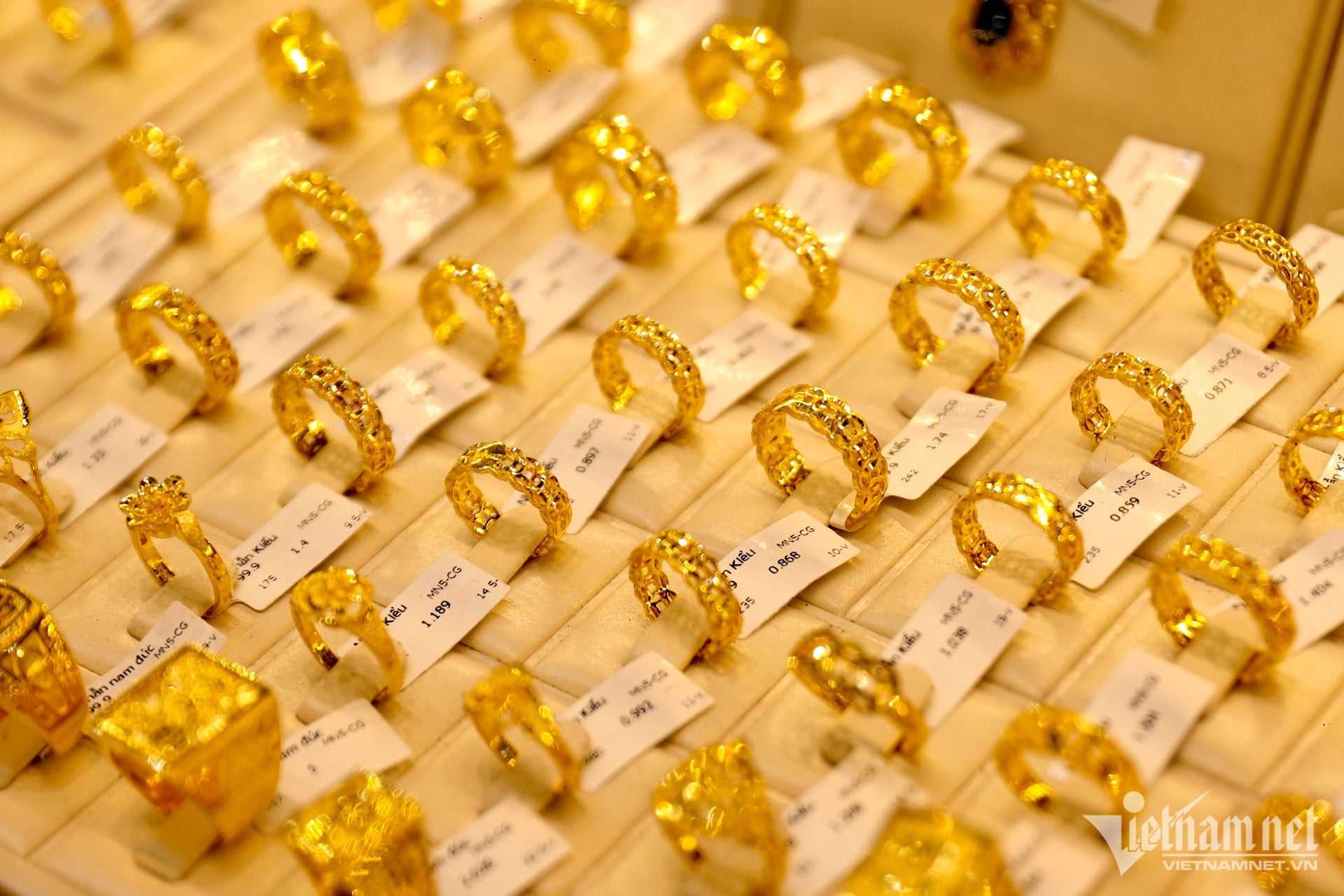
Domestically, the price of SJC gold bars has edged up in line with the global price in recent sessions, rising from 172.2 million VND/ounce (selling price) recorded on February 6th to 176.5 million VND on February 7th, and then to 181.2 million VND/ounce at the end of the session on February 9th. By the morning of February 10th, the price of SJC gold remained around 181 million VND/ounce, only about 9 million VND lower than the peak recorded on January 29th.
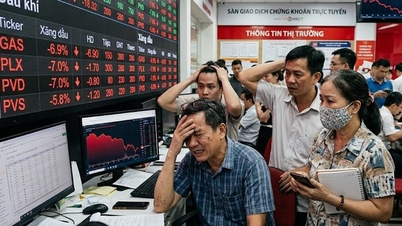
Selling pressure suggests the market is not yet ready for higher prices after gold prices experienced two sharp declines, from a peak of $5,600/ounce on January 29th to $4,400/ounce on February 2nd, and a drop from $5,060/ounce to $4,720/ounce between February 4th and 6th.
The sharp declines have made investors more cautious, and the market is likely establishing a new, more stable price level, around $5,000 per ounce, no longer rising continuously as it did for most of January.
Last night, gold prices surged to $5,100 per ounce as the US dollar weakened, amid investor preparations for a week of significant US economic data releases that could provide further clues about the Federal Reserve's monetary policy direction.
This week, the US will release the non-farm payrolls report, the consumer price index, and the number of initial jobless claims.
The news that the People's Bank of China (PBOC) continued its net gold purchases in January, extending its buying streak to 15 months, also contributed to maintaining the upward momentum in gold prices during last night's trading session.
The regular gold purchases by central banks in many countries, gold ETFs, and financial institutions have become an important support for stabilizing the gold market and are also considered indicators of the future prospects of the precious metal.
In overnight trading, silver prices rose more than 8% to above $83 per ounce after having gained nearly 10% in the previous session. Silver peaked at $121.6 on January 29th and, along with gold, plummeted at the end of last month and the beginning of this month.
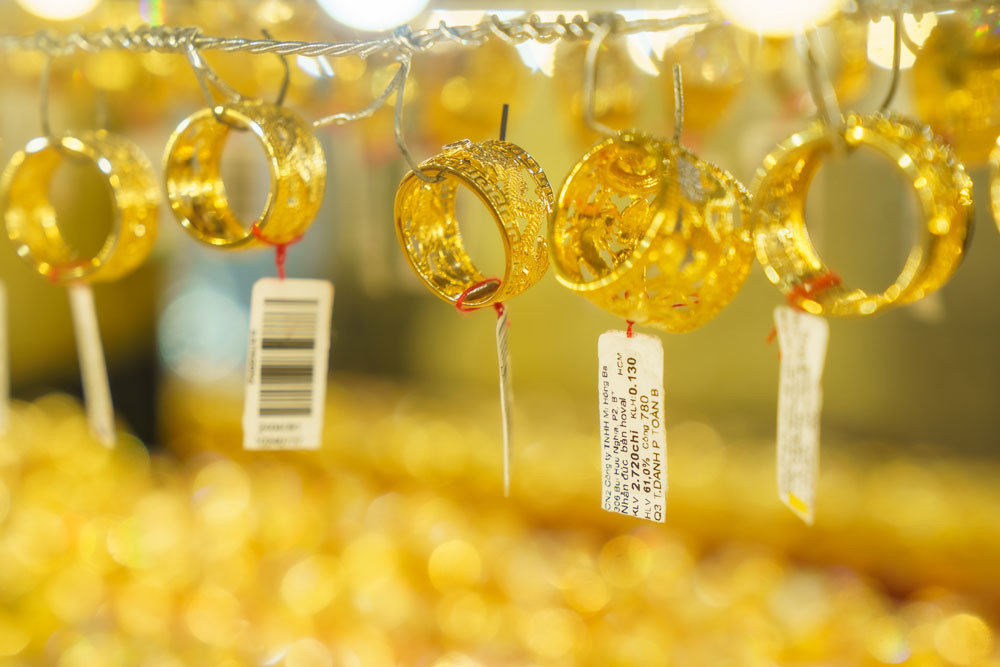
What are the prospects for the gold and silver markets?
Thus, gold and silver prices have recovered strongly in recent days, with gold recovering faster and more strongly than silver.
Gold and silver prices are returning to key levels thanks to a weakening US dollar. For gold, that's the $5,000/ounce mark, and for silver, it's $80/ounce.
According to experts at TD Securities on Kitco, expectations are rising for weak US economic data, particularly regarding the labor market. This, coupled with persistent concerns about the independence of the Federal Reserve (Fed), has pushed the US dollar close to its lowest level in four months, thereby driving up the price of gold.
However, the pace of price increases has slowed, and profit-taking pressure has intensified rapidly whenever gold has recorded breakouts.
In the long term, gold is still considered to be on an upward trend. After several consecutive sessions of net selling, the SPDR Gold Trust has returned to net buying of gold. A weakening US dollar and rising US debt remain supportive factors for gold. The Dollar Index (DXY) is not far from the four-year low set during the recent US asset sell-off.
The US dollar faced further pressure after another major currency strengthened significantly. The Japanese yen rose following the Japanese House of Representatives election, which saw a landslide victory for Prime Minister Takaichi Sanae. China and Japan have recently been selling heavily in US Treasury bonds and may continue to do so.
The return of gold prices to the $5,000/ounce mark is also seen as a signal of a deeper shift in the global monetary structure, between confidence in fiat currencies and other safe-haven assets. Following the Covid-19 pandemic, countries have intensified monetary easing to stimulate the economy. Inflation has also increased due to the US-China economic and technological war, geopolitical tensions in many places, and global supply chain conflicts. These factors continue to drive capital into gold.
Nevertheless, the gold market is expected to remain highly volatile in the short term due to the impact of the two recent sharp declines.
Source: https://vietnamnet.vn/gia-vang-giang-co-du-doi-van-chua-thoat-vung-bien-dong-manh-2489449.html
![[Photo] National Assembly Chairman Tran Thanh Man attends the groundbreaking ceremony for the National Highway 1A spatial axis project.](https://vphoto.vietnam.vn/thumb/1200x675/vietnam/resource/IMAGE/2026/05/19/1779161360398_ndo_br_bnd-1412-jpg.webp)



![[Photo] Capturing the moment the tide recedes at Yen Binh Son rapids - a million-year-old scenic spot in Quang Ngai.](https://vphoto.vietnam.vn/thumb/1200x675/vietnam/resource/IMAGE/2026/05/19/1779175463885_yen9-1199-jpg.webp)
































































![[Photo] General Secretary and President To Lam receives Indian Defense Minister Rajnath Singh](https://vphoto.vietnam.vn/thumb/402x226/vietnam/resource/IMAGE/2026/05/19/1779184046302_anh-man-hinh-2026-05-19-luc-16-46-58.png)




































Comment (0)