

This is because, until now, the EU and a few of its members have announced strategies for Africa, but these members are all influential within the union, and Africa is not a priority for Denmark in its foreign policy.
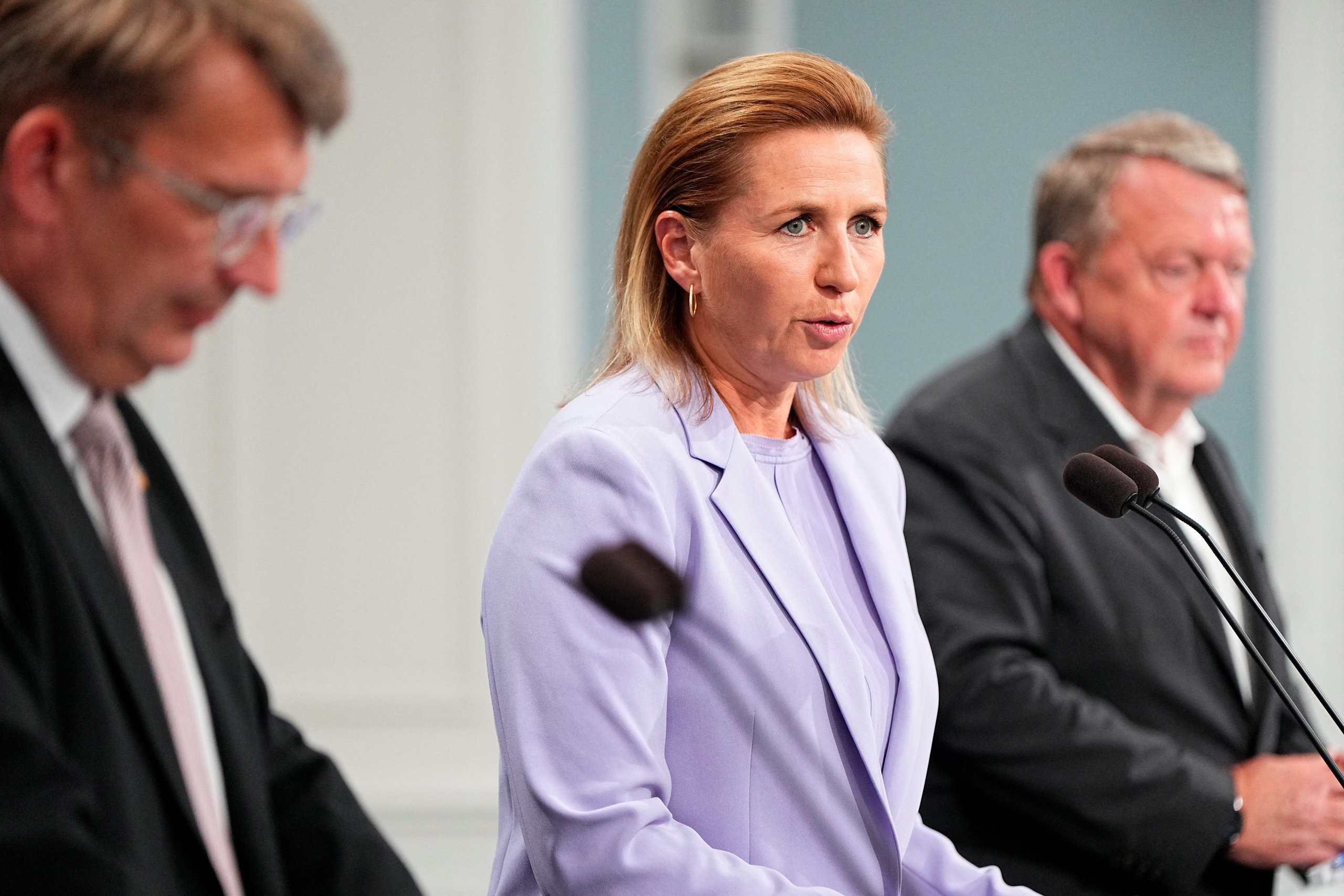
Danish Prime Minister Mette Frederiksen (center) speaks at a press conference in Copenhagen on August 28, 2024.
Denmark has suddenly expressed its interest in Africa, recognizing it as the "continent of the 21st century," considering African countries as "equal partners," and focusing on promoting bilateral and multilateral cooperation with African countries in areas of greatest interest and importance to them. All these policy perspectives and content in Denmark's strategy towards Africa are aimed at winning over the countries of the continent. The method employed here is to create the impression that Denmark puts African countries first.
In essence, the Danish government pursued two main objectives with the announcement of this strategy. Firstly, to gain a foothold in Africa amidst a rapidly changing and profound geopolitical landscape, with major powers vying for influence, roles, and fiercely clashing strategic interests. The US, UK, and other prominent EU members like France and Germany continue to clearly lose ground in Africa. This opens up numerous opportunities for other external partners to access, conquer, and exploit Africa's potential.
Secondly, using the promotion of relations with Africa under the guise of countering Russia and China will help Denmark enhance its position and role within the EU and NATO in general, and in the EU and NATO's relations with Russia and China in particular. This is precisely the strategy of gaining ground in distant lands while simultaneously strengthening its position nearby.
Source: https://thanhnien.vn/gianh-phan-noi-xa-185240829224902975.htm


![[Photo] Prime Minister Pham Minh Chinh attends the Conference on the Implementation of Tasks for 2026 of the Industry and Trade Sector](/_next/image?url=https%3A%2F%2Fvphoto.vietnam.vn%2Fthumb%2F1200x675%2Fvietnam%2Fresource%2FIMAGE%2F2025%2F12%2F19%2F1766159500458_ndo_br_shared31-jpg.webp&w=3840&q=75)















































































Comment (0)