

This is a significant new development, resolving many long-standing obstacles and opening up strong development opportunities for vocational education institutions.
A breakthrough lever in human resource development.
Each year, Ha Tinh College of Technology enrolls 950 new students in mechanical engineering, electrical engineering, electronics, automotive technology, construction, and other fields. Given the urgent needs of the labor market, the college aims to open more high-tech engineering programs and foreign language training to meet the demands of the Vung Ang Economic Zone and neighboring industrial parks.
According to Principal Nguyen Trong Tan, vocational education cannot be judged solely by tuition fees; more importantly, it must be judged by its ability to supply human resources. The school will strive to improve quality and open new programs that meet the labor needs of businesses, but investment is crucial for upgrading equipment and training staff. With the legal framework provided by Resolution No. 71-NQ/TW, the school's aspiration to open new programs has a solid foundation for realization.
Focusing on vocational training directly linked to agricultural production, small-scale handicrafts, and community services, Ha Tinh Vocational College attracts thousands of students annually, mainly rural youth and children from poor and near-poor households. However, according to school representatives, the biggest concern is the limited tuition revenue, which slows down investment in equipment and curriculum reform.
Previously, when financial autonomy was considered the primary measure, the school had limited opportunities for expansion. However, with Resolution No. 71-NQ/TW, autonomy is no longer dependent on finances, allowing us to be more proactive in selecting majors, improving teaching methods, and connecting with local businesses to ensure job placement for our students.
This change opens up great opportunities for rural youth in Ha Tinh province – who are often limited by economic conditions – to now have more avenues for vocational training and establishing stable careers.
The Vietnam-Germany Technical College in Ha Tinh has strengths in vocational training in mechanical engineering, industrial electricity, and automotive technology. It also boasts extensive experience in international cooperation, having implemented joint training programs based on German and Japanese standards. However, the implementation of collaborative projects often requires multiple layers of consultation and evaluation, especially when involving curriculum adjustments or the opening of new majors.
Mr. Cao Xuan Phu, Vice Principal of the Vietnam-Germany Technical College, stated that Resolution No. 71-NQ/TW empowers vocational education institutions to be more proactive in international cooperation. With streamlined procedures, the school can quickly sign partnership programs with FDI enterprises and open new training programs directly linked to labor market needs. This provides the school with the opportunity to affirm its position and improve the quality of training to international standards.
A common characteristic of vocational education institutions in Ha Tinh is that they all possess potential and clearly see market demand, but have long been hampered by bureaucratic procedures and financial constraints. With the implementation of Resolution No. 71-NQ/TW, these schools will have the opportunity to develop their unique identities, focusing on quality and reputation in training instead of merely balancing revenue and expenditure.
This is especially important for Ha Tinh, a locality that has both the Vung Ang Economic Zone, which is rapidly developing industrial parks, and needs to create jobs for tens of thousands of rural workers. Complete autonomy allows schools to be more proactive in curriculum development, business partnerships, and expanding international cooperation.
It can be affirmed that Resolution No. 71-NQ/TW not only opens up opportunities for governance innovation for each school, but also serves as a leverage for Ha Tinh to make breakthroughs in human resource development - a decisive factor for the province's rapid and sustainable development.
Also expressing agreement with the policy of ensuring full and comprehensive autonomy regardless of the level of financial autonomy, Mr. Nguyen The Luc - Vice Principal of Hanoi College of Pharmacy - said that this is expected to help vocational education institutions implement autonomy in a substantive and effective way; and at the same time overcome many long-standing difficulties in management and operation.
Specifically, not using the level of financial autonomy as a measure of the autonomy of educational institutions will "unleash" schools to the maximum extent in governance; giving educational institutions full decision-making power in many aspects: academic autonomy, autonomy in personnel organization, autonomy in cooperation with businesses, and autonomy in developing development strategies.
As a result, educational institutions are better positioned to maximize their potential, encourage creativity and breakthroughs in training, research, and management methods. Schools will also be encouraged to boldly innovate teaching and management methods to adapt to practical requirements and societal needs; enhance proactiveness, promote accountability, contribute to improving the quality of education, and create a fair and healthy competitive environment.

A careful roadmap, effective support and monitoring mechanisms.
To ensure that Resolution No. 71-NQ/TW is effective in practice, Mr. Nguyen The Luc believes that strong measures are needed to attract students to vocational education. Currently, the societal mindset still prioritizes academic degrees over practical skills, leading many parents and students to choose university, but after graduation, they struggle to utilize their expertise or find suitable jobs.
Therefore, it is necessary to strengthen communication, the involvement of the entire society and all levels and sectors; focusing on salary systems, job opportunities, and career advancement for vocational trainees, in order to achieve the vocational education goals by 2030 as set out in Resolution No. 71-NQ/TW.
Furthermore, it is necessary to build a legal framework to provide vocational trainees with opportunities to advance to higher levels; and to link training with practical experience in businesses. The revised Vocational Education Law needs to include solutions and a legal framework to encourage businesses to readily collaborate with the vocational education system, thereby forming a workforce with the skills and expertise to meet practical demands.
Vocational education institutions need full autonomy in developing long-term strategies, promoting the role and responsibility of their leaders, and strengthening accountability to the State and society. Policies should be enacted to support digital transformation and the application of new technologies, especially artificial intelligence (AI), in vocational education. Specifically, focus should be placed on investing in technological infrastructure, providing AI training for administrators and teachers, and moving towards a smart governance model in vocational training institutions.
While affirming that this is a groundbreaking policy in the spirit of creation and development, education expert and Doctor of Science Pham Do Nhat Tien also pointed out some risks and challenges. The biggest challenge is the enormous workload when one person holds both key positions, which will create immense pressure.
The concentration of power can lead to a lack of democracy, abuse of power, and authoritarianism, negatively impacting the promotion of school autonomy. A potential risk is the reduction of stakeholder participation, limiting the foundation of autonomy and accountability. Therefore, to implement the Party's policies, institutionalization must ensure a balance between management requirements and development needs.
Offering a solution, Dr. Pham Do Nhat Tien suggested that the revised Law on Vocational Education, along with its guiding decrees and circulars, should clearly define full and comprehensive autonomy and accountability commensurate with that autonomy. It should also clearly define the role, authority, and responsibilities of the Party Secretary, who is also the head of the vocational education institution.
Simultaneously, regulations on decentralization and delegation of authority within the leadership, administration, and management apparatus of vocational education institutions, along with mechanisms for controlling power, must be implemented while promoting grassroots democracy. Mechanisms for coordination between state management levels, professional social organizations, and businesses in vocational education management must be established. Improving the system of legal documents, regulations, and guidelines is not merely an administrative requirement but a key strategic focus for the comprehensive reform of vocational education in Vietnam.
Professor Pham Do Nhat Tien emphasized that from legal documents to implementation, extensive preparation is required at both the system and school levels. The immediate priorities include building and perfecting the vocational education management information system (TVET-MIS); restructuring the vocational education system towards strong decentralization of management of vocational education institutions to local authorities; innovating the governance of vocational education institutions based on output results using a KPI system; training and developing modern management capabilities, digital skills, and artificial intelligence; and building a system for monitoring students after graduation.
"For the policy of ensuring comprehensive and full autonomy for vocational education institutions to truly come to fruition, a careful roadmap is needed, accompanied by effective support and monitoring mechanisms," said Dr. Pham Do Nhat Tien.
Source: https://giaoducthoidai.vn/giao-duc-nghe-nghiep-but-pha-tu-quyen-tu-chu-toan-dien-post748118.html


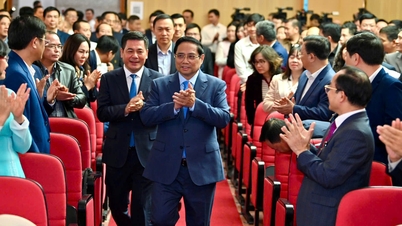
![[Photo] Prime Minister Pham Minh Chinh attends the Conference on the Implementation of Tasks for 2026 of the Industry and Trade Sector](/_next/image?url=https%3A%2F%2Fvphoto.vietnam.vn%2Fthumb%2F1200x675%2Fvietnam%2Fresource%2FIMAGE%2F2025%2F12%2F19%2F1766159500458_ndo_br_shared31-jpg.webp&w=3840&q=75)


















































































Comment (0)