

Feelings of being busy increase, but work remains stagnant.
Thu Trang (21 years old, living in Hanoi ) said that using her phone has become an almost unconscious habit, from the moment she wakes up until her free time throughout the day, she spends it browsing social media platforms. Initially, Trang only considered it a short form of entertainment after school, but in reality, she often spends hours aimlessly scrolling without much control.
"I usually set myself a 5-10 minute break after studying, as a reward. But in reality, it's very hard to stop once I pick up my phone. Sometimes I spend more than an hour just scrolling aimlessly, even longer than the time I spend concentrating on studying," she said.
According to Trang, it was these periods of time being silently "swallowed up" that often left her busy but unproductive.

From a different perspective, Ngoc Khanh (22 years old, Hai Ba Trung ward, Hanoi) believes that although she doesn't spend too much time continuously on social media, she still frequently feels short of time.
"I don't surf the internet for hours on end, but whenever I have a little free time or feel bored, I open my phone and check it for a few minutes. These very short periods, like a few minutes watching videos or a few dozen seconds browsing the homepage, repeat throughout the day," Khánh shared.

Initially, Khanh didn't realize the extent of this habit's impact. However, after a while, she began to notice the clear consequences. "By the end of the day, I still feel very busy, but when I look back, the amount of work completed isn't much. Conversely, the time spent on social media, though short, adds up to quite a lot," she said.
Khánh said that the feeling of emptiness became more pronounced when her daily routine was constantly disrupted by social media use. According to her, constantly switching between short bursts of content reduced her ability to maintain focus. Each time she returned to her main work, Khánh often needed extra time to regain her work focus, decreasing her overall productivity for the day.
The risk of "thinning" cognitive abilities.
According to psychologist Tran Gia Bao, the situation where young people are constantly online on social media but still feel they lack time and experience reduced efficiency in studying and working is gradually becoming a common reality in modern life.
Experts believe that one of the major causes stems from the operating mechanisms of current social media platforms. The constant likes, comments, and notifications are designed to stimulate excitement and keep users on the app longer.
"Each time an interaction occurs, the brain tends to seek the next feeling of satisfaction. This causes many people to unconsciously pick up their phones and browse social media, even if they initially only intended to use them for a few minutes," he analyzed.
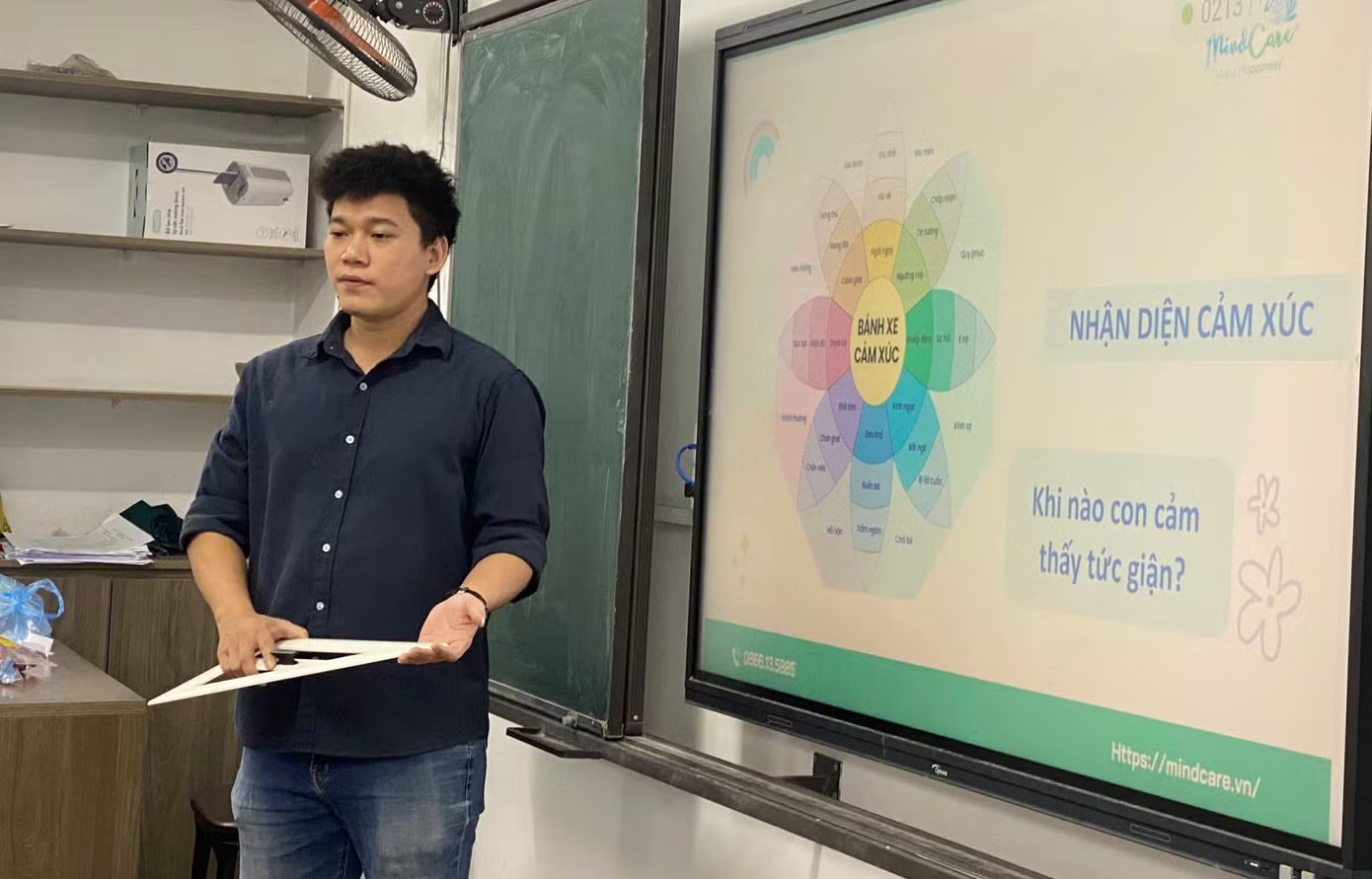
In addition, FOMO (fear of missing out) is another factor that makes it difficult for many people to leave social media. The worry of missing out on new information, trends, or interactions makes users more sensitive to phone notifications and creates a reflex to constantly check social media.
According to experts, this prolonged situation can affect both cognitive abilities and mental health. Frequent exposure to short, fast-paced content can easily lead to a decline in concentration and in-depth thinking skills.
"The brain hardly gets any real rest, causing many people to experience prolonged fatigue even without much physical activity. In addition, constant exposure to perfect images on social media easily leads young people to compare themselves to others, resulting in anxiety or dissatisfaction with their own lives," shared Master's student Tran Gia Bao.
To mitigate this problem, experts suggest that young people need to shift from passively using social media to actively controlling their online time. Each person can start by setting specific times during the day to limit their use of technology, such as during meals, before bedtime, or immediately after waking up. Turning off app notifications can also significantly reduce unnecessary distractions.
In addition, Master's student Tran Gia Bao encourages the development of alternative activities such as reading, light exercise, meditation, or breathing exercises to reduce dependence on phones. For those with concentration skills, young people can apply methods like the pomodoro technique, starting with short periods of focus and gradually increasing them over time to train their attention span.
"Regardless of the method used, the most important thing is consistency and regular practice. Young people need to reflect on whether they are falling into a state of aimless social media browsing so they can make timely adjustments," the psychologist advised.
Source: https://tienphong.vn/gioi-tre-cang-luot-mang-cang-keu-khong-co-thoi-gian-post1844720.tpo





![[Photo] General Secretary and President To Lam presides over the meeting to approve the draft report on the results of the second inspection by the Politburo of the Standing Committee of the Hanoi City Party Committee.](https://vphoto.vietnam.vn/thumb/1200x675/vietnam/resource/IMAGE/2026/05/26/1779789811432_a2-bnd-4430-9620-jpg.webp)
































































































Comment (0)