

Special rice variety
The LC93-1 upland rice variety, grown on less productive arable land in Huong Khe district, Ha Tinh province, does not require irrigation canals. Its efficiency is comparable to that of wet rice cultivation, opening up a new direction in crop restructuring and increasing income for people in this mountainous district.
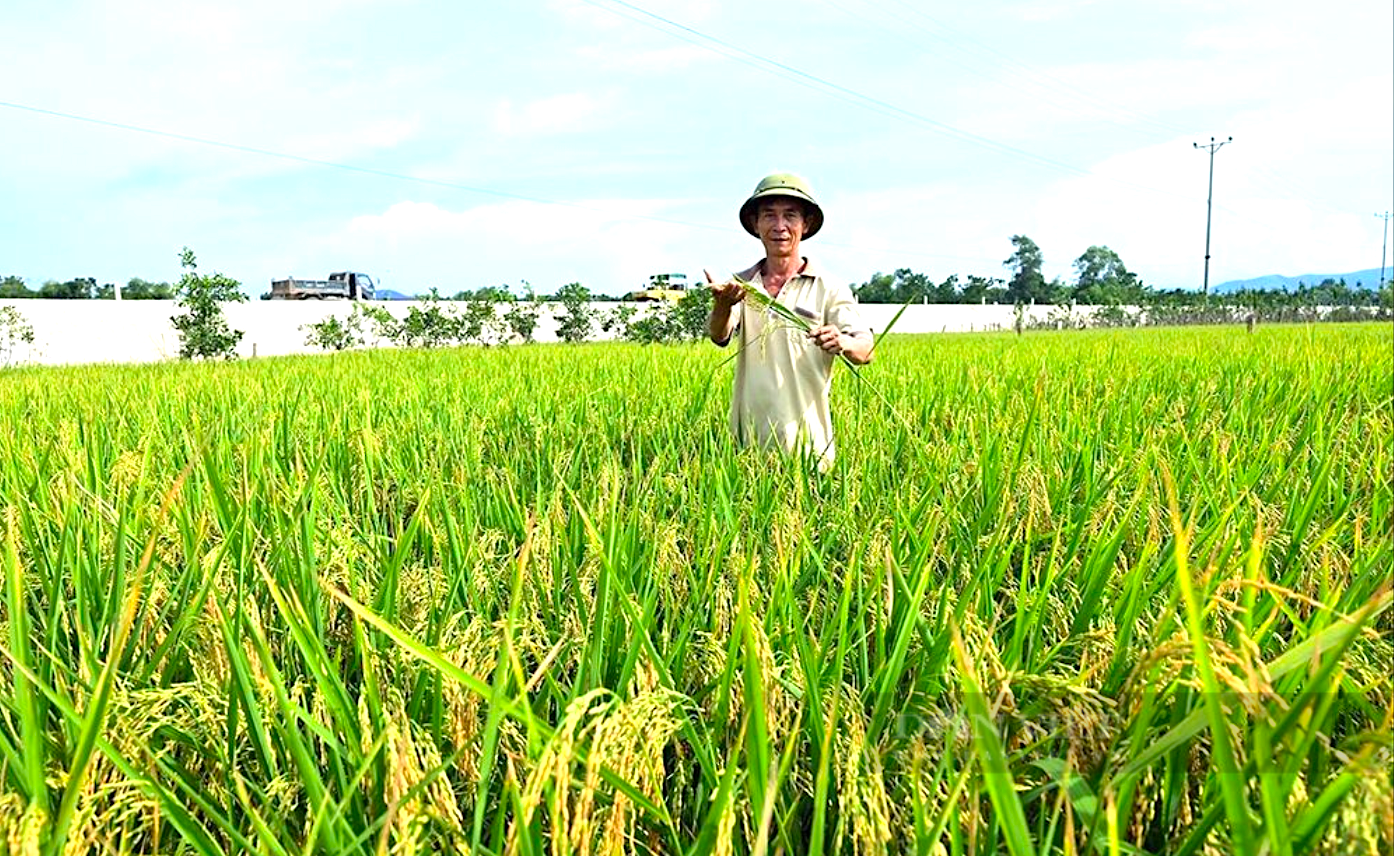
The LC93-1 upland rice variety grows and develops well, yielding high productivity on less productive arable land in Huong Khe district, Ha Tinh province. Photo: DC
Mr. Tran Dinh Luyen, residing in Huong Binh village, Loc Yen commune, Huong Khe district, said: "My family boldly converted more than 1 sao (approximately 1000 square meters) of low-yield crop land to experimentally cultivate the LC93-1 upland rice variety introduced by the commune. During the trial period, the upland rice variety yielded stable productivity and was drought-resistant. This summer-autumn season, my family expanded the upland rice cultivation area to 3 sao."
"Since introducing upland rice cultivation, the yield has been quite high. The first harvest reached about 2 quintals per sao (approximately 1000 square meters), then increased to 2.5-2.7 quintals per sao. We have rice for consumption and straw for raising buffalo and cattle. To date, all three sao of previously abandoned arable land are now planted with upland rice," Mr. Luyen shared.
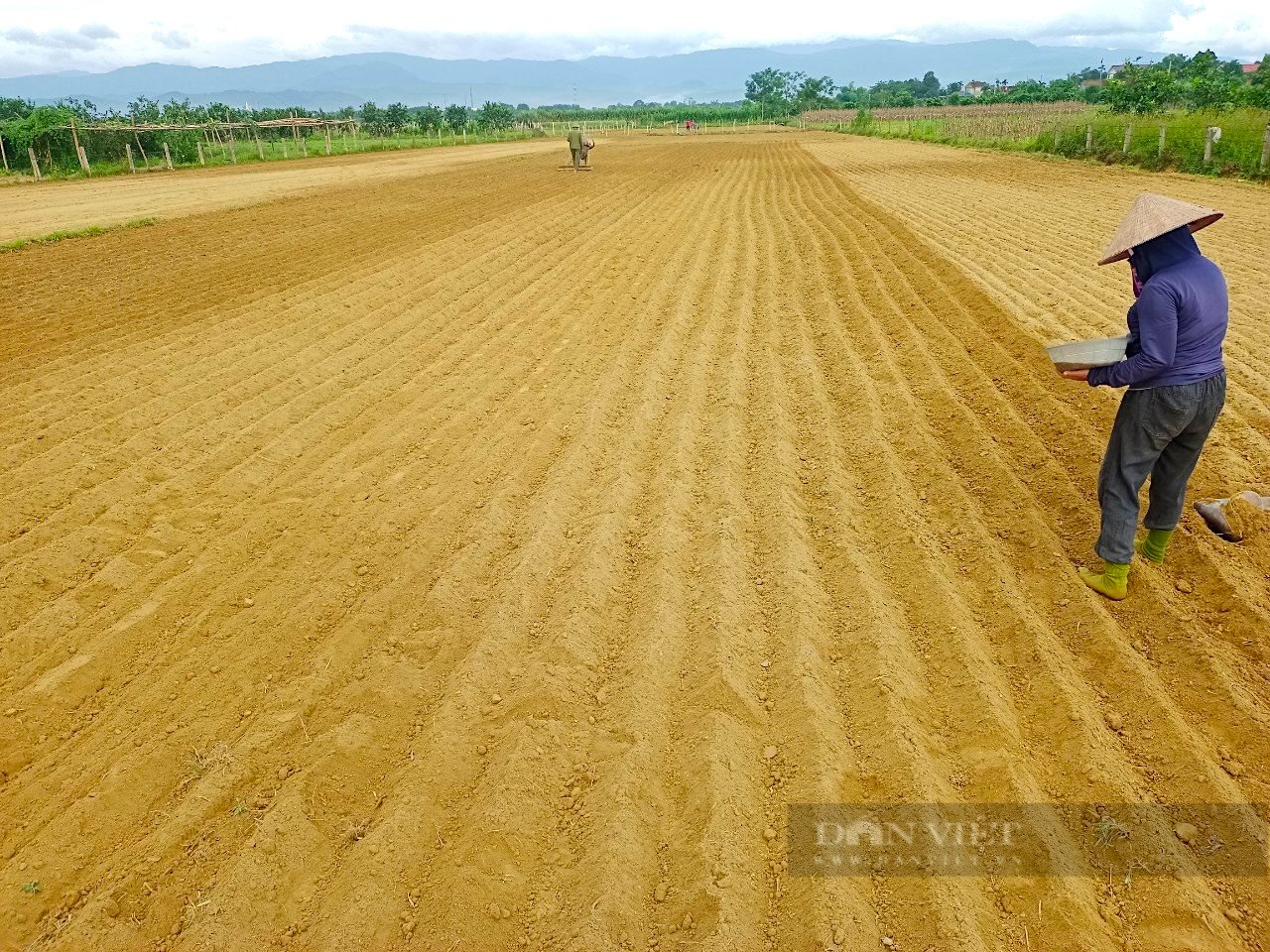
The LC93-1 upland rice variety is planted in rows on low-yield land in Huong Khe district, Ha Tinh province. Photo: PV
Ms. Vo Thi Hien, residing in Huong Giang village, Loc Yen commune, Huong Khe district, said: "Growing upland rice is easy to do and easy to care for. All you need to do is plow the land, make ridges, and sow the seeds straight in rows. Before the rice plants start to tiller, farmers have to diligently weed and cultivate the soil to prevent nutrient competition and ensure good growth and development."
Each plot of dryland rice yields nearly 3 quintals, which is even higher than the yield of wet rice in the spring crop. In particular, this rice variety produces fragrant and delicious rice, which is favored by the locals. Last year, my family sold rice seeds at 12,000 VND/kg, and rice for consumption at 8,000-10,000 VND/kg.
"Calculated income per sao (approximately 1000 square meters) of upland rice cultivation is over 2.5 million VND, while if you plant beans, you only earn about 1 million VND per sao, sesame yields a maximum of about 1.5 million VND, and upland rice cultivation is 2 to 3 times higher," said Ms. Vo Thi Hien excitedly.
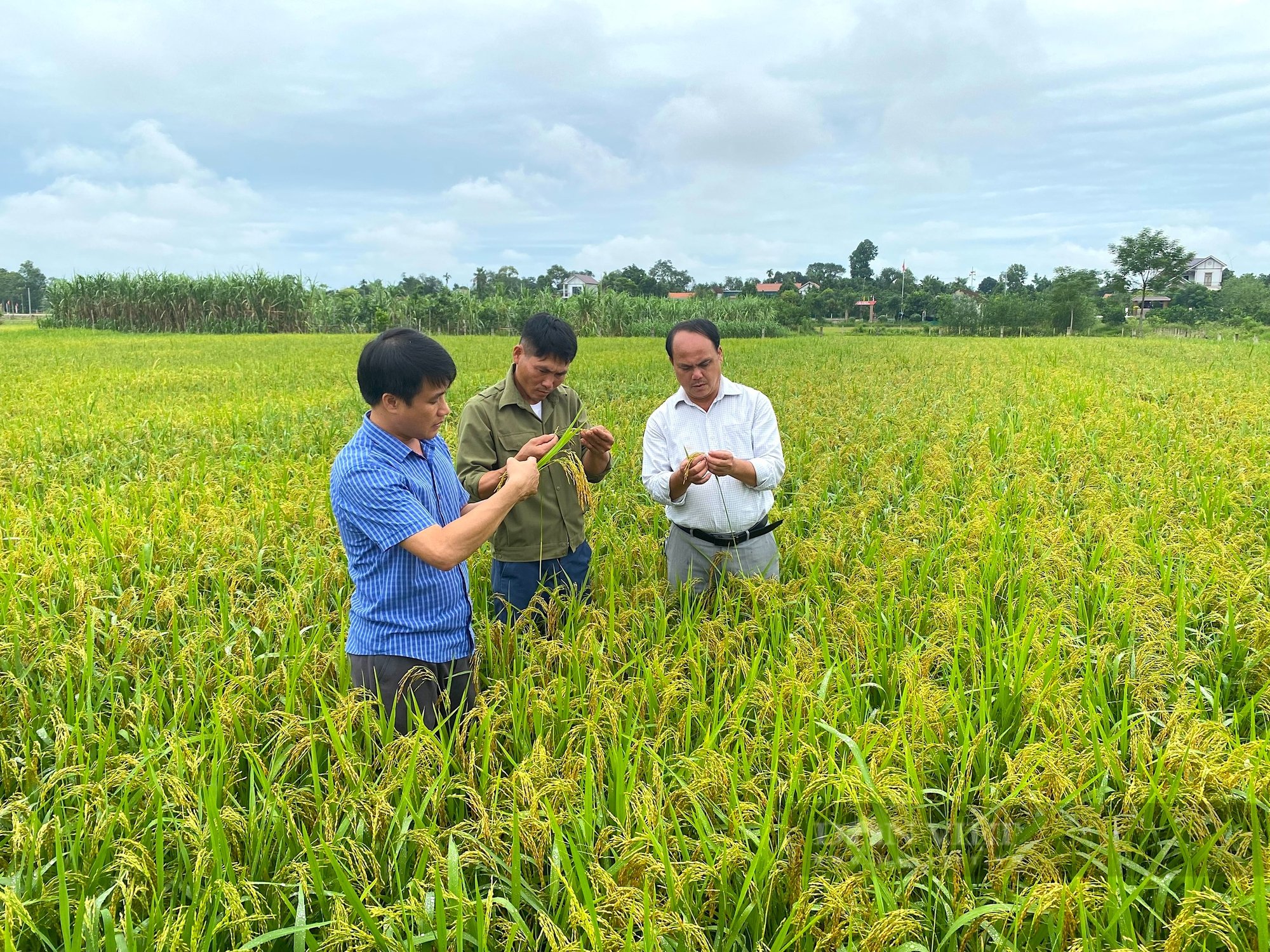
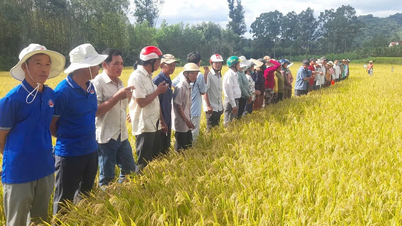
Agricultural experts inspect the growth process of the LC93-1 upland rice variety. Photo: PV.
Huong Khe is one of the mountainous districts located in the arid region of Ha Tinh province, where annual summer temperatures are always 0.5-1 degrees Celsius higher than in other areas. Although the district has a system of rivers, streams, lakes, and dams, most of the irrigation works are small, making irrigation extremely difficult.
Gradually increase the area and green the less productive land.
Every year, the local authorities conduct a review and assessment of the production results of each crop to develop appropriate production plans. In particular, some cash crops such as corn, sesame, and beans, when grown in the summer-autumn season on dry, upland areas, yield low economic returns.
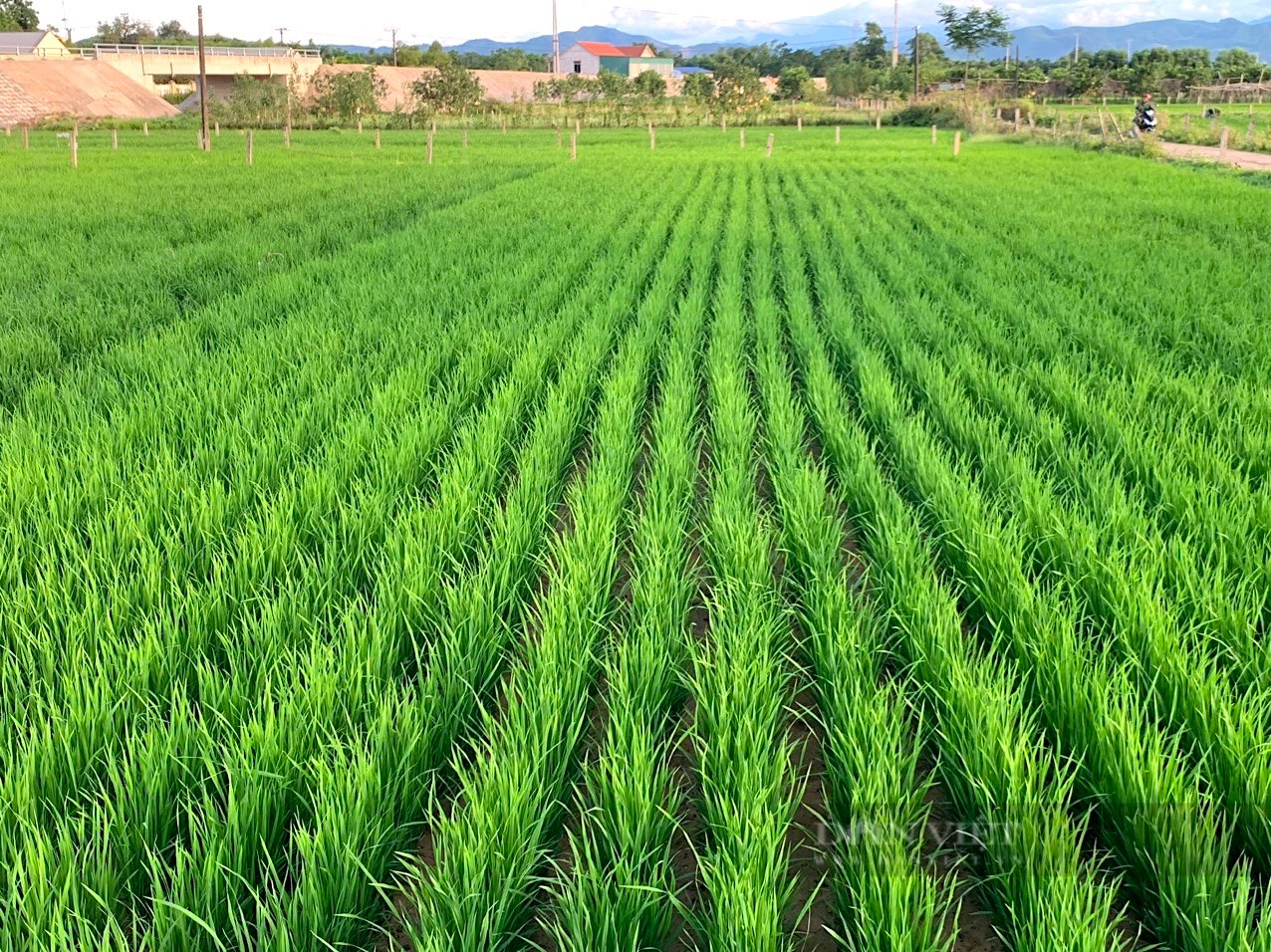
The LC93-1 upland rice variety grows and develops well on dry, fertile soil in Huong Khe district, Ha Tinh province. Photo: PV
The local authorities have focused on implementing crop conversion and introducing suitable crop varieties into production, taking into account local conditions and farming practices. Upland rice has been tested, showing adaptability to farming conditions and climate, yielding noticeable results, leading to an expansion of planted area year after year.
Mr. Nguyen Van Ngoc, Vice Chairman of the People's Committee of Loc Yen commune, said: "The LC93-1 upland rice variety was brought from Dak Lak province for trial planting in 2021. In 2022, production increased to 5 hectares, gradually expanding to 40 hectares by the summer-autumn crop of 2024."
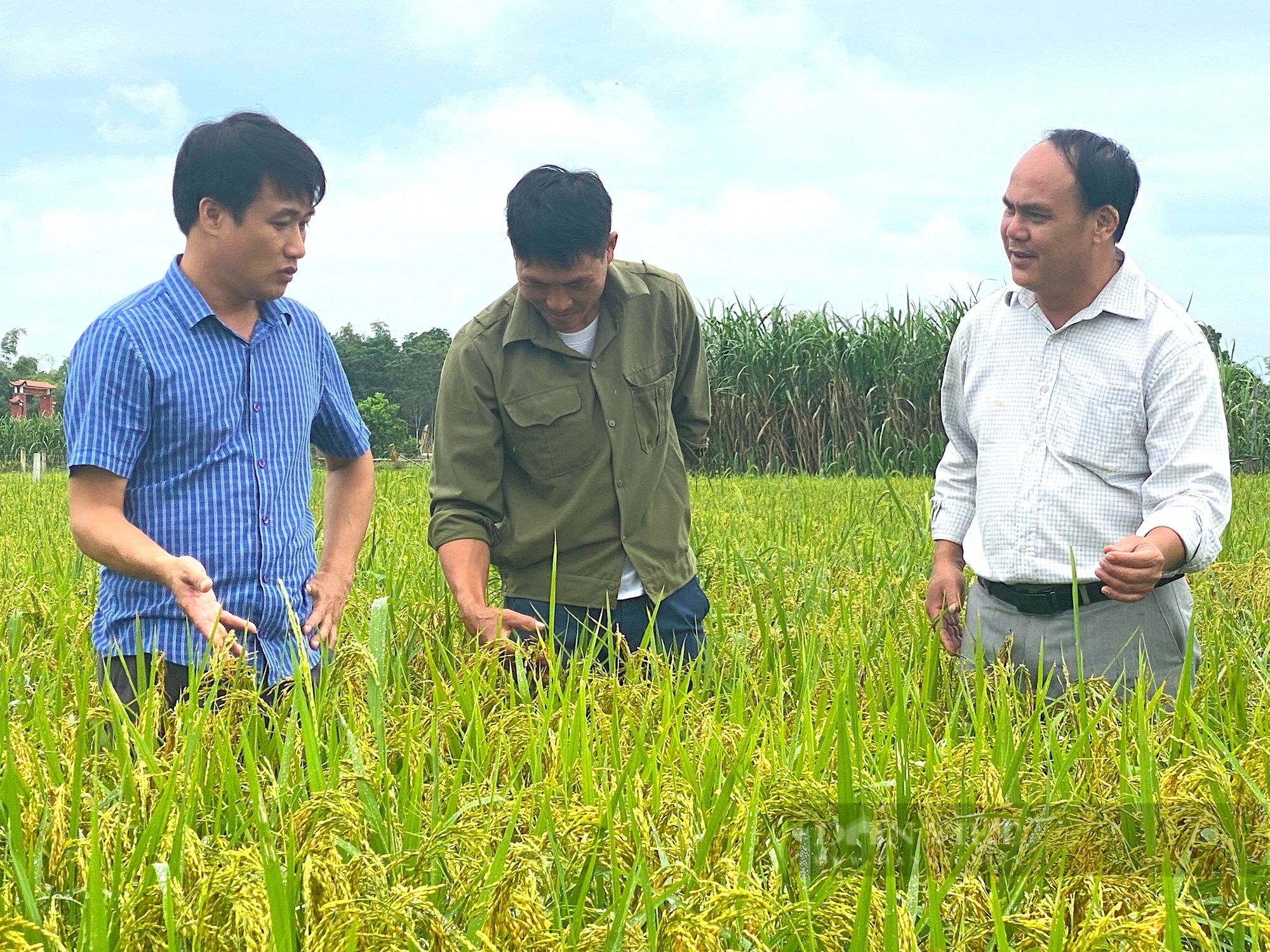
To date, the entire Huong Khe district in Ha Tinh province has expanded the area for upland rice cultivation to 50 hectares. Photo: PV
Compared to growing other crops, rice cultivation in dryland fields offers superior economic value while requiring relatively simple farming conditions. This rice variety has good resistance to pests and diseases, is tolerant to natural disasters, is easy to plant and care for, and its yield is comparable to that of wet rice. Furthermore, the rice stalks grown in dryland are one and a half times stronger than those of wet rice, and the agricultural by-products can be used for livestock feed.
Currently, many people in some communes such as Phuc Dong, Huong Lam, Huong Lien, and Huong Do are converting less productive bean and sesame fields to upland rice cultivation. This year's summer-autumn crop, despite prolonged hot weather, the upland rice fields remained lush and green, and the entire area has been harvested. This ensured safety and avoided adverse weather conditions.
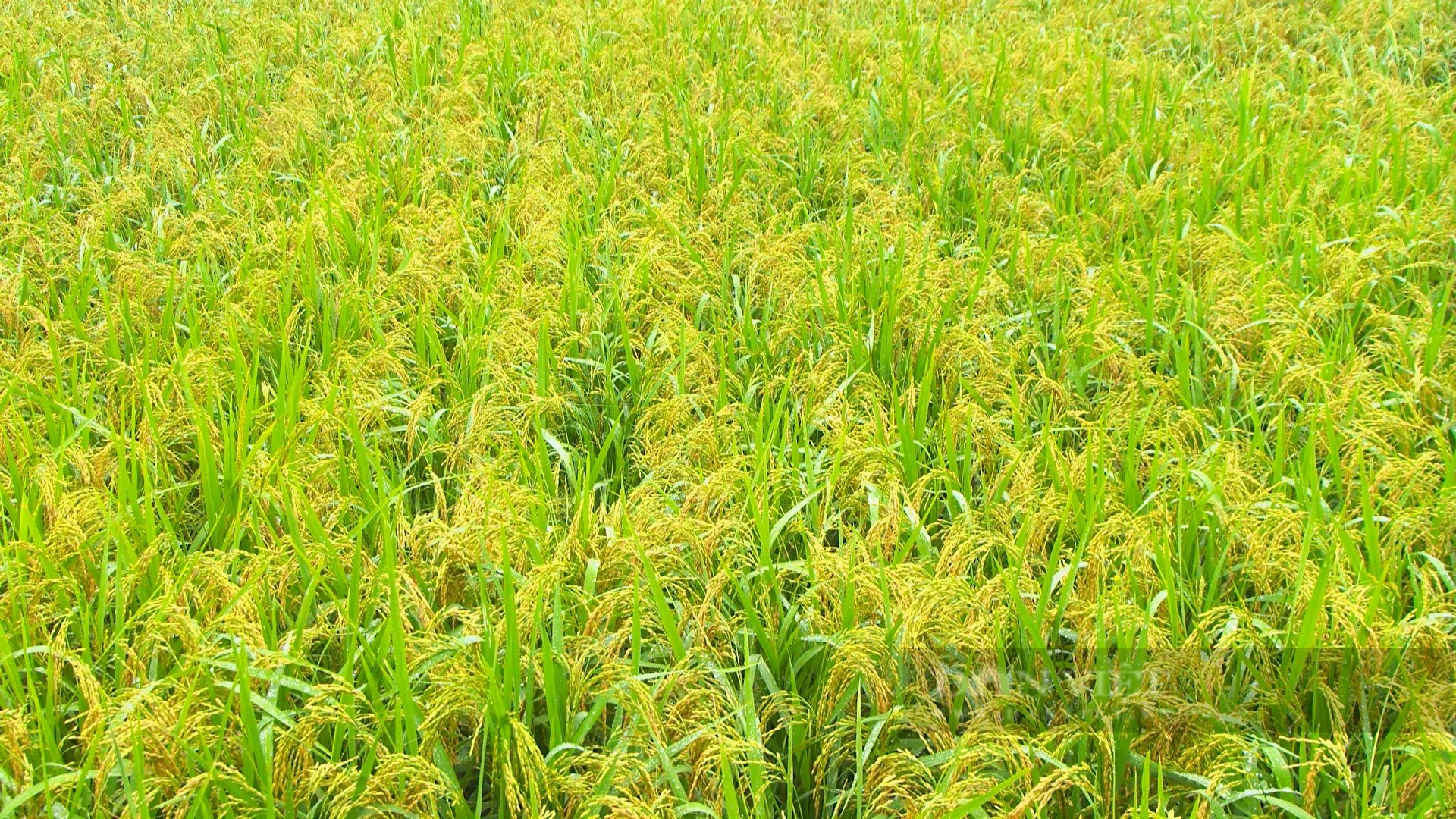
Cultivating the LC93-1 upland rice variety is simple; just prepare the ridges and sow the seeds, no irrigation is needed. Photo: PV
Speaking to a reporter from Dan Viet newspaper, Ms. Le Thi Tham, Deputy Head of the Agriculture and Rural Development Department of Huong Khe district, said: "The upland rice variety grows and develops well, with a yield of about 2.7-3 quintals/sao (500m2 sao). With its drought tolerance, simple cultivation process, and low pest and disease incidence, the district has expanded the cultivation of this rice variety to nearly 50 hectares and is continuing to encourage people to expand the area in arid regions throughout the district."
"The District Department of Agriculture and Rural Development will advise the District People's Committee on policies and mechanisms to support people and expand the area of upland rice cultivation to reduce the area of abandoned arable land. This is identified as a suitable direction for restructuring crop patterns, increasing economic efficiency per unit area, and improving people's income," said Ms. Le Thi Tham, Deputy Head of the District Department of Agriculture and Rural Development of Huong Khe District.
Source: https://danviet.vn/giong-lua-trong-duoc-tren-can-it-cong-cham-soc-ma-nang-suat-lai-cao-nong-dan-ha-tinh-thich-me-20240912082339621.htm

![[Photo] Prime Minister Pham Minh Chinh presides over a meeting on private sector economic development.](/_next/image?url=https%3A%2F%2Fvphoto.vietnam.vn%2Fthumb%2F1200x675%2Fvietnam%2Fresource%2FIMAGE%2F2025%2F12%2F20%2F1766237501876_thiet-ke-chua-co-ten-40-png.webp&w=3840&q=75)
































































Comment (0)