

 |
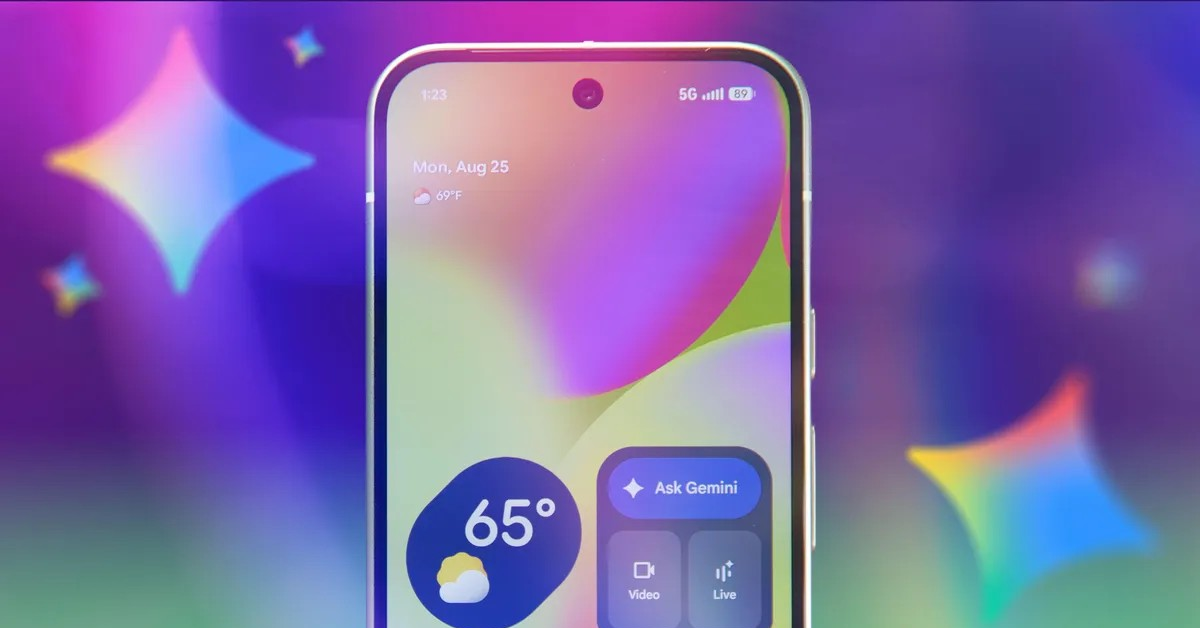
| Google is integrating Gemini more deeply into Android, allowing AI to handle many everyday tasks autonomously and ushering in a major shift in how users interact with smartphones. (Source: Cnet) |
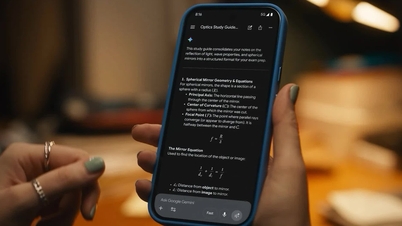
Google has just announced a new step in its AI smartphone development strategy by deeply integrating the Gemini artificial intelligence assistant into the Android operating system. Beyond simply assisting with information searches or answering questions, Gemini is expanding into a digital assistant capable of performing many tasks on the phone on behalf of the user.
According to Google, the new feature, called Gemini Intelligence, will allow AI to handle everyday tasks such as filling out forms, scheduling appointments, shopping, making reservations, or searching for services without users constantly switching between apps. This is seen as a significant step in the effort to transform Android into an AI-centric platform, rather than just an application management operating system as it was before.
Ben Greenwood, Director of Product Management for Android Core Experiences, said Google wants Gemini to function as "a true assistant," capable of understanding users and proactively completing tasks for them.
"In my opinion, it's important to have just one assistant who understands you and works seamlessly across all the products you're using," said Greenwood.
In the latest Android update, Gemini can create purchase orders from note lists, automatically fill out complex forms using data stored on Google Drive, such as passport or driver's license numbers. Users can also take photos of advertising flyers and ask Gemini to find suitable tours for a large group.
Google has also added the ability to create custom widgets using simple commands, for example, displaying the temperature in both Celsius and Fahrenheit. These changes show that Gemini is not just a conversational tool, but is being designed to intervene more directly in the daily phone user experience.
The new features are expected to first appear on Samsung Galaxy and Google Pixel phones later this summer. Gemini Intelligence will also be integrated into Android Auto, Wear OS, and Google's smart glasses, aiming to create a unified AI experience across multiple devices.
This move is seen as a significant step forward in the AI smartphone race between Google and Apple. While Google is expanding Gemini's role on Android, Apple is still considered to be lagging behind with the next generation of Siri for iPhone.
Many experts believe the smartphone industry is entering a major transformation, where AI could gradually change how users interact with traditional applications. Instead of opening each application to complete each task individually, users can delegate tasks directly to AI assistants and let the system handle the rest.
Analyst Ming-Chi Kuo argues that users don't actually want to "use a bunch of apps," but rather want to get things done as quickly as possible through their phones. According to him, this could fundamentally change how smartphones operate in the future.
Signs of this trend have begun to emerge. Numerous sources indicate that OpenAI is developing its own AI smartphone and could begin mass production next year. Meanwhile, Amazon is also reportedly considering a return to the phone market with a device focused on AI rather than traditional applications.
However, Google is not yet ready to completely remove the app from Android. In its initial phase, Gemini Intelligence primarily serves to reduce manual operations and automate repetitive tasks, saving users time when handling familiar tasks.
One example given by Google is the Rambler feature on the Gboard keyboard. This tool can remove extraneous words, corrections, or filler sounds when users type using voice. If a user says "buy bread, cereal, and bananas… oh, no bananas," the system will only record bread and cereal.
Gemini can also automatically and seamlessly switch between multiple languages within the same conversation, catering to the mixed-language speaking habits of many users.
According to Google, the ultimate goal is for AI to handle more tasks without requiring users to give overly detailed instructions. However, the biggest question remains whether users are ready to let AI take the wheel of their phones more in the future.
By integrating Gemini deep into Android, Google is betting on a new scenario for the mobile market: smartphones are no longer just places to store apps, but devices that understand context, automate tasks, and perform many daily tasks for the user. This could also be the direction shaping the next round of competition among major tech companies in the era of AI phones.
Source: https://baoquocte.vn/google-dua-gemini-len-android-dinh-hinh-cuoc-dua-smartphone-ai-395029.html


![[Photo] General Secretary and President To Lam receives Amazon's Senior Vice President David Zapolsky](https://vphoto.vietnam.vn/thumb/1200x675/vietnam/resource/IMAGE/2026/05/22/1779466547770_a1-bnd-3513-6601-jpg.webp)

























































































Comment (0)