

After the fireworks faded, the streets around the city center gradually emptied, but Thang Long Imperial Citadel still shone with a warm golden light. On New Year's Eve, this place, which has witnessed countless ups and downs in the nation's history, became a spiritual meeting point for hundreds of Hanoi residents. They came not only to celebrate the New Year but also to find a moment of tranquility after the hustle and bustle of life, and to entrust their hopes for the new year.
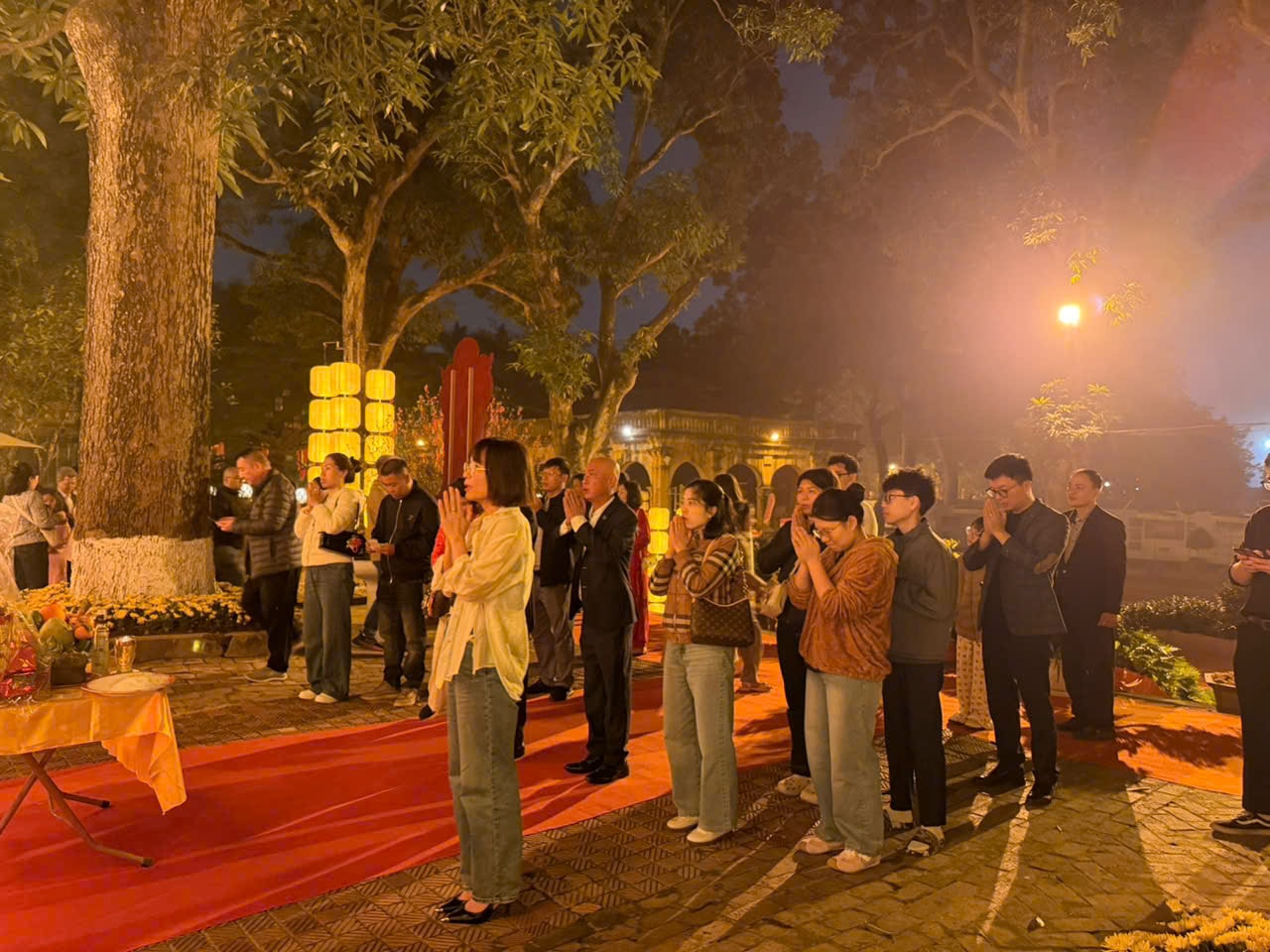
Beneath the ancient trees, groups of people lined up neatly, hands clasped in front of their chests. The lingering scent of incense, illuminated by lanterns hanging along the path, created a scene both solemn and intimate. Simple offerings of fresh flowers, sweet fruits, and fragrant incense sticks were neatly placed before the altar. Without noise or jostling, each person seemed to find a quiet moment to reflect on the past and their plans for the future.
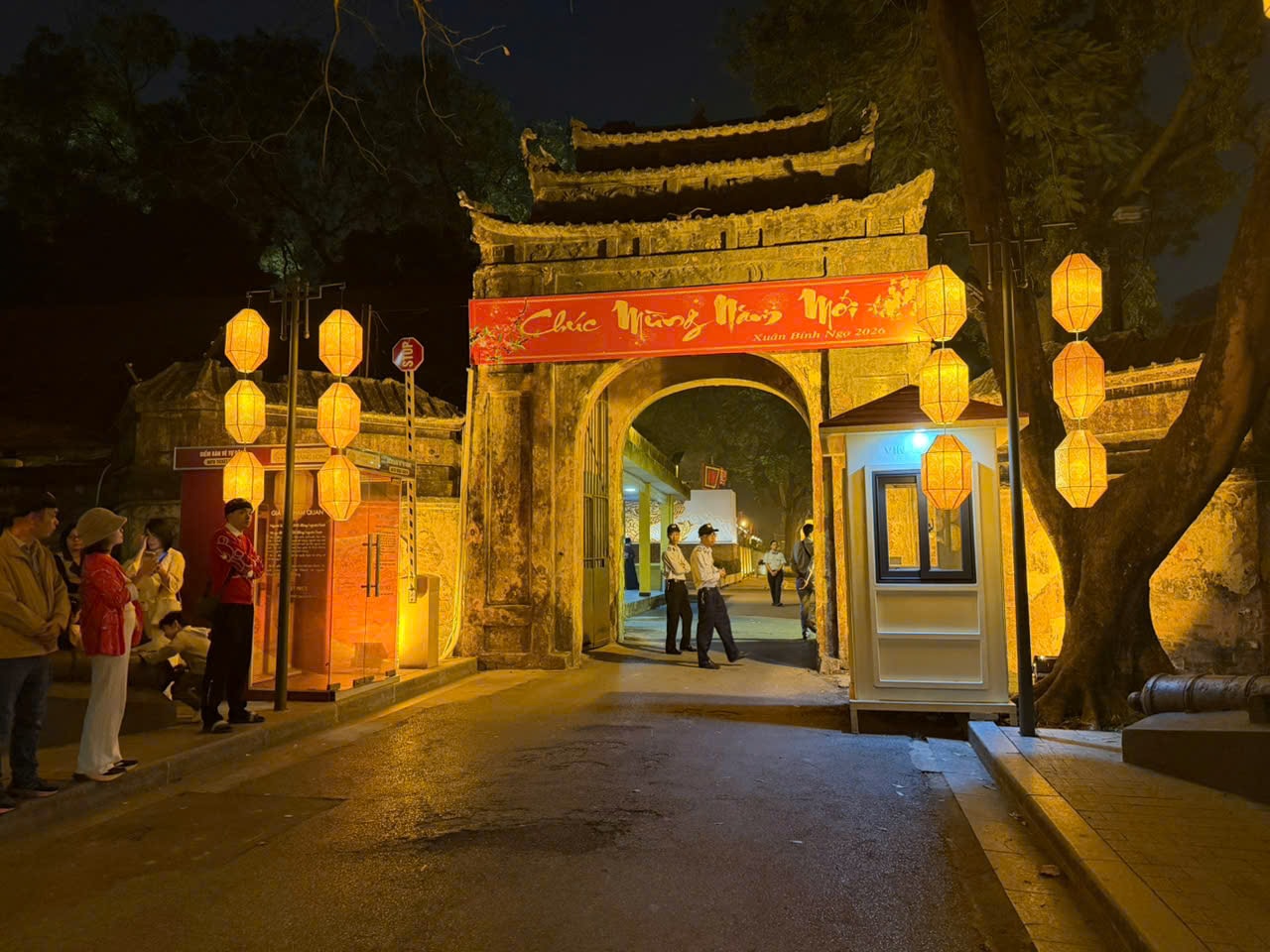
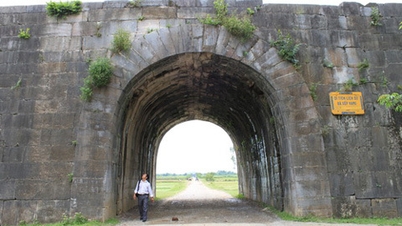
The ancient city gate stands out against the vibrant red of New Year's banners. The moss-covered stone walls are illuminated by rows of golden lanterns, highlighting the serene beauty of this thousand-year-old heritage. The Imperial Citadel is not just a tourist attraction, but also a symbol of the depth of history, the enduring tradition, and the indomitable spirit of the people of Hanoi .
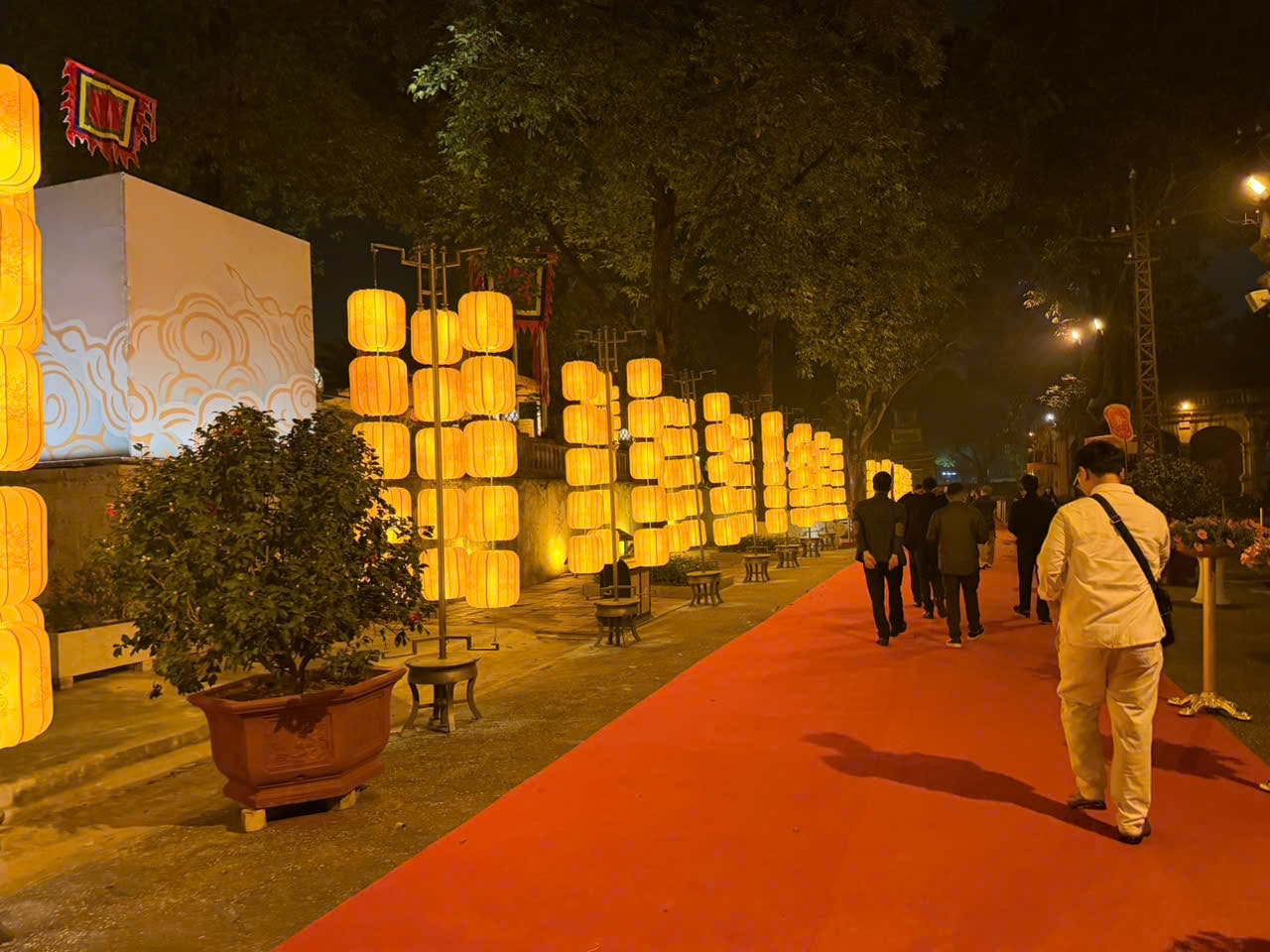
Along the red carpet leading to the central area, people walked slowly. There were three-generation families attending the New Year's ceremony together, grandparents leading their grandchildren, parents reminding their children to maintain order and clasp their hands when offering incense. For many, this was a way to remind their children and grandchildren of their roots, of the spirit of "drinking water, remembering the source" deeply ingrained in Vietnamese thinking.
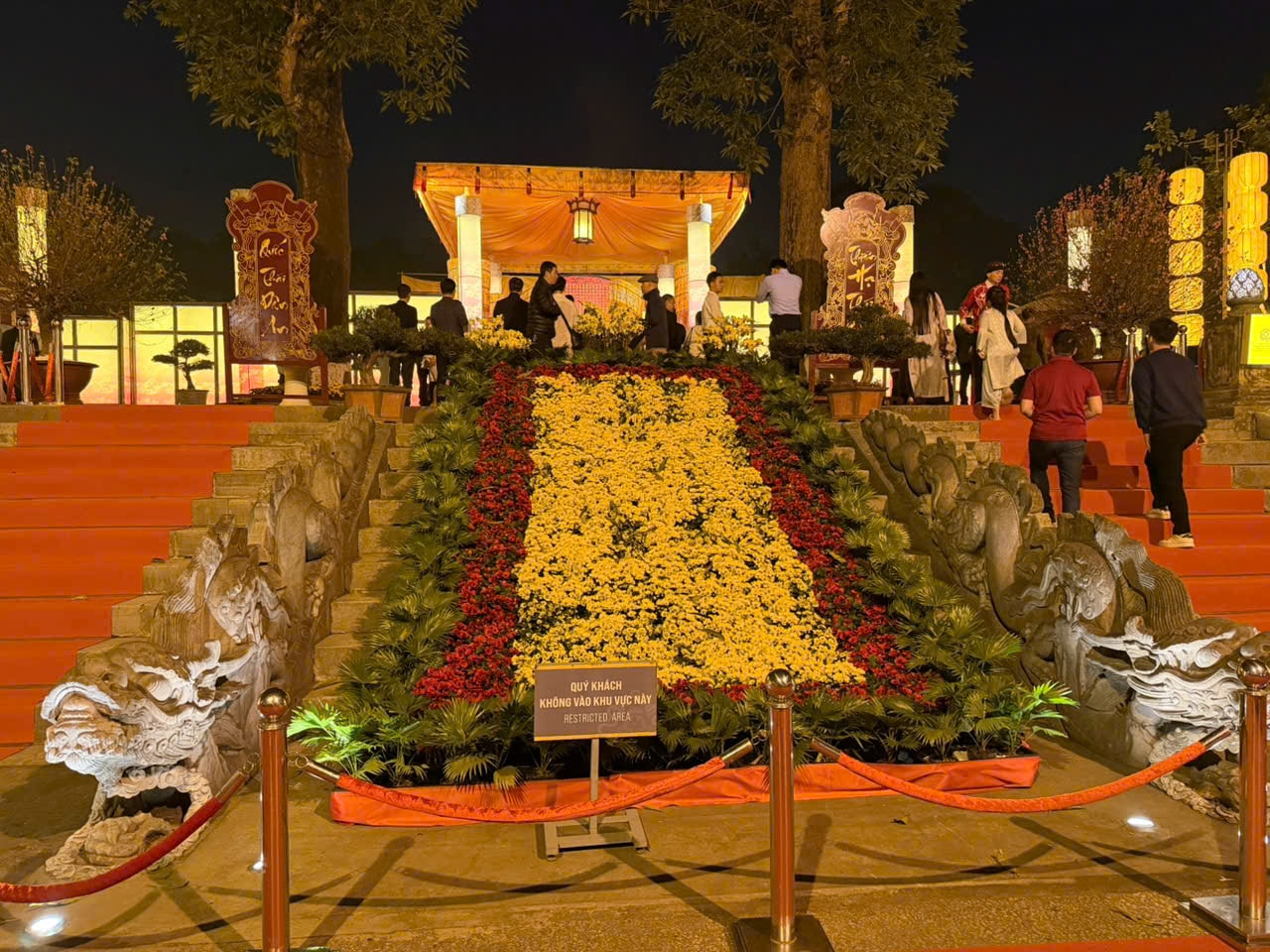
At the stone dragon steps, a large, elaborately arranged carpet of vibrant yellow and red flowers attracts many people who stop to admire it. The yellow symbolizes prosperity, and the red evokes good fortune, creating a hopeful scene for the new year.
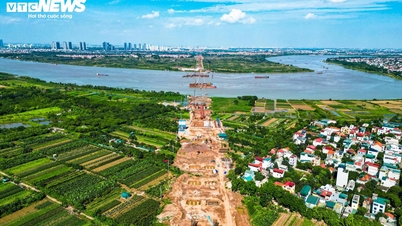
This year, in the stories of the Lunar New Year, many people mention the phrase "the miracle of the Red River." It's not just a slogan, but an aspiration for the powerful transformation of the capital city. The Red River, a waterway closely intertwined with the history of Hanoi's formation and development, is expected to become a green space axis, a new cultural and economic center, and a hub of creativity and innovation.
Amidst the crowds that night, Tran Quoc Duy (a fourth-year student at Hanoi University of Science and Technology) shared that he chose to visit Thang Long Imperial Citadel right after New Year's Eve to find a sense of peace before embarking on a challenging academic year. "Standing in a place with a history of thousands of years, I feel small but also clearly see the responsibility of the younger generation. If Hanoi wants to achieve new miracles, it must start with its people, with knowledge and creativity," Duy said.
According to Duy, for engineering students like him, the aspirations at the beginning of the year are closely linked to studying and research. “I hope Hanoi will develop more strongly in technology, digital transformation, and smart infrastructure. If I have the opportunity to participate in projects related to planning, energy, or the environment along the Red River, it would be a very meaningful experience. I think the ‘Miracle on the Red River’ is not just about the bridges or new urban areas, but also about how the city creates opportunities for young people to contribute,” Duy expressed.
Not only young people, but many older people also express their wishes for a more civilized, greener, cleaner Hanoi with more convenient transportation and a richer cultural life. Therefore, these New Year's wishes are not limited to health or wealth, but expand into a shared aspiration for a livable city.
Thang Long Imperial Citadel, in the early morning of the Lunar New Year of the Horse 2026, stands as a bridge between the past and the future. It holds tradition, memories, and pride; but also eyes looking forward, anticipating positive change. The incense sticks lit are not only for good fortune, but also a silent promise: each person will strive harder in their work, studies, and civic responsibilities.
As night falls, the crowds thin out, and the lanterns still cast a gentle glow on the ancient stone walls. A new year has begun, bringing with it countless hopes. From the sacred space of the Imperial Citadel, the wishes of the new year quietly spread, nurturing the belief that Hanoi will continue to rise, writing new chapters in its development journey – so that the "Miracle on the Red River" will not only be a dream, but become a reality in the near future.
Source: https://hanoimoi.vn/gui-khat-vong-ky-tich-song-hong-vao-nam-moi-733928.html
![[Photo] General Secretary and President To Lam presides over a meeting with the Central Organizing Committee.](https://vphoto.vietnam.vn/thumb/1200x675/vietnam/resource/IMAGE/2026/06/03/1780482764658_a1-bnd-4741-3342-jpg.webp)
![[Photo] First session of the 14th Congress of the Vietnam Trade Union](https://vphoto.vietnam.vn/thumb/1200x675/vietnam/resource/IMAGE/2026/06/03/1780465947883_ndo_br_img-3852-jpg.webp)
![[Photo] Secretary of the National Assembly Party Committee, Chairman of the National Assembly presides over the meeting of the Standing Committee and Executive Committee of the National Assembly Party Committee.](https://vphoto.vietnam.vn/thumb/1200x675/vietnam/resource/IMAGE/2026/06/03/1780480353201_ndo_br_bnd-2585-jpg.webp)




![[Infographic] Over 1.2 million candidates registered for the 2026 High School Graduation Exam](https://vphoto.vietnam.vn/thumb/402x226/vietnam/resource/IMAGE/2026/06/03/1780496872518_w_20260603205412.jpeg)



![[Podcast] Capital City Law 2026: Increased penalties for violations in the fields of culture and advertising](https://vphoto.vietnam.vn/thumb/402x226/vietnam/resource/IMAGE/2026/06/03/1780487283783_4522222.png)
























![[Video] Sunset at Lap An Lagoon – Where the sun sets over the fishing nets](https://vphoto.vietnam.vn/thumb/1200x675/vietnam/resource/IMAGE/2026/05/31/1780192137701_beach-landscape-sea-water-nature-grass-745871-pxhere-com.jpeg)
























Comment (0)