

 |
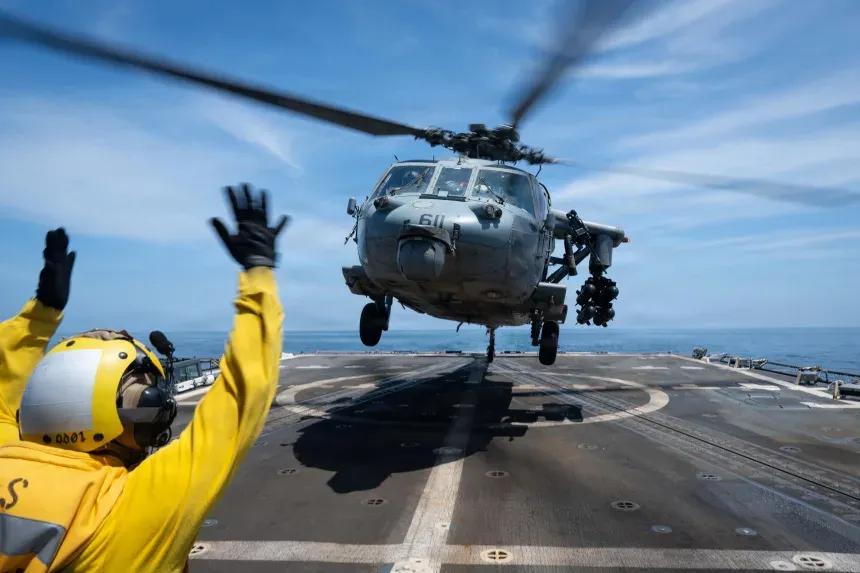
The aircraft landed on the deck of a US Navy aircraft carrier. Photo: US Navy . |
On the night of May 27, the US military conducted another airstrike targeting Iranian military objectives, citing the threat posed by these locations to Washington's forces and maritime operations in the region.
Immediately, Iran's Islamic Revolutionary Guard Corps (IRGC) announced retaliation by attacking a US base in the region – identified as the source of the early morning airstrikes.
Sending a strong message, the IRGC declared that any act of aggression would have consequences and warned Washington would face even more severe retaliation if it continued to escalate.
The Iranian Foreign Ministry accused Washington of repeatedly violating the ceasefire agreement established in early April. Tehran asserted that this move has deepened its doubts about any commitments from the US side. IRGC commanders declared they have the full right to retaliate appropriately if the US dares to break the agreement.
This new escalation comes at a time when both sides are working to finalize the terms of a preliminary Memorandum of Understanding (MoU) aimed at reopening shipping lanes through the Strait of Hormuz.
Although US-Iran peace negotiations continue through mediation, the prospect of ending the war remains dim due to constant interruptions by airstrikes and deep disagreements.
Despite these direct acts of hostilities, neither the US nor Iran has yet declared that the ceasefire has collapsed.
In Tehran, the US sanctions and maritime blockade are stifling the economy , yet people still cling to hope for faint signs of cooling down in the markets.
Meanwhile in Washington, the Trump administration's prospects for ending the conflict are being severely shaken by internal resistance from within Republican lawmakers, amid opinion polls showing that a large majority of the American public is weary and skeptical about the outcome of the war.
Tehran's financial markets are booming amid a wave of skepticism.
Expectations of a breakthrough in US-Iran negotiations are clearly reflected in financial markets, but sentiment among the people and leaders in Tehran remains divided.
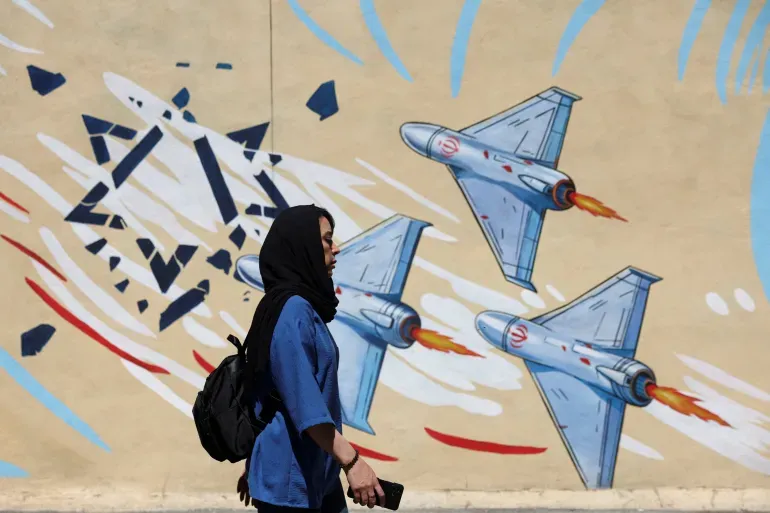 |
A woman in Tehran walks past a mural depicting Iranian drones on May 26. Photo: Reuters. |
In Tehran, investors appear to be betting on a de-escalation scenario with Washington. The Iranian currency has reversed course and appreciated by more than 5% this week, bringing the rial to around 1.73 million to 1 USD on Tuesday morning, although it remains close to the historical low recorded last month.
At the same time, the main index of the Tehran Stock Exchange also extended its gains, surging past the 4 million point mark after a controlled reopening a week earlier. The index had previously reached a historical peak of around 4.5 million points earlier this year, but plummeted after thousands were killed in nationwide protests in January, a time when war was imminent.
Overall, the Iranian economy is under pressure due to the consequences of the war and the tightening sanctions from the US, including the maritime blockade of southern ports.
This blockade, coupled with the United Arab Emirates' (UAE) cutting off Iran's role as a major import source – due to severely deteriorated relations following a series of Iranian missile attacks on the UAE – has caused significant damage.
"The supply of goods will be a big question mark for at least the next few months, so nothing can be said for sure," a small business owner at a shop in central Tehran specializing in mobile phones and digital devices – items that were mainly imported from the UAE before the war – told Al Jazeera.
"We clearly see how price can deter customers. But it's not just about price. A laptop you were eyeing last week might not be available with similar specifications this week."
Dariush, a retired civil engineer living west of Tehran, expressed concern about the cascading effects of the current situation: "At this point, any solution that ends this precarious situation – neither war nor peace, with an uncertain future – would be welcome. If this continues, the consequences will be catastrophic."
From a different perspective, a 64-year-old art teacher and sculptor (who wished to remain anonymous) believes that Iran and the US will reach an agreement, which would put Iran in a relatively more advantageous position than before the war.
She argued that the constant disruptions to the Strait of Hormuz would force the US to humble itself, sign an agreement, and release some of Iran's assets frozen abroad.
However, a 23-year-old student countered, arguing that even if the two sides signed a memorandum of understanding, it would not alleviate the pressure on the Iranian people for a secure future.
Why is it so difficult for Trump to end the war with Iran?
Although President Trump declared over the weekend that he was on track to reach a peace deal with Iran, this prospect seems completely unacceptable to hardliners within the Republican Party.
Some lawmakers have even warned that the deal could make Iran stronger than it was before the conflict broke out. If Iran continues to maintain its hardline stance, it remains unclear which agreement could help Trump save face while ending the war before it becomes a bigger problem for his party.
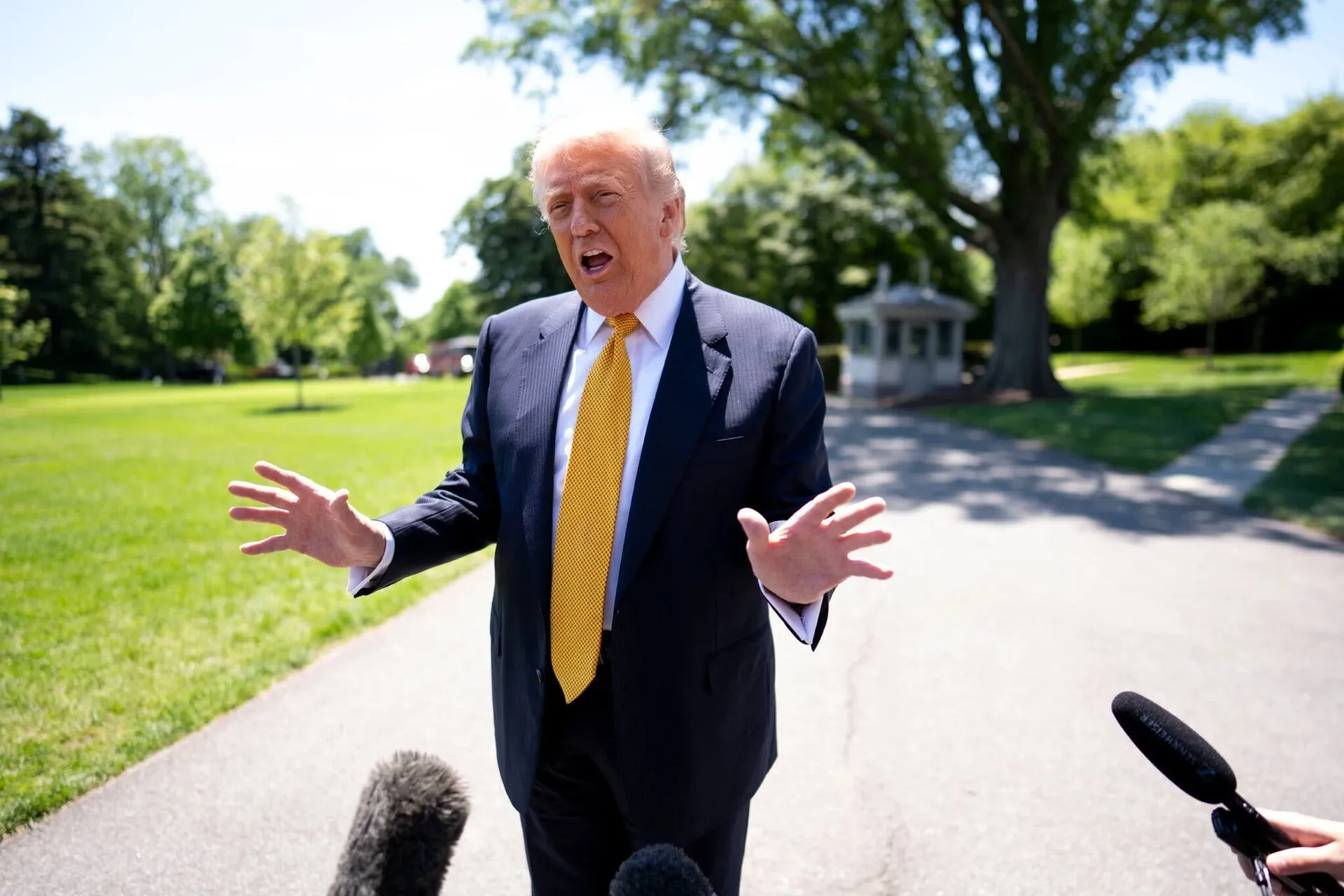 |
President Trump repeatedly changed his position during the negotiations. Photo: Reuters. |
According to an analysis by The New York Times , for weeks now, Trump has been constantly alternating between statements about negotiations, bombing, and blockades – sometimes all happening on the same day. He even hinted more than once that the war was over, only for the US to launch new airstrikes on the country on May 27th.
CNN reported that Trump appears to have made two serious mistakes from the outset: He lacked a clear, viable plan for how to bring the war to an end, and he failed to convince the American people to fully accept the war.
Instead, he set the bar for success so high that he and the War Department would struggle to surpass it, and even declared to voters after launching the attack that the price to pay was entirely worth it.
In reality, the American public has little faith that President Trump has a good way out of this conflict. Opinion polls in recent weeks show that Americans are weary of the Iran war. From the beginning, they did not support the war, did not think it would yield positive results, and did not expect significant concessions from the other side.
A Fox News poll last week found that only 39% of registered voters want U.S. military operations to continue "until objectives are achieved," compared to 61% who prefer a "limited timeframe."
Similarly, a New York Times-Siena College poll indicated that 52% of registered voters said the U.S. should end military operations even if an agreement with Iran on its nuclear program cannot be reached. Only 37% wanted to resume military operations if the two countries could not reach a comprehensive nuclear agreement.
According to a Washington Post-ABC News poll, 65% of Americans are "not confident" that a deal ending the war would prevent Iran from developing nuclear weapons (a red line repeatedly raised by Trump).
The escalating costs of the Iran conflict and soaring fuel prices are weighing heavily on both the U.S. military and economy just ahead of the midterm elections.
At the Pentagon, dwindling budgets forced the military to cut training and routine maintenance, prompting military leaders to pressure Congress for urgent additional funding. This situation compelled the White House to seek an early exit to appease voters while still maintaining the upper hand in negotiations.
Commenting on this domestic pressure, analyst Paul Musgrave of Georgetown University in Qatar suggested that the US President is seeking a peace deal with Iran "as a political victory," so that he can quickly move on to the next issues on his agenda.
According to Musgrave, hardline factions in Washington and Tel Aviv are working to contribute their voices and actions to reshape the negotiation process. They want to ensure that this will be a comprehensive and optimal agreement for all parties – a long-term goal, although it requires more careful consensus-building steps.
Source: https://znews.vn/ha-man-chien-su-my-iran-them-gian-truan-post1654934.html


![[Photo] Standing Committee member of the Party Central Committee Tran Cam Tu working with the Central Inspection Committee](https://vphoto.vietnam.vn/thumb/1200x675/vietnam/resource/IMAGE/2026/05/28/1779969579668_ndo_br_bnd-2495-jpg.webp)




























































































Comment (0)