

When people "chase after" charging stations
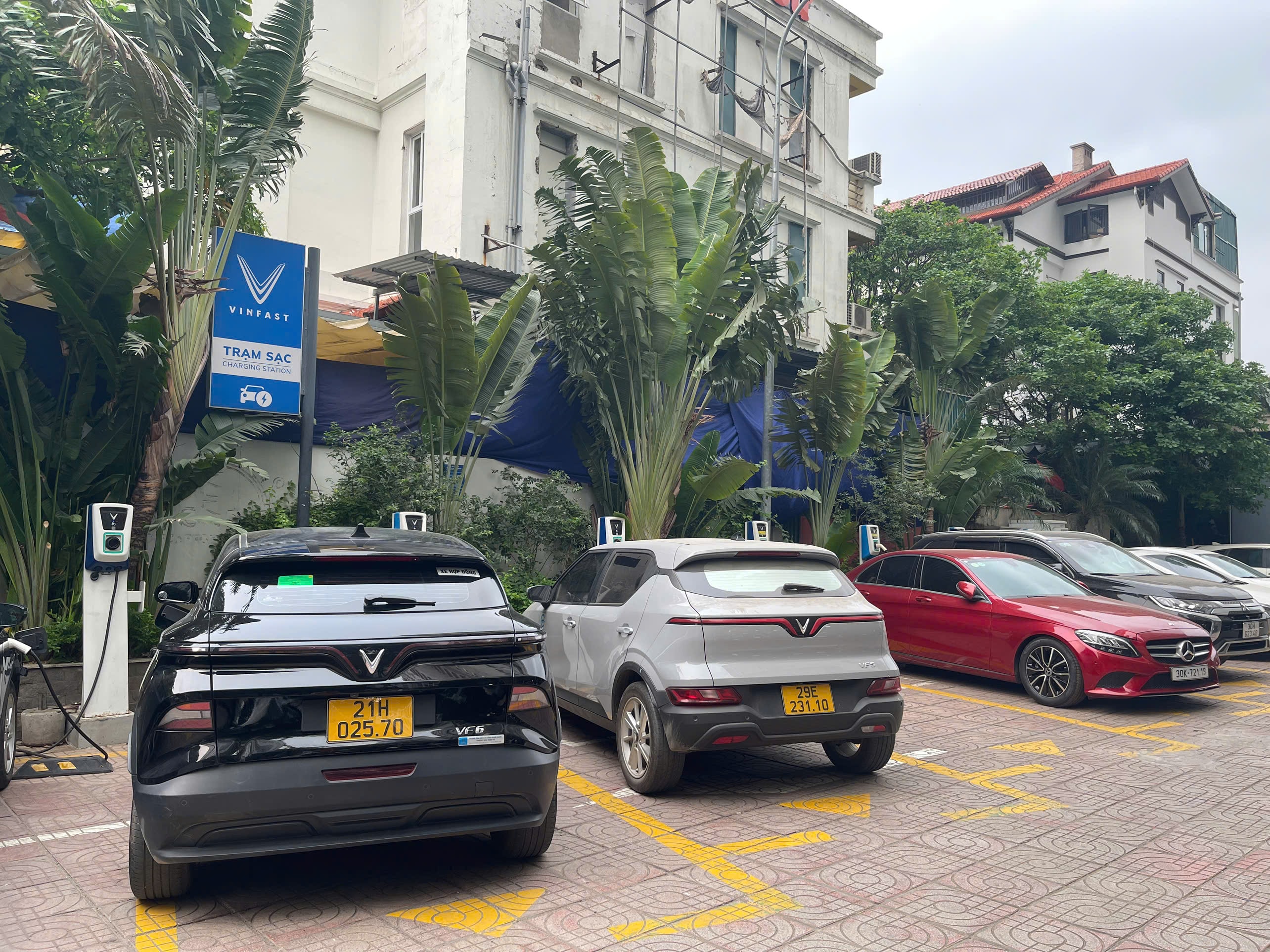
The advantages of electric vehicles, such as reduced operating costs, lower emissions, and environmental friendliness, are undeniable. These benefits have led to increasing interest and choice among Hanoi residents. However, behind this seemingly simple decision lie many concerns. Ms. Nguyen Thi Thanh Son, from the B6 apartment complex in Thanh Xuan ward, shared: “My family is planning to buy an electric motorbike for our child to go to school, but we have some concerns about charging. We live in an apartment complex, so we usually park our motorbike on the ground floor, but the landlord doesn't allow charging due to fire hazards. We also have to go far to find a charging station, so we haven't dared to make a decision yet.”
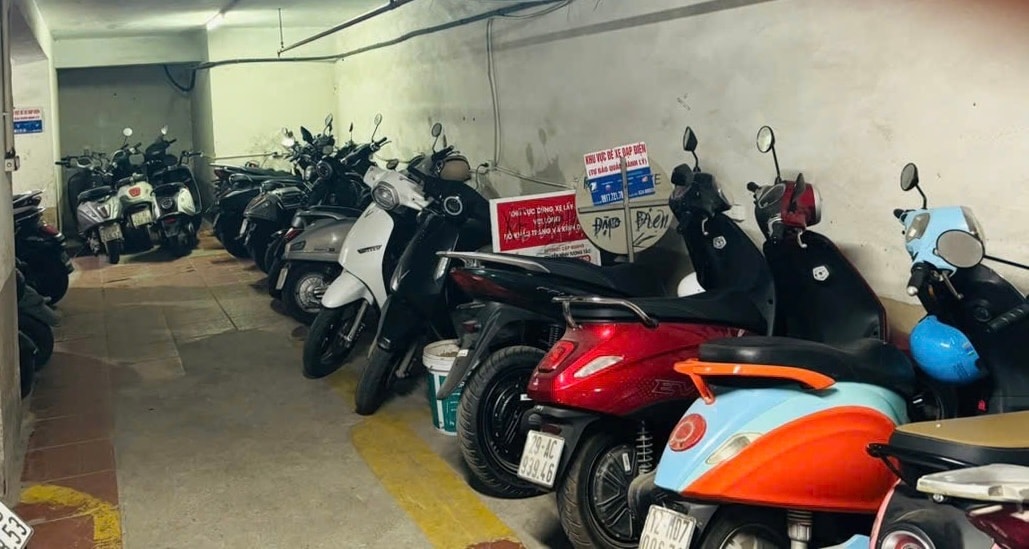
Ms. Son's family's concerns are not unique, as even in new apartment buildings, which are expected to have more integrated infrastructure, the shortage of charging stations persists. Ms. Pham Thi Giang, from Riverside Garden apartment building, 349 Vu Tong Phan Street, Khuong Dinh Ward, said: “For over a year, the building management has arranged a separate charging area for electric vehicles, but the number of charging stations is very limited. It's often overloaded at night, and many days I have to wait a long time. Especially, after 10 PM, the power is cut off for safety reasons, so sometimes the battery isn't fully charged.” Not only is there a shortage in quantity, but the distribution of charging stations is also inefficient. Mr. Le Van Thao, from Giang Vo Ward, complained: “One day, I drove past 2-3 charging points on my way home from work, but they were all full. In the end, I had to go further and wait for an hour for my turn. This is very inconvenient, especially for people with busy schedules.”
The long wait times for charging stations are also a nightmare for many ride-hailing drivers. Nguyen Van Long, a driver for Xanh SM, said: “Although charging is free until 2027, the limited number of charging stations means long waiting times, directly impacting my income. Every day I drive around Tu Liem and Phuc Dien wards, so I often take advantage of lunchtime to charge at the 1A-Vinaconex 7 apartment building, 136 Ho Tung Mau, Phu Dien ward. However, the building has nearly 1,000 households but only 7 charging stations, of which only 3 are operational and have low capacity, so charging takes a long time.” In suburban areas, the difficulties are even more pronounced. Le Tuan Anh from Thien Loc commune shared: “My area only has a few charging stations; every time I need to charge, I have to go to the neighboring commune, about 7km away. Many days I have to wait because there are so many people there.”
Furthermore, different car manufacturers are currently using different charging standards, which limits the use of shared charging stations. This not only causes inconvenience but also reduces the efficiency of infrastructure utilization. Clearly, when infrastructure lags behind, people are forced to "chase" for charging stations instead of enjoying the convenience that electric vehicles offer. These shortcomings are directly impacting the community's decision to embrace green transitions.
Removing bottlenecks to achieve breakthroughs.
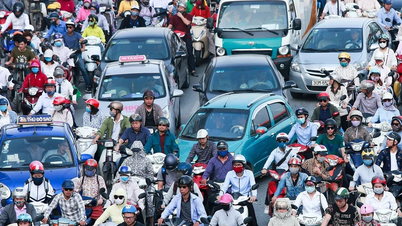
The above facts show that developing charging station infrastructure is not only an urgent requirement but also a prerequisite for promoting green transportation. The Prime Minister has issued Directive No. 20/CT-TTg, requiring ministries and agencies to promptly finalize technical regulations and standards related to charging stations and integrate green transportation infrastructure into urban planning. Accordingly, the Ministry of Construction is tasked with revising regulations for apartment buildings and supplementing design guidelines for charging areas. The Ministry of Industry and Trade is to develop standards on safety and power supply systems. This is considered an important step to create a synchronized legal framework, helping localities and businesses confidently implement projects.
From a professional perspective, experts believe that developing charging station infrastructure is a prerequisite for promoting green transportation. Former Deputy Chief of the National Traffic Safety Committee Office, Truong Kim Tao, stated: “Greening transportation is the right policy, but to implement it successfully, it must be accompanied by a complete charging station system. In particular, thorough research is needed on fire prevention and firefighting solutions in apartment complexes, such as dividing charging bays and installing automatic fire extinguishing systems to ensure safety.” From a planning perspective, architect Tran Huy Anh, a Standing Committee member of the Hanoi Architects Association, argued: “Charging stations cannot be developed haphazardly; a comprehensive plan is needed, linked to electricity, transportation, and urban planning. At the same time, charging connectors must be standardized so that vehicles can use them interchangeably, avoiding wasted resources.”
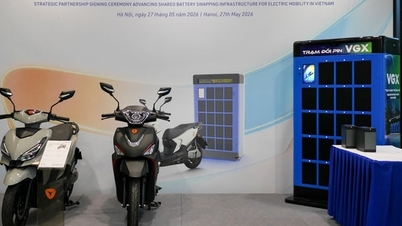
Hanoi City has tasked the Department of Construction with reviewing hundreds of potential locations for building charging stations combined with parking lots, especially along ring roads and gateway areas. According to Deputy Director of the Hanoi Department of Construction, Dao Viet Long: “Identifying the systematic and synchronized development of charging station infrastructure is a key factor because without it, the transition to green vehicles will be difficult to achieve the expected results. Therefore, the Department of Construction, as the lead agency, has conducted extensive field surveys and reviews. Through these surveys, the department has compiled 100 potential locations, distributed across various land types and areas, suitable for installing charging stations. However, the biggest difficulty currently is that central government agencies have not yet issued complete national standards for charging stations. Furthermore, due to the rapid development of technology, electric motorcycles not only charge directly but also quickly swap batteries; the Department is considering proposing the establishment of a battery swapping station system for two-wheeled electric vehicles.”
In addition to the city's efforts, ministries and agencies need to promptly issue technical regulations, safety standards, and clear licensing mechanisms to facilitate business investment. Integrating charging infrastructure into urban planning also needs to be promoted. Priority should be given to charging stations in densely populated areas, bus stations, transfer points, and major transportation routes to ensure convenience for residents. For apartment complexes under construction, design standards for charging areas should be included from the outset. For existing buildings, mechanisms should be in place to support the upgrading of electrical systems while ensuring fire safety requirements are met. Simultaneously, the participation of various economic sectors should be expanded, allowing gas stations, shopping centers, parking lots, etc., to install charging stations, helping to quickly expand the network and meet actual needs.
The shift to green transportation is an inevitable trend. Hanoi has a great opportunity to lead this process. However, to realize this goal, the development of charging station infrastructure needs to be accelerated and implemented systematically. When people no longer worry about running out of battery on the road, and when charging becomes as convenient as refueling, electric vehicles will truly become a popular choice. Removing the "bottleneck" in charging infrastructure is also removing the biggest obstacle to the green transition. Then, the capital city will have more momentum to break through, moving towards a sustainable, modern, and environmentally friendly future.
Source: https://hanoimoi.vn/ha-tang-sac-xe-dien-nut-that-can-duoc-thao-go-975935.html





![[Photo] The heat at the fireworks display site on the opening night of the Da Nang International Fireworks Festival 2026](https://vphoto.vietnam.vn/thumb/1200x675/vietnam/resource/IMAGE/2026/05/27/1779889741485_ndo_br_z7872039145157-fecaba5112f39e8352544099d7ef4738-5140-jpg.webp)





















































































Comment (0)