

This policy has received much attention because it directly relates to urban order, people's livelihoods, and the appearance of the capital city.
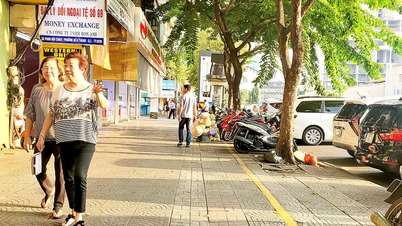
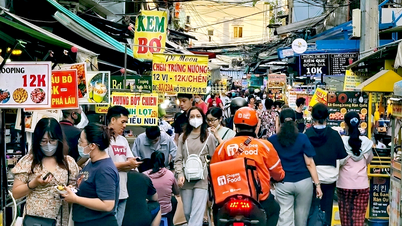
In Hanoi, sidewalks have long been not only for pedestrians but also a source of livelihood for tens of thousands of small businesses. From beverage stalls and food vendors to shops utilizing storefronts, sidewalk commerce has become a familiar part of urban life, especially in the Old Quarter or tourist and culinary streets.
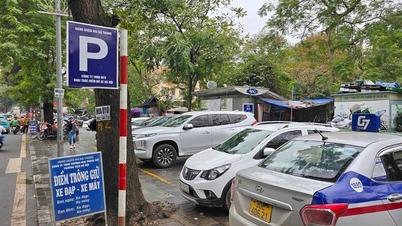
However, the prolonged encroachment on sidewalks also causes many negative consequences. In many places, pedestrians are forced to walk on the road because sidewalks are occupied by vendors or parked vehicles. This not only detracts from urban aesthetics but also poses a potential traffic safety hazard.
Therefore, allowing conditional use of a portion of the sidewalk is considered a more appropriate solution, rather than an absolute ban which is difficult to enforce effectively. If properly managed, this policy would both regulate business activities and increase revenue for the budget, while also boosting the night-time economy .
Notably, Hanoi has set quite strict criteria. Only streets with sidewalks at least 3 meters wide, after reserving a minimum of 1.5 meters for pedestrians, will be considered for the pilot program. This is an important principle because, under any circumstances, sidewalks must first and foremost serve pedestrians. Sidewalks in front of houses cannot be considered "private business rights" of individuals, as they are public property.
The phased implementation and pilot program also demonstrate the city government's cautious approach. This is necessary to assess the actual effectiveness and avoid lax management that could lead to a recurrence of the chaotic and unsightly situation of the past.
For the policy to be effective, the most important factor remains management and supervision. Without transparency, sidewalk leasing could lead to negative consequences or unfair competition. The city needs to clearly publicize the selection criteria, fees, usable area, and responsibilities of businesses. In addition, increased application of technology, surveillance cameras, and automated enforcement are necessary to ensure sidewalk usage complies with regulations.
More importantly, the issue of sidewalks needs to be viewed not only from the perspective of urban management but also in relation to people's livelihoods. For many self-employed individuals and small businesses, a few square meters of sidewalk provide a crucial source of income. Therefore, policies need to ensure a balance of interests, maintaining urban order while creating conditions for people to conduct legitimate businesses.
In many countries, using sidewalks for business is not prohibited, but it always comes with strict regulations regarding area, time, and pedestrian access. Hanoi can certainly learn from that experience to develop a suitable model.
Renting out sidewalk space is not just about a few square meters of land, but also a matter of urban management. If done well, Hanoi can both develop its night-time economy and build a more civilized, modern, and livable urban image.
Source: https://nld.com.vn/tphcm-hai-benh-vien-lon-cung-bieu-dien-phau-thuat-robot-196260514100817683.htm



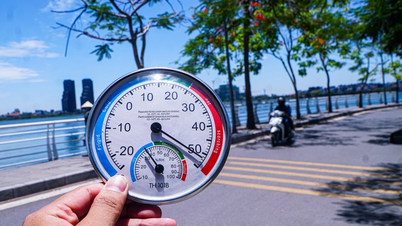
![[Image] Hanoi's urban life under the challenge of a "scorching hot" environment](https://vphoto.vietnam.vn/thumb/1200x675/vietnam/resource/IMAGE/2026/05/25/1779706979265_nang-nong-t5-2026-minh-duy-7-4636-jpg.webp)
































































































Comment (0)