

The Mekong River originates in the Qinghai-Tibet Plateau, flowing south for over 4,200 km, crossing six countries: China, Myanmar, Laos, Thailand, Cambodia, and Vietnam, before finally emptying into the sea. There, the river has created a fertile delta, a land of alluvial deposits: the Mekong Delta.

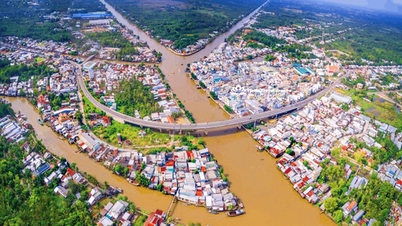
When the Mekong River flows into Vietnam, it takes on a beautiful name: the Cửu Long River (or Cửu Long Giang). This is precisely the reality: upon entering Vietnam, the Mekong River splits into two main branches, the Tiền Giang and Hậu Giang, which then branch out, depositing fertile alluvial soil in the delta before emptying into the East Sea through nine estuaries.

Perhaps this is the basis for our ancestors, who first settled the Southern region, naming this section of the river the Nine Dragons. This is also the inspiration for my journey to explore the land of Nine Dragons, by traveling along the nine windy river mouths.


However, in reality, the Ba Lai estuary in Ben Tre province has been replaced by a saltwater intrusion barrier system (put into operation in 2002). According to old documents, the Ba Thac estuary is located in the Dung islet ( Tra Vinh province), but for many years, even the locals have not remembered the exact location of this estuary.

The reason is simple: over time, due to continuous alluvial deposition and changes in some natural river flows, the Ba Thac estuary has long been filled in. Therefore, the legend of the Dragon Land with 9 river mouths has actually reduced to only 7.

No matter how much nature changes, the most important thing remains that the great Mother River has created a peaceful land, the foundation for the formation of one of the most distinctive cultural communities, contributing greatly to the treasure trove of Vietnamese culture.


For centuries, since the Nguyen lords first settled and developed the land, the Southern region, nestled between rivers, has always been a place where unique qualities converge and intertwine, what, in colloquial terms, is the generous "garden culture."


![[Photo] Prime Minister Pham Minh Chinh attends the Conference on the Implementation of Tasks for 2026 of the Industry and Trade Sector](/_next/image?url=https%3A%2F%2Fvphoto.vietnam.vn%2Fthumb%2F1200x675%2Fvietnam%2Fresource%2FIMAGE%2F2025%2F12%2F19%2F1766159500458_ndo_br_shared31-jpg.webp&w=3840&q=75)


























































Comment (0)