

In 2024, Quang Ninh province issued an early plan outlining the development of over 60 new tourism products for the year. These products were proposed by businesses, localities, and organizations with the aim of diversifying tourism services and products to cater to the diverse experiences of various customer segments across different seasons of the year.
Many high-quality, large-scale products
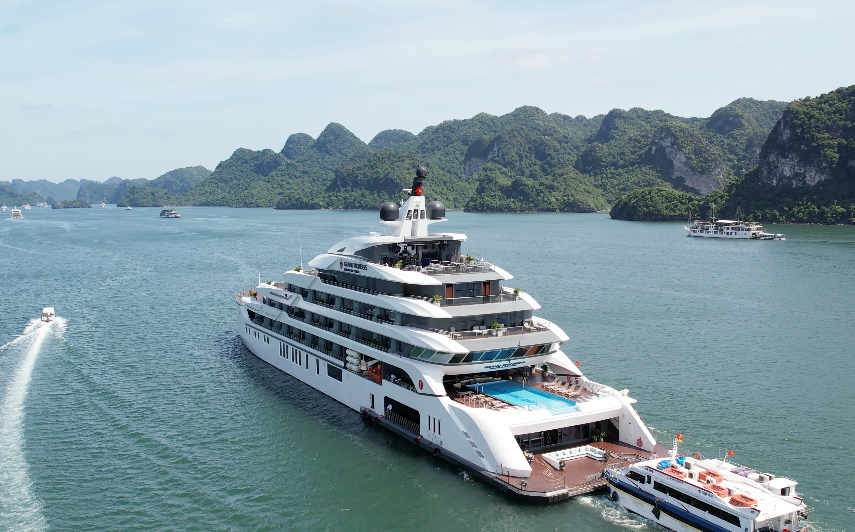
In accordance with Plan No. 177/KH-UBND dated August 6, 2024, Quang Ninh province plans to develop and supplement the number of new tourism products to be put into operation to serve tourists this year. These include: Ha Long Bay and Bai Tu Long Bay (11 products); Ha Long (14 products), Dong Trieu (3 products), Uong Bi (2 products), Cam Pha (1 product), Van Don (14 products), Co To (7 products), Tien Yen (1 product), Ba Che (2 products), Binh Lieu (2 products), Dam Ha (3 products), Hai Ha (3 products), and Mong Cai (4 products).
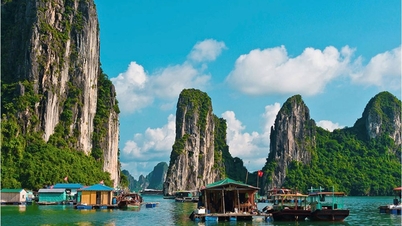
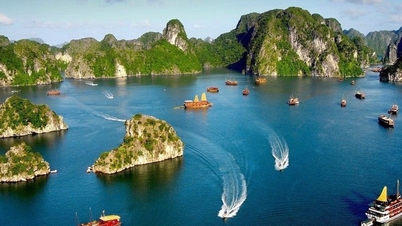
Thus, these products have developed relatively diversely across different regions of the province. Areas around famous bays like Ha Long and Bai Tu Long have seen strong development of new products and a tendency to expand into Bai Tu Long Bay to attract tourists, aiming to spread the flow of visitors away from Ha Long Bay, which experiences high concentrations of tourists and tends to become overcrowded during peak tourist seasons at certain nearshore attractions and famous caves with beautiful scenery.
Not only the Bai Tu Long Bay area but also Van Don district demonstrates immense development potential with the highest number of new tourism products in the entire province. In reality, alongside established eco-tourism experiences such as picking plums, fishing, camping in the summer, and experiencing orange orchards in the winter, large businesses have invested in large-scale projects that have begun operation here this year.
These include the Wyndham Garden Sonasea Van Don luxury resort, owned by Van Don Tourism Investment and Development Joint Stock Company (CEO Van Don), which commenced operations at the end of April to capitalize on the summer tourist season. Shortly after, the Angsana Quan Lan hotel complex, owned by Viglacera - Van Hai Joint Stock Company, also began operations. Both projects feature luxury rooms, villas, and entertainment services meeting 5-star quality standards. The investment and operation of these high-end resorts by major businesses affirms the attractiveness of Van Don's coastal and island tourism, providing a foundation for a strong breakthrough in local tourism.
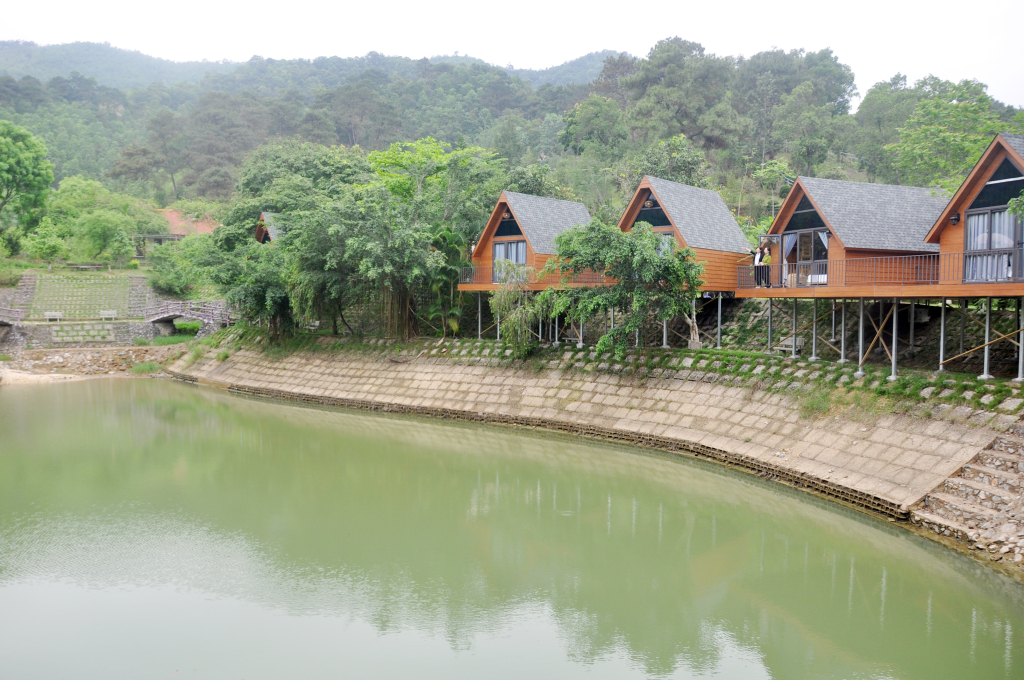
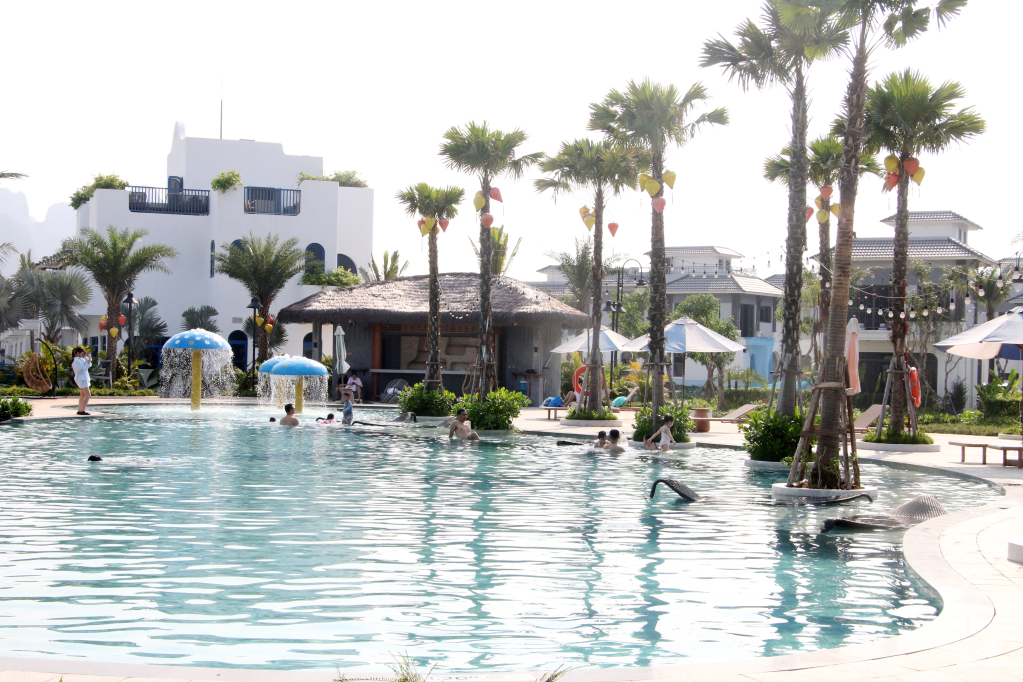
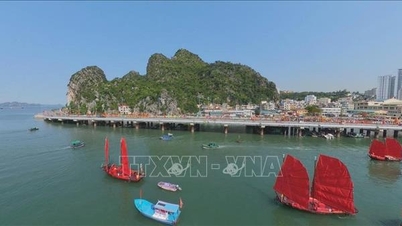
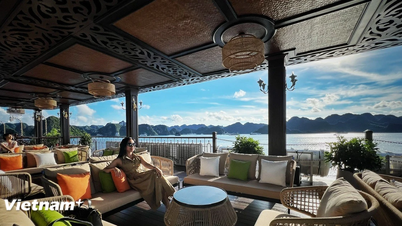
The capital city of Ha Long has also introduced many new products this year. Tourists visiting Ha Long last summer experienced products such as the pedestrian street combined with food , the Bai Chay night service at the SunWorld Old Town, the "Memories of the Past" market at the Quang Ninh Museum grounds, the Lighthouse entertainment complex, and the restaurant cruise combined with wedding services, experiencing romantic holidays on Ha Long Bay on luxurious cruise ships such as Ambassador, Saquila, Sea Octopus, Indochiana Cruise, Capella…
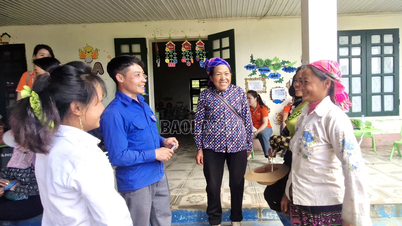
Viet Thuan Transport Company continues to operate the Grand Pioneers II cruise ship, adhering to the criteria of high-quality, eco-friendly cruises and pioneering the "Heritage Journey," the first of its kind connecting Ha Long Bay and Bai Tu Long Bay. In the highland areas of Ha Long, they are developing community-based tourism models in Son Duong, Bang Ca, and Ky Thuong communes, offering services such as guava orchard tours, scenic views, and cultural experiences with the Dao ethnic minority.
Quite a few products have failed to deliver on their promises.
According to statistics from the Department of Tourism, as of the end of November, 41 out of 67 new tourism products had been put into operation. 10 out of 67 products are being finalized and are expected to be launched in the last month of this year. However, 5 out of 67 tourism products in Ha Long Bay are facing legal obstacles because the detailed plan for the conservation and promotion of the heritage value of Ha Long Bay until 2020 has expired and is no longer suitable for the current situation, and the new phase of the Ha Long Bay plan has not yet been approved by the competent authorities, thus preventing their implementation.
These products include a speedboat tour on Route 4 in Ha Long Bay; a fishing experience with local fishermen; traditional dragon boat racing in the bay; a one-day trip to Vong Vieng fishing village; and relaxing beach activities and services on natural sandy beaches in the Hon Bo Hung and Thien Canh Son areas of Ha Long Bay. These are products that the company previously tested and is now proposing to reopen, aiming to offer new services in offshore areas, targeting high-spending tourists who are willing to spend more time exploring new and unique sights in Ha Long Bay.

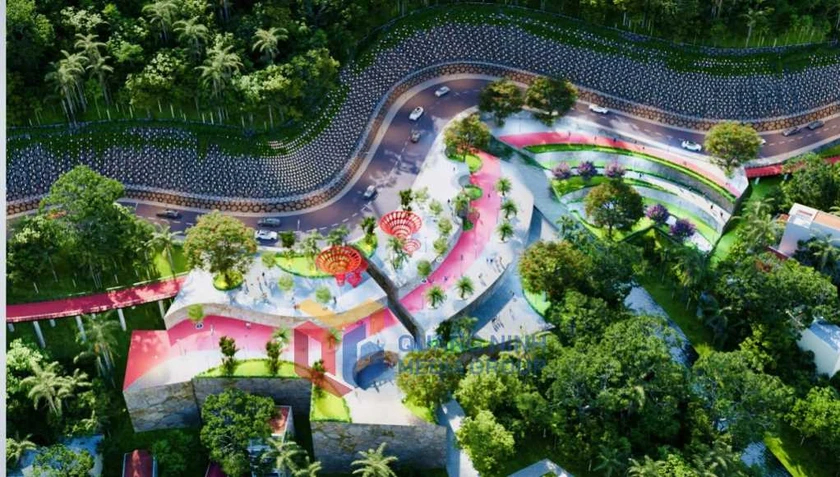
In addition, 11 out of 67 tourism products are currently completing legal procedures and are proposed to be postponed to 2025. Among these, Ha Long City has 7 products: the nostalgic ferry waiting area and the Bai Chay ferry route; the pedestrian street model combining night-time economy in the area of the Provincial Planning, Fair and Exhibition Center and the extended Tran Quoc Nghien road to the Vinhome urban area; the check-in point on Dang Ba Hat street and Dang Ba Hat hill; the Ha Long Flower Park pedestrian street; the cluster of relics including the Bai Tho Mountain Cultural Area, the temple of Duke Tran Quoc Nghien and Long Tien Pagoda; the temple of King Le Thai To; and the Yen Lap Lake scenic area - Loi Am Pagoda.
Co To District also has 4 products: 7-star island tour in Dong Tien commune; a marine sports and entertainment complex combined with sunset viewing at Love Beach; overnight camping in Thanh Lan; and a tour dedicated to the homeland's islands and seas in Dao Tran village, Thanh Lan commune.
In reality, Quang Ninh province still has much room for developing new tourism products. The fact that the number of registered new products this year has nearly doubled compared to 2023 is clear evidence of this. Expanding the scope, allowing businesses, units, and localities to propose new products themselves, as well as eliminating products during the implementation process, is an important step to create proactiveness for units, exploit the dynamic and insightful thinking of businesses, and ensure the attractiveness of products when put into operation in practice, avoiding wasteful investment of state and business funds.
However, the fact that many products still face unresolved policy issues highlights many areas for improvement. Therefore, ensuring a legal framework for new tourism products planned for development in 2025 should be considered from the outset, avoiding a situation where projects are abandoned prematurely, setting a precedent for proposals made merely for show, and preventing tourists and businesses from waiting, hoping, and then being disappointed when many highly anticipated products fail to materialize.
Source


![[Photo] Admire the coral "masterpiece" amidst the million-year-old heritage of Dak Lak province.](https://vphoto.vietnam.vn/thumb/1200x675/vietnam/resource/IMAGE/2026/05/31/1780221235105_anh-man-hinh-2026-05-31-luc-16-53-27.png)
![[Image] Hanoi Police officially crowned champions of V-League 2025/2026](https://vphoto.vietnam.vn/thumb/1200x675/vietnam/resource/IMAGE/2026/05/31/1780244769054_ndo_br_039d561b692be875b13a-jpg.webp)
![[Photo] The General Secretary, President and his wife begin their state visit to the Philippines.](https://vphoto.vietnam.vn/thumb/1200x675/vietnam/resource/IMAGE/2026/05/31/1780230559452_anh-man-hinh-2026-05-31-luc-19-28-11.png)
![[Photo] Solemn bathing ceremony and Buddha procession in Hue](https://vphoto.vietnam.vn/thumb/1200x675/vietnam/resource/IMAGE/2026/05/31/1780228263543_1-jpg.webp)
















![[Video] Sunset at Lap An Lagoon – Where the sun sets over the fishing nets](https://vphoto.vietnam.vn/thumb/340x192/vietnam/resource/IMAGE/2026/05/31/1780192137701_beach-landscape-sea-water-nature-grass-745871-pxhere-com.jpeg)







































![[Photo] Admire the coral "masterpiece" amidst the million-year-old heritage of Dak Lak province.](https://vphoto.vietnam.vn/thumb/402x226/vietnam/resource/IMAGE/2026/05/31/1780221235105_anh-man-hinh-2026-05-31-luc-16-53-27.png)





























Comment (0)