

A seemingly harmless, prolonged cough can lead to unexpected complications. The case of Ms. Duyen (33 years old, Ho Chi Minh City) serves as a warning, as just a few minutes after coughing violently, she suffered a ruptured capillary, leading to subconjunctival hemorrhage in her right eye.
Subconjunctival hemorrhage: A symptom of red eyes that causes many people concern.
According to Pham Huy Vu Tung, Deputy Head of the Ophthalmology Department, High-Tech Eye Center, Tam Anh General Hospital, Ho Chi Minh City, when the patient came for examination, the right eye had a large red patch in the white of the eyeball, but there was no pain or decreased vision.
The examination revealed she had subconjunctival hemorrhage – a condition where tiny capillaries beneath the transparent membrane covering the white of the eye rupture, causing blood to leak out and accumulate. Although it looks rather "scary," this condition is usually benign and does not affect vision.
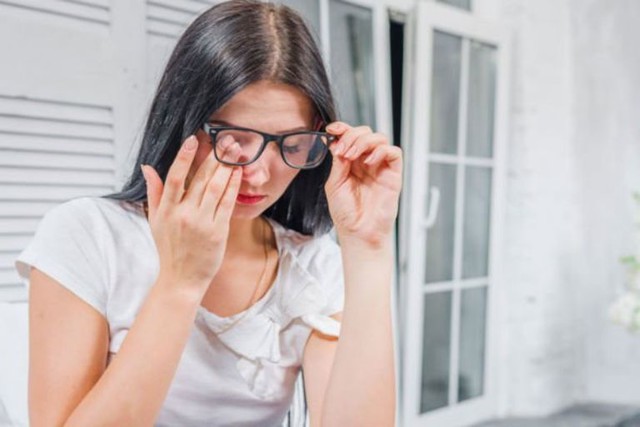
Illustrative image.
Why can a strong cough cause capillaries in the eye to rupture?
In Duyen's case, the prolonged coughing caused a sudden increase in blood pressure, rupturing the delicate capillaries in her eyes. This is a fairly common mechanism.
Besides forceful coughing, subconjunctival hemorrhage can also occur with persistent sneezing, strenuous activity, rubbing the eyes, trauma, or improper contact lens use. These factors all increase pressure on the small blood vessels in the eye.
After being prescribed eye drops to help dissolve the blood clot and protect the surface of the eyeball, the patient's condition fully recovered after about two weeks.
Most are benign, but one should not be complacent.
Experts say that most cases of subconjunctival hemorrhage will resolve spontaneously within 1–2 weeks without special intervention. However, this condition can recur if risk factors are not controlled.
Notably, subconjunctival hemorrhage is sometimes associated with underlying conditions such as hypertension, diabetes, or atherosclerosis. Therefore, patients need to monitor their overall health, especially if the redness of the eye occurs frequently.
When should you see an eye doctor immediately?
Although mostly benign, patients should not be complacent if unusual symptoms appear, such as persistent eye pain, blurred vision, eyelid swelling, or redness.
Doctors recommend limiting eye rubbing, avoiding straining while coughing, and drinking plenty of warm water to reduce respiratory irritation. Additionally, protective eyewear should be worn when driving or exercising to prevent injury.
Regular eye exams every 6–12 months are also an important way to detect eye diseases early and protect long-term vision.
Source: https://giadinh.suckhoedoisong.vn/ho-du-doi-5-phut-co-gai-33-tuoi-vo-mach-mau-o-mat-172260504095656875.htm
![[Photo] Ba Lang An Lighthouse - the "eye of the sea" amidst the "rock museum" of Quang Ngai province.](https://vphoto.vietnam.vn/thumb/1200x675/vietnam/resource/IMAGE/2026/05/29/1780038698840_anh-man-hinh-2026-05-29-luc-14-10-42.png)


![[Image] Pleasant weather helps students enter the 10th grade entrance exam with confidence.](https://vphoto.vietnam.vn/thumb/1200x675/vietnam/resource/IMAGE/2026/05/29/1780034401612_ngay-1-thi-lop-10-minh-duy-8-5009-jpg.webp)



























































































Comment (0)