

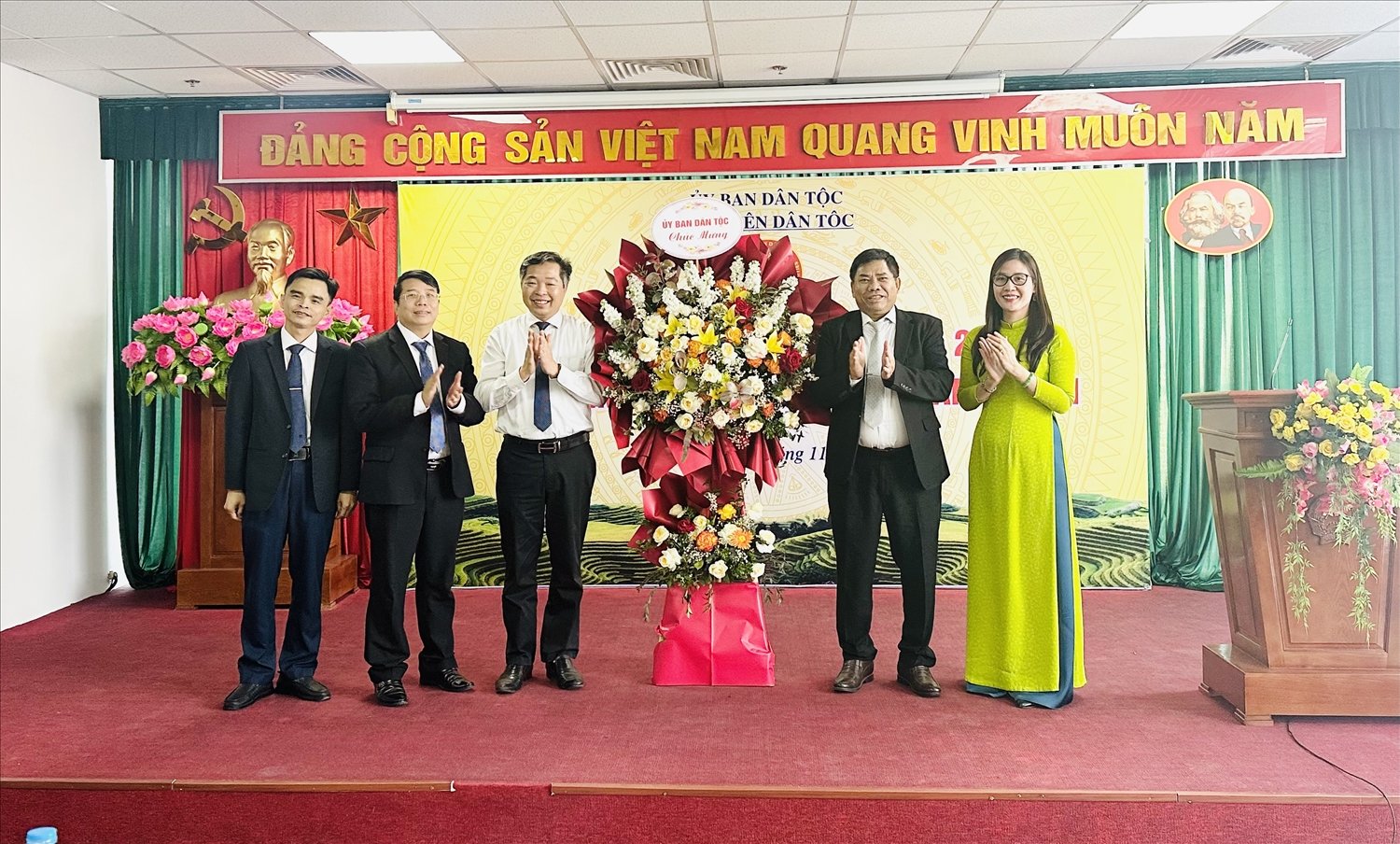
On August 8, 2016, the Prime Minister issued Decision No. 1562/QD-TTg establishing the National Academy of Ethnic Minorities, based on the reorganization of the Institute of Ethnic Minorities and the School of Ethnic Minority Cadres. The National Academy of Ethnic Minorities is a public scientific research and education institution under the Committee for Ethnic Minorities, operating according to the regulations of universities.
The National Academy of Ethnic Minorities has undergone a long journey of nearly 20 years of development and continuous innovation. The Academy's achievements have contributed to affirming the success of a research university model within the national education system. It is a key national higher education institution with an ever-growing scale, operating as a research university that continuously improves the training and development of cadres in ethnic minority areas.
In his opening speech, Professor Tran Trung, Director of the National Academy of Ethnic Minorities, stated that for the 2024-2025 academic year, the Academy will have 117 students, including 55 males and 62 females. 107 of these students are from ethnic minority groups, accounting for 91% of the total student body. Notably, these 117 students come from 20 provinces across the country, stretching from Dien Bien province to Ca Mau . The training results over the past period have been progressively improved, adopting modern teaching methods. For the first cohort, 6 students achieved excellent results; for the second cohort, 5 students achieved excellent results; for the third cohort, 10 students achieved excellent results; and for the fourth cohort, students currently in their first semester have not yet received their exam results.
The Academy prioritizes the development of its teaching staff and identifies it as a key factor in ensuring the quality of its training. Simultaneously, the Academy has signed cooperation programs with numerous universities and research institutes to expand its team of experts in research, training, and education, and has attracted visiting lecturers from major universities to the Academy.
In addition to following the training program, students also participate in events, festivals, and activities focused on practical experience, and attend student entrepreneurship seminars at the Academy; at the same time, students participate in clubs, teams, cultural, artistic, and sports activities to enhance their cultural and spiritual lives; and every year, students participate in volunteer activities. From this, each student gains more knowledge, confidence, and a greater sense of responsibility towards the community, striving to study and train diligently. With that spirit, on behalf of the Academy's leadership, I hereby declare the opening of the 2024-2025 academic year.
On this occasion, Professor Tran Trung expressed his gratitude for the guidance and support from the Party Committee and the leadership of the Committee for Ethnic Minorities; the effective assistance from various departments and units; and the cooperation of universities, research institutes, and localities over the past period, which has led to the achievements of the Academy for Ethnic Minorities today.
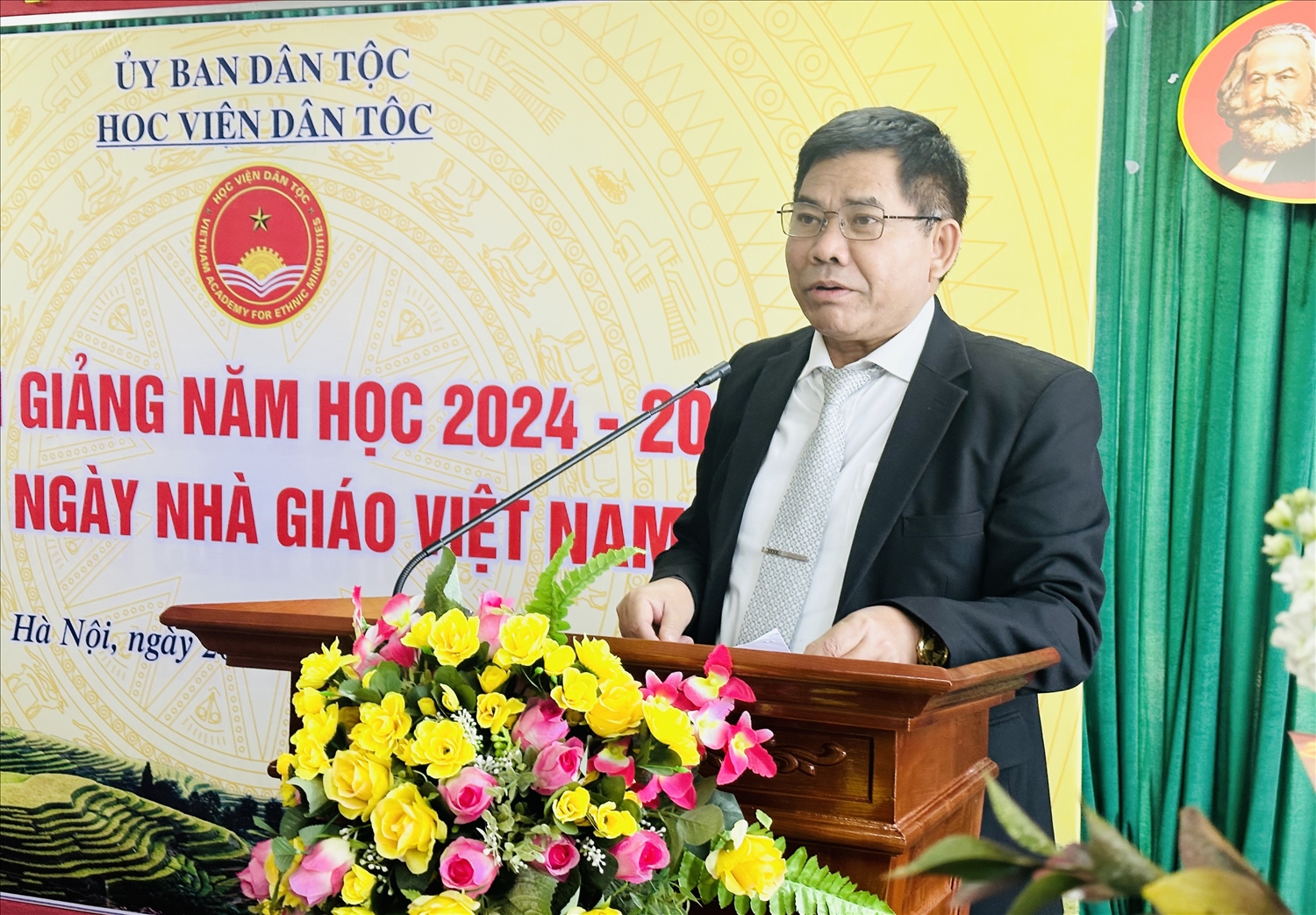
Speaking at the Opening Ceremony, Deputy Minister and Vice Chairman of the Committee for Ethnic Minorities Affairs, Y Thong, emphasized: Education and training is a top national priority, a cause of the Party, the State, and the entire people, and an important foundation for implementing the policy of "Equality, solidarity, respect, and mutual assistance for development among ethnic groups." Over the years, the Party and the State have always paid great attention to and prioritized investment in education and training in areas with particularly difficult socio-economic conditions, ethnic minority regions, border areas, islands, remote areas, and policy beneficiaries… Many mechanisms and policies have been issued and implemented to meet the learning needs of children of ethnic minorities and ensure social equity in education.
In this context, despite facing many difficulties and challenges regarding staffing and facilities, the National Academy of Ethnic Minorities has made significant efforts and contributions to researching and proposing strategies and policies for ethnic affairs; organizing training for cadres, civil servants, and officials in the political system from the central to local levels and communities nationwide; and providing full-time undergraduate training, contributing to the development of human resources for ethnic minority and mountainous regions. On behalf of the leadership of the Committee for Ethnic Minorities, the Deputy Minister and Vice Chairman acknowledged, commended, and congratulated the Academy on its achievements and contributions in the 2023-2024 academic year.
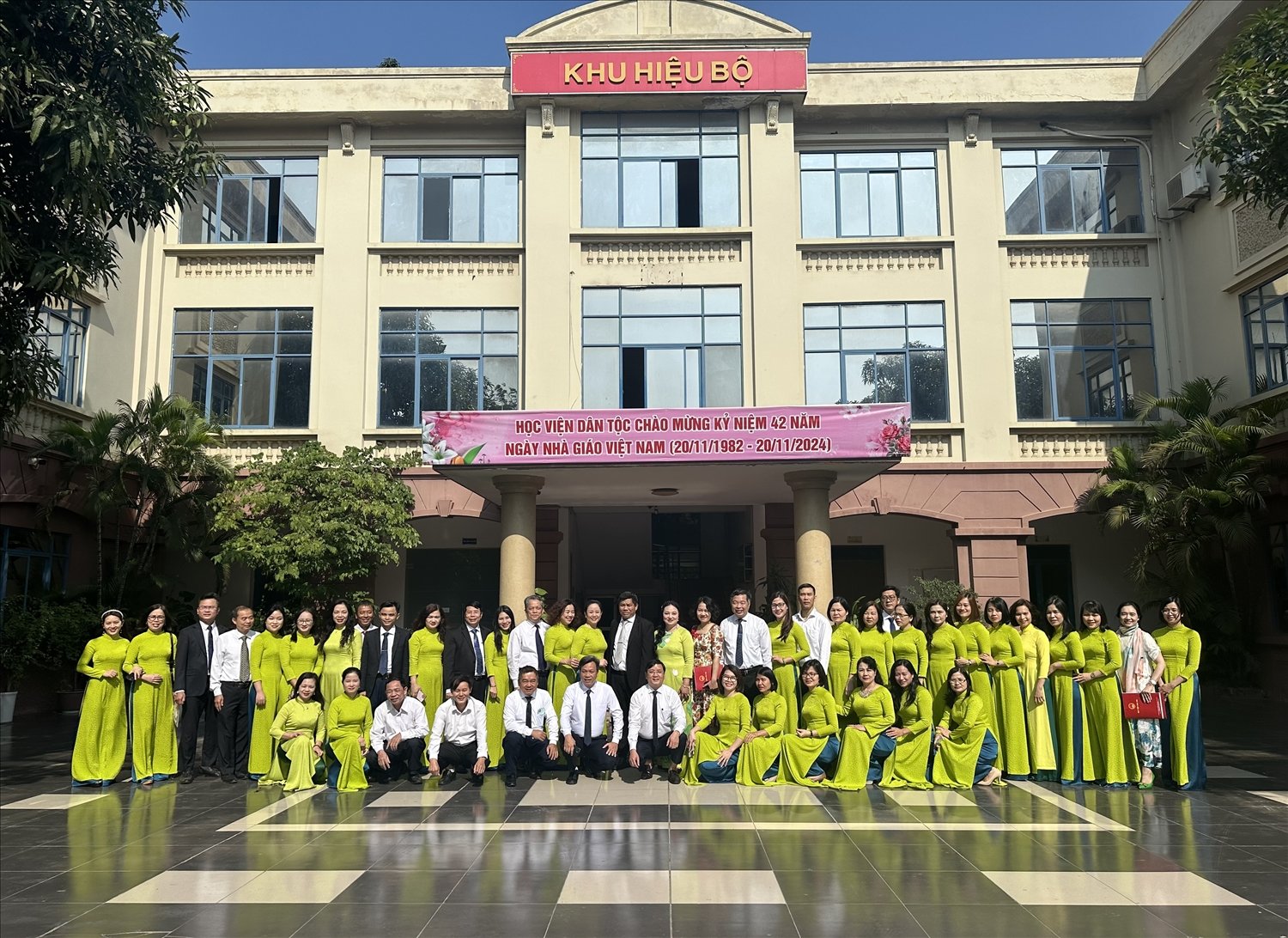
To successfully fulfill its assigned political tasks, in the 2024-2025 academic year, the Deputy Minister and Vice Chairman hopes that the National Academy of Ethnic Minorities will continue to build upon its achievements, affirm its position, and strive even harder in training high-quality human resources for ethnic minority and mountainous regions.
Continue to implement the Party and State's guidelines, policies, directives, and resolutions on education, training, and ethnic affairs; and concretize them into the Academy's programs and plans.
Effectively carry out the task of fostering knowledge of ethnic minorities and ethnic affairs among cadres, civil servants, and public employees in the political system from the central to local levels. Continue to further improve the quality of training; strengthen moral education, lifestyle education, life skills education, and physical education for students, ensuring school safety; focus on improving the quality of foreign language teaching and learning, and applying information technology.
We prioritize and encourage faculty and staff to continuously improve their professional skills, pursue further education, and participate in scientific research; promote grassroots-level scientific research and student-led scientific research; implement policies to encourage students to engage in research-related studies; and strengthen cooperation with businesses to support student employment after graduation. We also focus on Party building, the development of mass organizations and the administration, and the implementation of democratic, open, and transparent regulations to ensure political stability and foster unity within the Academy. We strive to uphold the motto "Building a culturally rich Academy, with exemplary teachers and elegant students."
The Deputy Minister and Vice Chairman expressed his hope that the students would strive to study and train to improve their knowledge and develop their skills; focusing on enhancing their foreign language proficiency and applying information technology so that they would have more opportunities to find jobs in the future and become good, qualified officials to contribute to building their homeland and country.
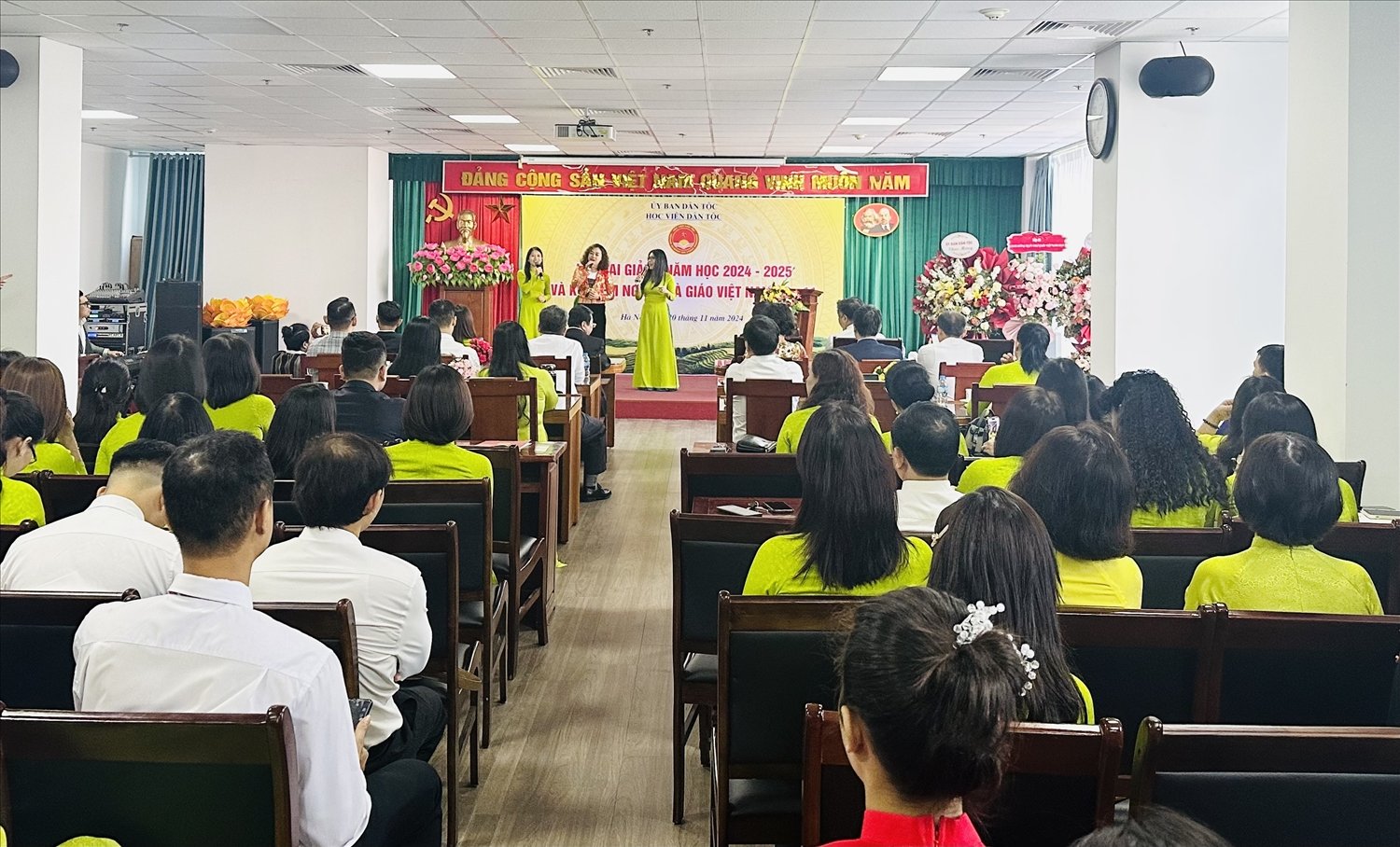
“Although there are still many challenges, with the achievements already made, with the attention and support of leaders at all levels, with the love for the profession and the dedication of the teaching staff, and with the belief in the growth of the Academy, the leaders of the Committee for Ethnic Minorities Affairs believe that the Academy for Ethnic Minorities Affairs will continue to achieve even more outstanding achievements in the 2024-2025 academic year,” the Deputy Minister and Vice Chairman expressed his confidence.
On this occasion, the Board of Directors of the National Academy awarded prizes to the top-ranked and second-ranked new students in the entrance exam; and granted scholarships to students who achieved high academic results in the 2023-2024 academic year.

![[Photo] Prime Minister Pham Minh Chinh attends the Conference on the Implementation of Tasks for 2026 of the Industry and Trade Sector](/_next/image?url=https%3A%2F%2Fvphoto.vietnam.vn%2Fthumb%2F1200x675%2Fvietnam%2Fresource%2FIMAGE%2F2025%2F12%2F19%2F1766159500458_ndo_br_shared31-jpg.webp&w=3840&q=75)
















































































Comment (0)