

|
The 2024 Thai Xoe Dance Festival attracted a large number of participating athletes. |
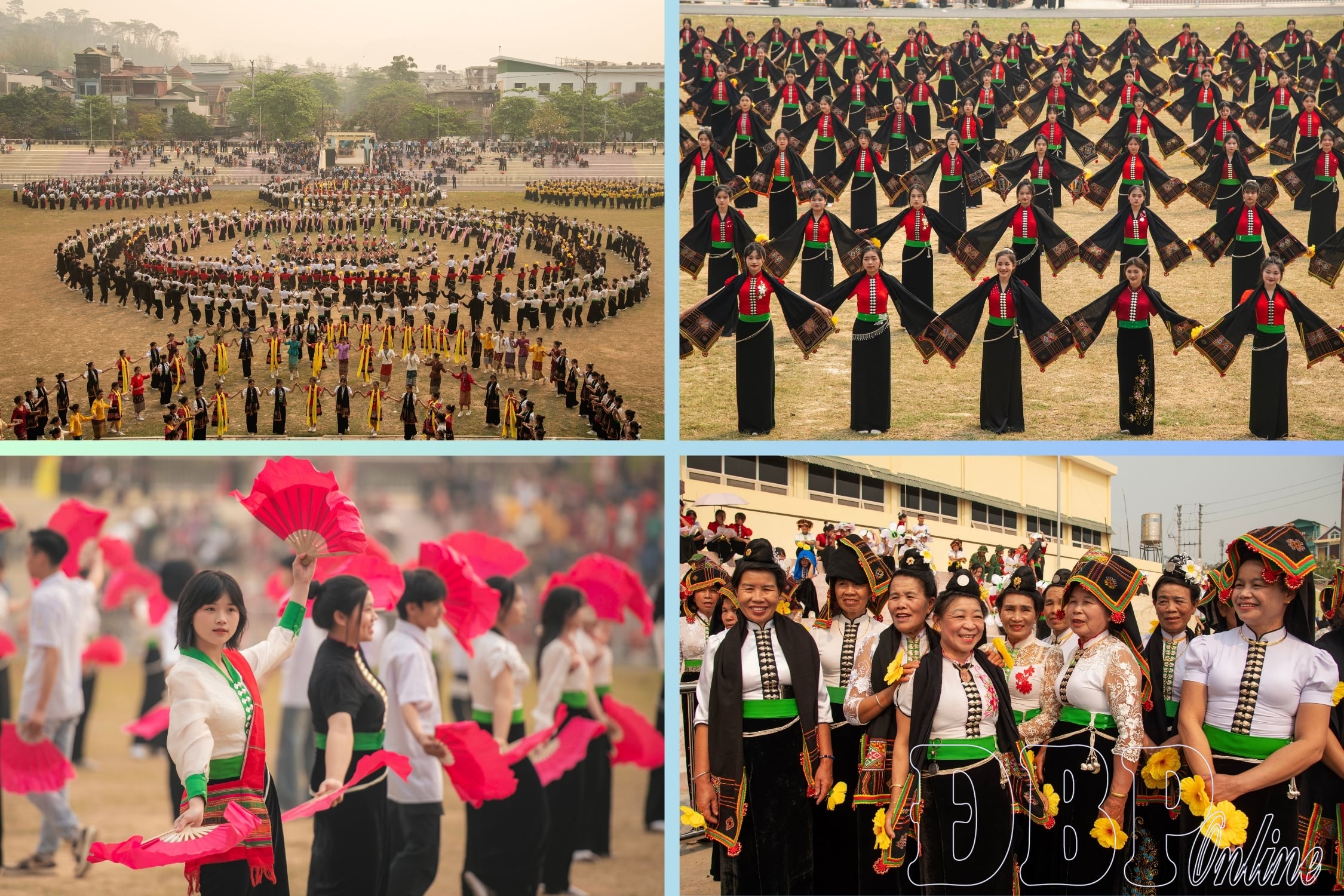
In recent years, the cultural institutions system, from the provincial to the grassroots level, has been prioritized for upgrading and comprehensive investment. A series of large-scale projects such as the Dien Bien Phu Victory Museum, 7/5 Square, Vo Thi Sau Park, the multi-purpose gymnasium, the provincial stadium, and the provincial museum exhibition hall have created a professional environment for cultural creation, research, and practice. Alongside this, community cultural centers in communes, wards, and residential areas have been renovated and equipped with additional facilities, ensuring conditions for the regular operation of mass cultural activities. The development of cultural institutions is considered "soft infrastructure" that directly contributes to improving the capacity of officials, performers, and artisans. When creative spaces are expanded, opportunities to access knowledge, technology, and cultural activities become more sustainable.
Besides investing in infrastructure, the province also focuses on implementing many policies and regulations for cultural and artistic staff. Currently, those working in the performing arts receive preferential professional allowances; cultural and information staff receive in-kind compensation and hazardous/dangerous work allowances; propagandists and film projection teams in mountainous areas receive mobile allowances; and actors and public propagandists receive training and performance instruction in accordance with regulations. The awarding of the titles "People's Artisan" and "Outstanding Artisan" in the field of intangible cultural heritage is given attention. To date, the province has 41 artisans who have been awarded or posthumously awarded the title of Outstanding Artisan by the President of Vietnam. Among them, 23 outstanding artisans with low incomes and difficult circumstances are receiving monthly living allowances (7 outstanding artisans receive an allowance of 850,000 VND/month; 16 outstanding artisans receive an allowance of 700,000 VND/month). These are practical supports that help cultural workers feel secure in their contributions, especially in remote areas where socio-economic conditions are still challenging.
|
Artisan Sung A Tua, from Nam Ngam A village, Pu Nhi commune, is passing on the technique of playing the Hmong flute to the younger generation. |
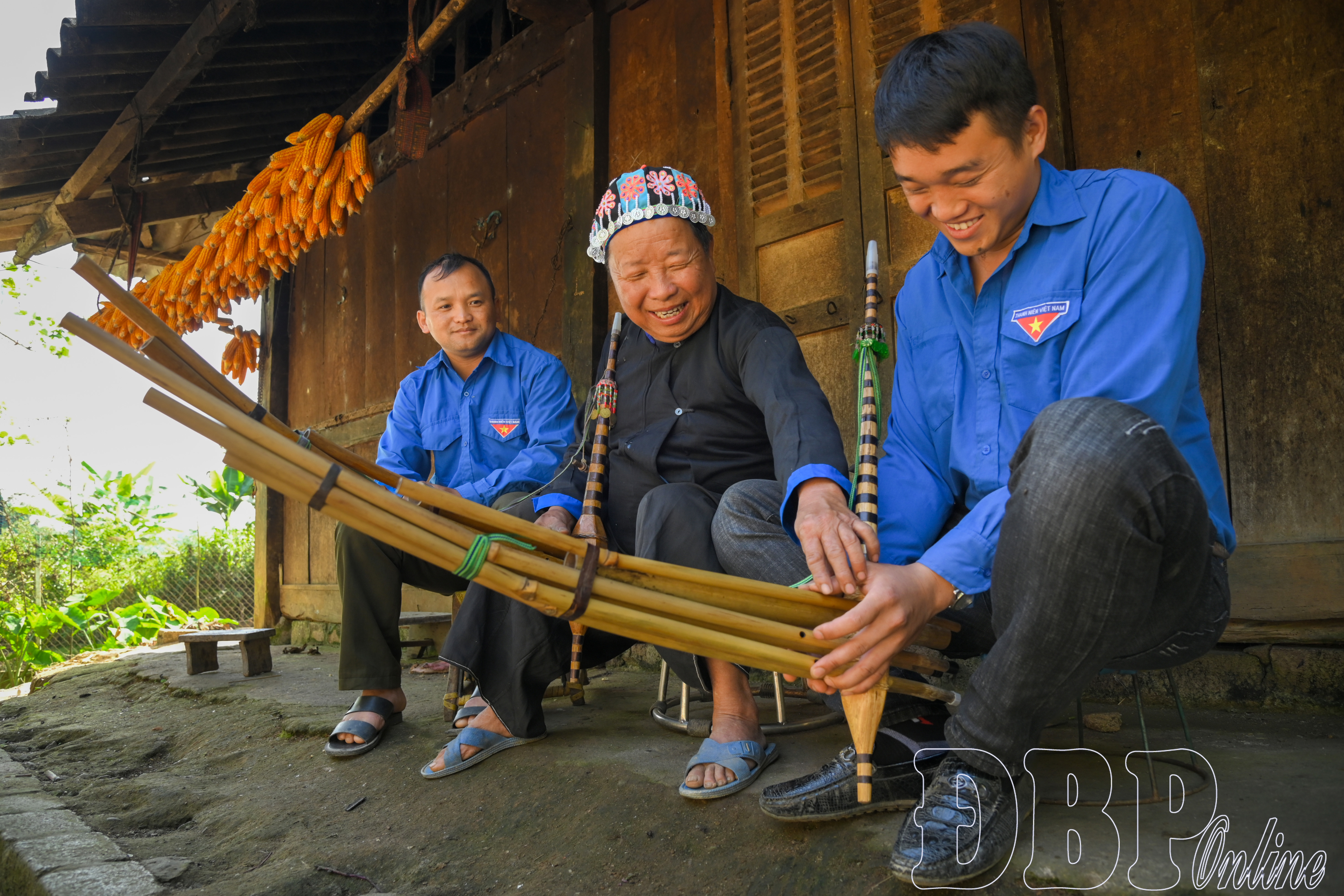
Moreover, cultural and artistic activities and mass art movements in Dien Bien province have seen many positive changes, spreading strongly from the grassroots level. The province currently has 1,240 mass art troupes in villages, hamlets, and residential areas that maintain regular activities. This is an important force contributing to the preservation and promotion of the cultural identity of ethnic groups, and also serves as an environment for training and nurturing cultural human resources right from the community. In particular, the issuance of Resolution No. 05/2023/NQ-HĐND dated July 14, 2023, stipulating a support level of 2 million VND/troup/year, has created a clear impetus for the grassroots art movement. Thanks to this funding, many art troupes have better conditions to operate.
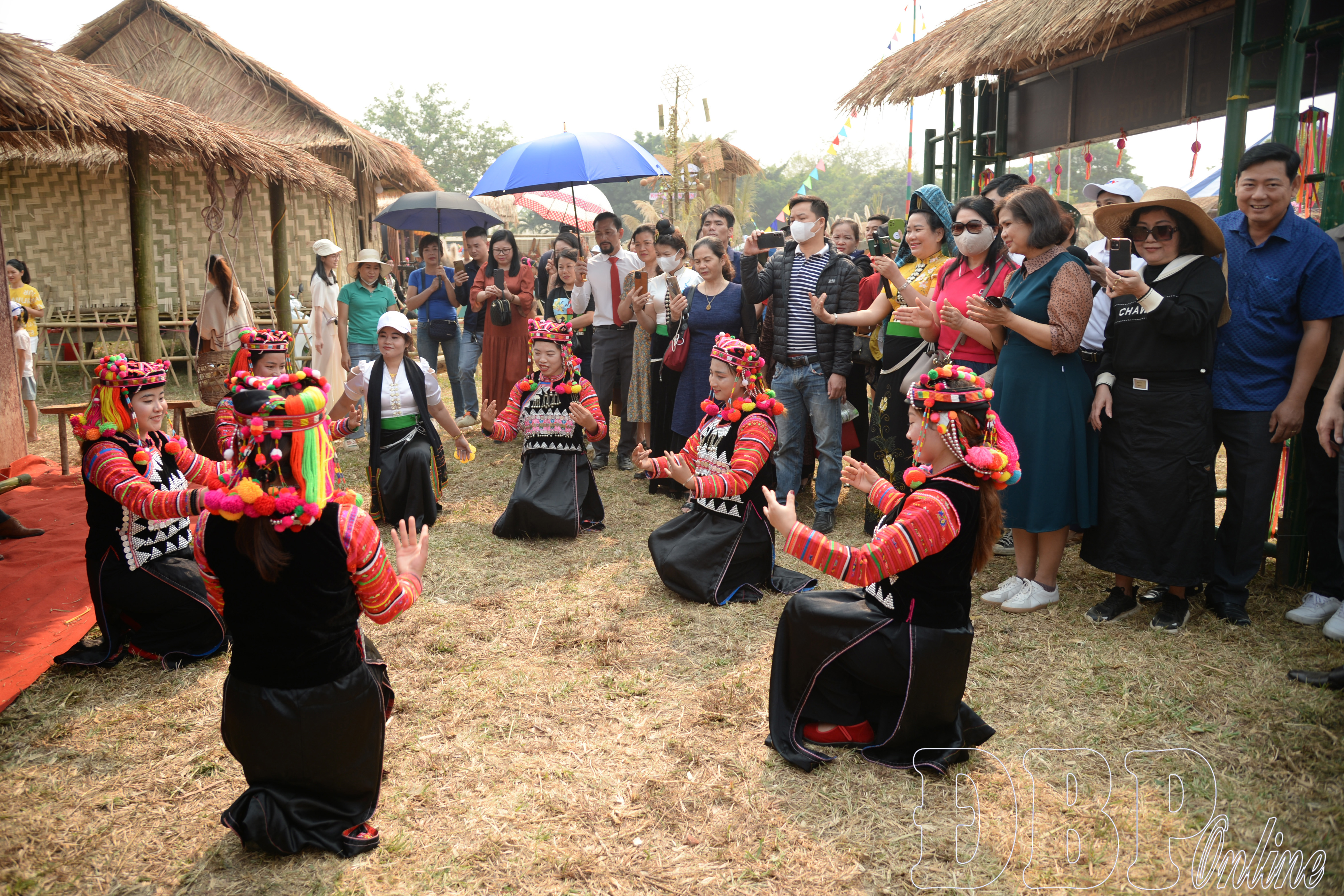
Ms. Pờ Sơn Mé, Team Leader of the Ta Ko Khu village's performing arts group (Sin Thau commune), shared: “Thanks to this support, many women in the village can participate in the performing arts group. With 2 million VND, my team has extra money to buy makeup and drinks during rehearsals for programs during village and commune holidays without having to spend their own personal funds. This is also a great source of encouragement, further fueling the passion of the women to contribute to the local cultural and artistic movement.”
|
The Ta Ko Khu village's performing arts troupe performs for tourists as part of the activities of the Hoa Ban Festival. |
Nevertheless, Dien Bien still faces a shortage of high-quality human resources in the cultural sector. In reality, the cultural staff at the grassroots level is "thin and lacks in-depth expertise," especially after the administrative unit mergers. At the cultural and social departments, the number of civil servants is very limited but they have to handle many areas, resulting in a large workload but difficulty in specializing. Notably, the human resources for new fields such as cultural industry, creative design, cultural marketing, art management, or digital technology application do not meet the requirements. These are rapidly developing fields that demand high levels of expertise, but Dien Bien currently lacks sufficient personnel to handle them. Meanwhile, artisans and artists – those who hold the "soul" of the heritage – lack a truly professional environment to develop and commercialize their creative products.
Furthermore, as a mountainous province with a high poverty rate, Dien Bien's budget revenue is primarily dependent on the central government. The province's budget revenue is limited, and its small economic scale makes it difficult to balance and increase spending on culture… failing to prioritize it to the required 2%. The application of digital technology is also limited: there is no digitized database of heritage, and no e-commerce platform for cultural products. Meanwhile, the mobilization of social resources in the cultural sector has not met expectations… due to difficult socio-economic conditions, a small number of businesses, and small-scale enterprises.
|
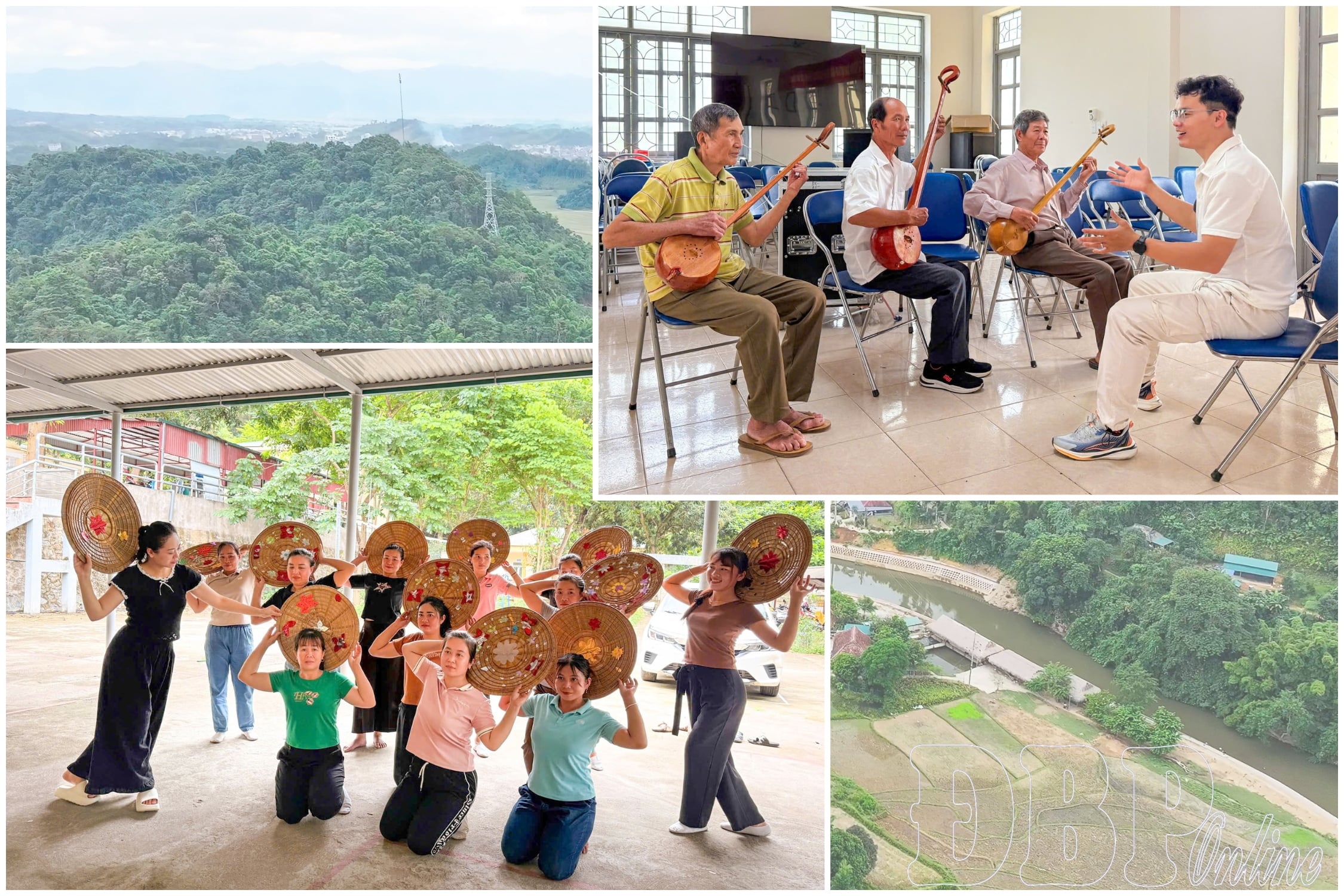
Officials from the Department of Culture, Sports and Tourism conducted training to enhance cultural and artistic capacity at the grassroots level in Muong Lay ward. |
Furthermore, specific incentive policies for cultural talents have yet to be implemented. Currently, there is no mechanism for talent scholarships, creative support, or criteria for evaluating talent, leading to limitations in attracting and retaining talent. Many young artists and performers choose to develop their careers in large cities – where the creative environment is more open. Ms. Dieu Thi Thuc, Head of the Provincial Ethnic Arts Troupe, frankly shared the difficulties in attracting and retaining high-quality personnel: “Dien Bien is a poor province, and talented people are very rare in Dien Bien. Performers with good looks and expertise tend to stay in cities because there are more opportunities for development. Here, the income of dancers is very low, only equivalent to civil servant salaries. Performances outside are rare, and the remuneration is modest. Truly, the artists of the Troupe must be very passionate about their profession to stay and remain here…”
Overall, Dien Bien's challenges in developing cultural human resources stem from the unique socio-economic characteristics of a mountainous border province, where infrastructure, income, and career opportunities are limited. However, positive signs from grassroots arts and culture movements, investment in cultural institutions, and the involvement of various sectors demonstrate the province's determination to address the "bottleneck" in human resources, especially high-quality human resources for culture.
|
The younger generation in Dien Bien is learning and preserving traditional dances. |
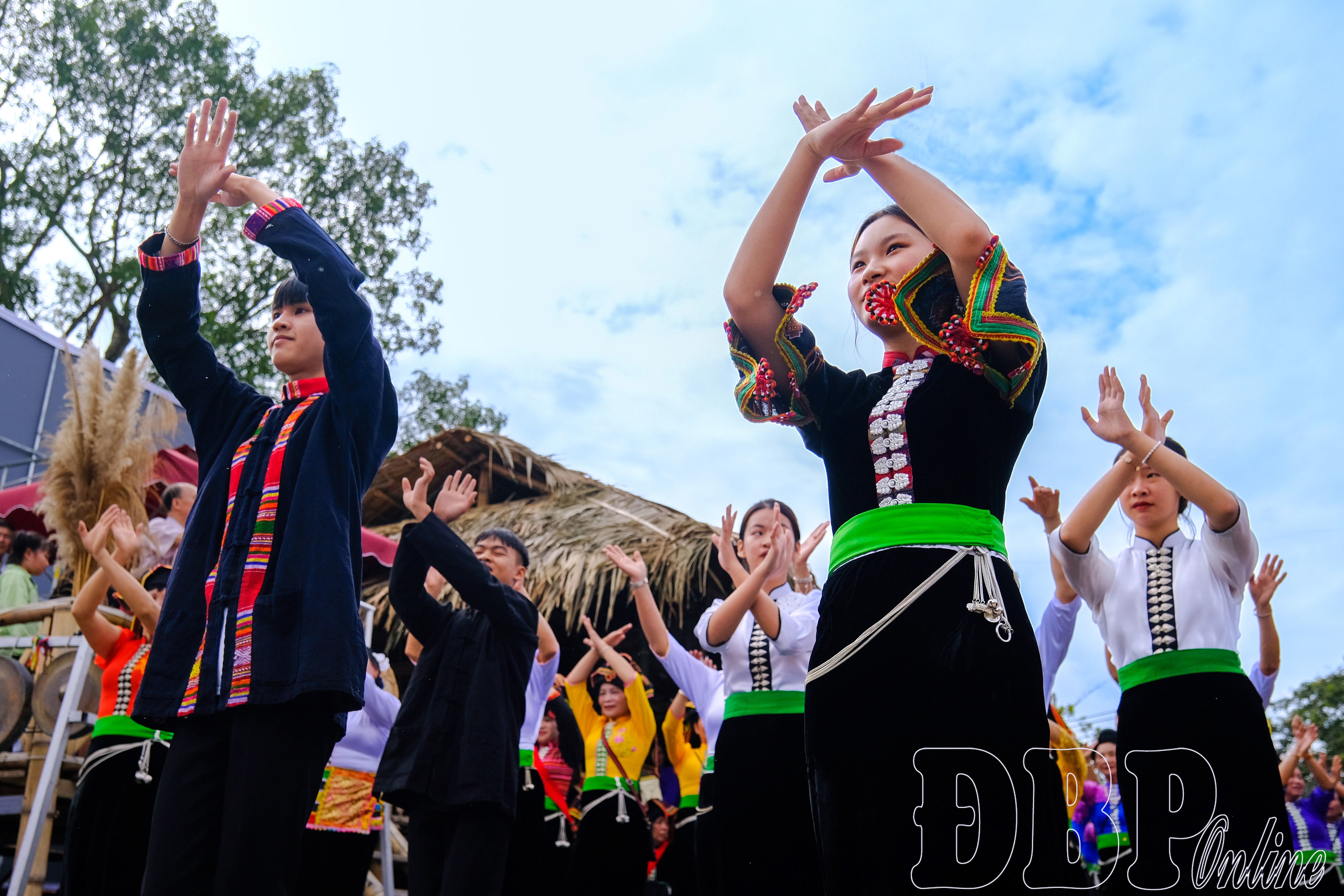
In the coming period, the province will focus on solutions to build a workforce of cultural professionals capable of accessing new technologies, ready to preserve heritage, develop the cultural industry, and disseminate the cultural values of ethnic groups in the era of integration. This is not simply an urgent immediate requirement but also a long-term driving force for culture to become an intrinsic strength, contributing to the sustainable development of this westernmost region.
Article and photos: Diep Chi
Source: https://dienbientv.vn/tin-tuc-su-kien/van-hoa/202512/tao-dot-pha-trong-phat-trien-nguon-nhan-luc-van-hoa-5822025/

![[Photo] Closing Ceremony of the 10th Session of the 15th National Assembly](/_next/image?url=https%3A%2F%2Fvphoto.vietnam.vn%2Fthumb%2F1200x675%2Fvietnam%2Fresource%2FIMAGE%2F2025%2F12%2F11%2F1765448959967_image-1437-jpg.webp&w=3840&q=75)


![[Photo] Prime Minister Pham Minh Chinh holds a phone call with the CEO of Russia's Rosatom Corporation.](/_next/image?url=https%3A%2F%2Fvphoto.vietnam.vn%2Fthumb%2F1200x675%2Fvietnam%2Fresource%2FIMAGE%2F2025%2F12%2F11%2F1765464552365_dsc-5295-jpg.webp&w=3840&q=75)































![[OFFICIAL] MISA GROUP ANNOUNCES ITS PIONEERING BRAND POSITIONING IN BUILDING AGENTIC AI FOR BUSINESSES, HOUSEHOLDS, AND THE GOVERNMENT](https://vphoto.vietnam.vn/thumb/402x226/vietnam/resource/IMAGE/2025/12/11/1765444754256_agentic-ai_postfb-scaled.png)


























![[Photo gallery] Long Thanh Airport 'lights up' ready to welcome its first flight](https://vphoto.vietnam.vn/thumb/402x226/vietnam/resource/IMAGE/2025/12/11/1765467251707_bia_20251211222704.jpeg)













Comment (0)