

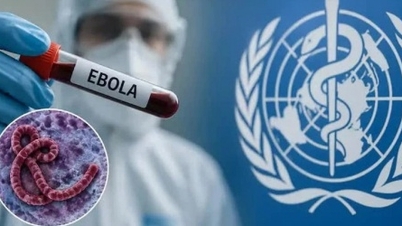
The Ministry of Health has issued a new Decision on the publication of the professional document "Guidelines for the Diagnosis and Treatment of Ebola Virus Disease," applicable nationwide. This Decision replaces Decision No. 2968/QD-BYT issued in 2014, aiming to update the latest knowledge and treatment methods for this dangerous infectious disease.
This updated guidance includes changes to some legal provisions. It also adds several new points, such as the causative agents: six strains have been added, including Bombali ebolavirus (discovered in 2018). The guidance emphasizes that the Zaire species is the only one currently available with a vaccine and specific treatment.
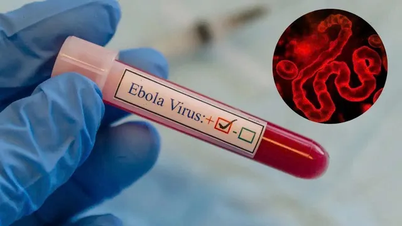
Regarding testing methods: Additional techniques used in detecting disease-causing viruses should be included: Rapid antigen/antibody tests for screening. RT-PCR should be clearly defined as the gold standard. Gene sequencing methods should also be added.
Regarding the diagnostic criteria for suspected cases, the updated guidelines specify detailed quantification of clinical symptoms to facilitate identification: A fever of 38°C, at least one specific symptom, and an epidemiological link within the past 21 days are mandatory.
Regarding treatment, the new guidelines add supportive nutritional and psychological care for patients. Particular attention is paid to monitoring treatment for the elderly, immunocompromised individuals, and children. Monoclonal antibodies (Inmazeb, Ebanga) are added for the Zaire strain. There are no contraindications as the life-threatening risks outweigh the side effects.
Regarding vaccines, the guidelines have been updated to include the Ervebo vaccine (rVSV-ZEBOV), which was approved in 2019 by the U.S. Food and Drug Administration (FDA) and the World Health Organization (WHO) for the prevention of the Zaire strain.
The guidelines also add stricter regulations for managing close contacts, prohibiting breastfeeding, blood donation, tissue donation, organ donation, or semen donation within 21 days of the last contact with close contacts.
Regarding post-discharge management, hospitals are required to notify the local CDC for post-discharge case management. For autopsy, cremation is mandatory in accordance with the guidelines in Circular No. 21/2021/TT-BYT on the management of Group A infectious diseases as stipulated by law.
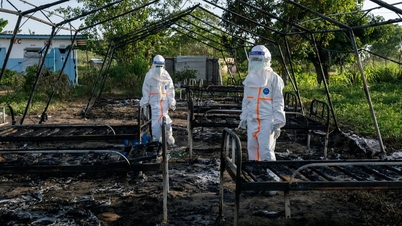
According to the Ministry of Health, Ebola virus disease is a dangerous acute infectious disease with the potential to erupt into large epidemics, with an average mortality rate of about 50%, and even up to 90% in some outbreaks. The disease was first discovered in 1976 in the Democratic Republic of Congo, near the Ebola River – where the disease is named.
Ebola virus is primarily transmitted through direct contact with the blood, tissues, and bodily fluids of infected people or animals, such as urine, feces, saliva, and semen. Additionally, contaminated items such as clothing, bedding, or used needles can also be a source of infection.
Source: https://giaoducthoidai.vn/huong-dan-chan-doan-va-dieu-tri-benh-ebola-post779210.html



![[Photo] General Secretary and President To Lam presides over the meeting to approve the draft report on the results of the second inspection by the Politburo of the Standing Committee of the Hanoi City Party Committee.](https://vphoto.vietnam.vn/thumb/1200x675/vietnam/resource/IMAGE/2026/05/26/1779789811432_a2-bnd-4430-9620-jpg.webp)
































































































Comment (0)