

Combining rice cultivation with fish farming significantly reduces environmental treatment costs, limits the use of pesticides and chemical fertilizers. Fish raised in rice paddies consume insects, weeds, and agricultural by-products, thereby improving the environment and enhancing the productivity and quality of both rice and fish.

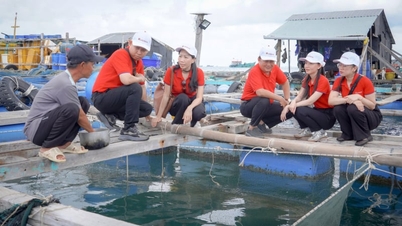
The rice-fish farming model provides a stable income for the people of Xuan Lung commune.
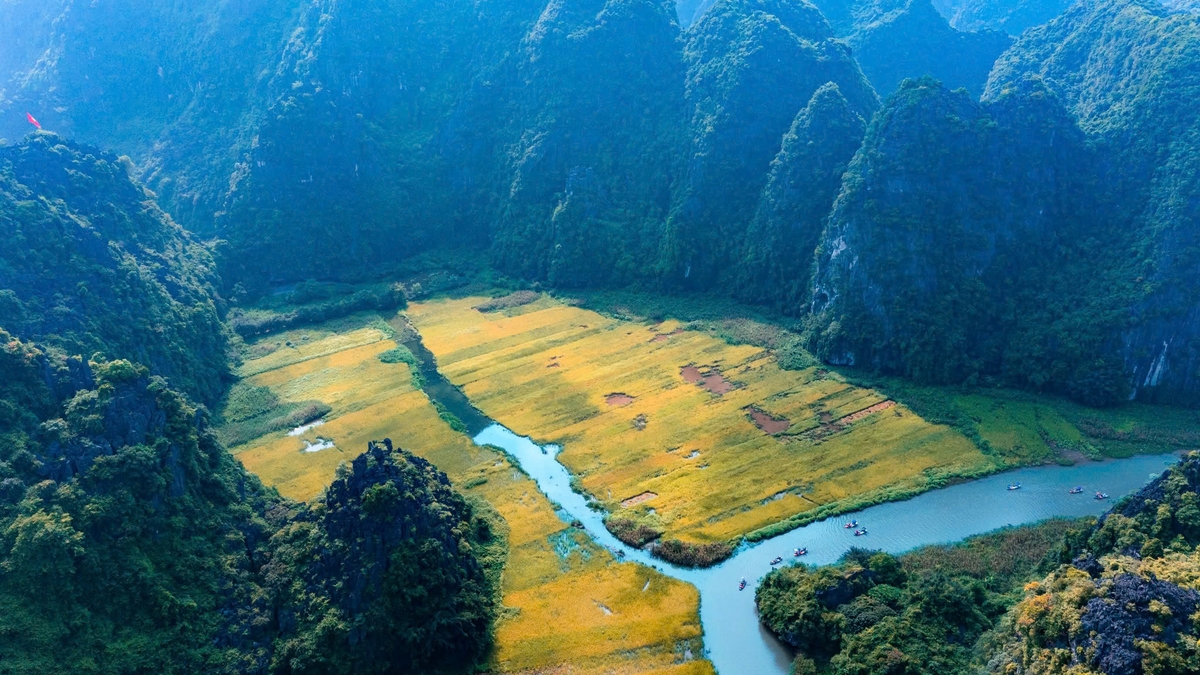
In Xuan Lung commune, the rice-fish farming model has been maintained and developed for many years, becoming a key production direction that brings considerable income to farmers. Mr. Nguyen Tien Dat, Chairman of the Farmers' Association of Xuan Lung commune, said: “The model of one rice crop, one fish crop has proven its effectiveness, helping to improve land use efficiency and increase income for the people. In 2025, the entire commune will maintain 522 hectares of rice cultivation with an average yield of 57.5 quintals/hectare; and simultaneously implement 23 rice-fish farming models with a total area of 87.8 hectares.”
Not only Xuan Lung commune, but many other localities in the province are also actively converting low-lying rice paddy land to single-crop fish farming. Besides harvesting one spring rice crop, with a yield of about 60 quintals/hectare, aquaculture on rice land brings profits of 60-80 million VND/hectare, much higher than monoculture rice farming.
Based on practical effectiveness, localities have implemented many solutions to encourage, support, and expand the rice-fish farming model, such as: supporting the cost of purchasing fish fry, feed, and biological products for water environment treatment; organizing training, transferring scientific and technical knowledge, and guiding people on disease prevention and control and safe aquaculture practices.

The fish-rice farming model is a suitable approach that both increases people's income and promotes the sustainable development of the province's fisheries sector.
According to estimates, by 2025 the total aquaculture area in the province will reach approximately 19,903 hectares, including both specialized farming and farming utilizing reservoirs and single-crop rice fields. The strong development of single-crop fish farming on rice land has significantly contributed to increasing farmers' income and promoting stable growth in the aquaculture sector.
It can be affirmed that the model of one rice crop followed by one fish crop is a suitable approach for the practical conditions of many localities in the province. The implementation of this model both improves the efficiency of agricultural land use and protects the ecological environment, creating sustainable livelihoods for the people and making a positive contribution to the overall development of the local agricultural sector.
To promote and replicate this model, according to Comrade Do Trong Tuan - Head of the Fisheries Department, Provincial Department of Livestock, Veterinary and Fisheries: Localities need to strengthen planning, review land resources, and prioritize low-lying areas and areas with inefficient rice production to develop the rice-fish farming model in a concentrated manner. Encourage the formation of commodity production areas linked to irrigation systems and convenient internal field transportation for farming and product consumption.
Strengthen support in terms of seeds, supplies, and capital for people participating in the model. Continue to implement policies supporting high-quality fish fry, feed, biological products for water environment treatment, and create conditions for farmers to access preferential loan sources to invest in improving fields, building embankments, and expanding production scale. At the same time, promote the transfer of scientific and technical knowledge, guide people to apply biosafety fish farming processes, manage the environment well, and prevent and control diseases.
Furthermore, it is necessary to strengthen the linkages between production and consumption to stabilize output and enhance product value; and to promote and replicate effective models. The development of the rice-fish farming model should be linked to environmental protection, adaptation to climate change, and towards ecological and sustainable agricultural production.
Le Oanh
Source: https://baophutho.vn/huong-di-ben-vung-nang-cao-thu-nhap-cho-nong-dan-245710.htm

















![[Video] Sunset at Lap An Lagoon – Where the sun sets over the fishing nets](https://vphoto.vietnam.vn/thumb/340x192/vietnam/resource/IMAGE/2026/05/31/1780192137701_beach-landscape-sea-water-nature-grass-745871-pxhere-com.jpeg)
![[Photo] The General Secretary, President and his wife lay flowers at the Ho Chi Minh Monument in Manila.](https://vphoto.vietnam.vn/thumb/1200x675/vietnam/resource/IMAGE/2026/05/31/1780219759477_anh-man-hinh-2026-05-31-luc-16-29-07.png)























































Comment (0)